
ROCKET LAUNCH FAILURE

School Assembly Headlines for November 17: Top national, international, sports and business updates
School Assembly Headlines for November 17: Indian Railways has successfully constructed three new platforms at Ahmedabad railway station to enhance operations. The International Cricket Council re-elected Jay Shah as chairman for a second term, reflecting his influence in cricket. Additionally, China confirmed a trilateral summit with the US and Russia scheduled for November 19 in Shenzhen. Indian equity markets showed positive movement as the Sensex and Nifty rose significantly.


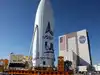
Amazon loses 40 satellites in failed rocket launch
Amazon lost 40 satellites from its internet constellation on Sunday after a rocket failed during the first of several dozen flights the tech giant has purchased, marking a setback in Jeff Bezos' race against Elon Musk's Starlink. The setback came a day after Musk's SpaceX deployed 26 large Starlink satellites during a test flight of its Starship mega-rocket, pulling off the first-ever "catch" of a spaceship to demonstrate the feasibility of reusable rockets.
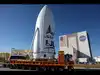
Boeing-Lockheed Martin joint venture rocket launch fails, destroys 40 satellites for Amazon's Leo broadband internet
Rocket carrying Amazon's Leo broadband internet unit satellites was failed to launch by Boeing and Lockheed Martin's joint venture United Launch Alliance.

US flight chaos hits 1.5 million passengers, 11,000 flights: What brought skies to a halt?
FAA flights grounded reason: A nationwide ground stop impacted thousands of flights across the United States due to overloaded air traffic control systems. Officials confirmed that over 3,000 flights landed safely during the event, affecting more than a million travelers. Secretary of Transportation Sean Duffy mentioned that it could happen again as the issues were mechanical. Limited flights resumed later, but full recovery will take days for airlines.
- Go To Page 1

60-year-old takes ChatGPT advice on not paying rent to landlord; AI says losing home is 'legally impossible', now he is homeless and suing OpenAI
A Danish man has sued OpenAI, claiming ChatGPT encouraged him to withhold rent during a dispute with his landlord and later convinced him they were business partners building a billion-dollar venture. He says he was evicted and ended up sleeping behind a rented car with his two dogs before moving into a campsite cabin.

Crematorium used for heating: How Europe is using funerals to warm schools, homes and swimming pools
A school being built in Scotland is set to use heat recovered from a city crematorium, highlighting how energy generated during cremation is being repurposed for heating. Crematoriums in England and Finland are also using or planning to supply surplus heat to swimming pools, funeral homes and residential buildings, helping reduce fuel consumption and reuse energy that would otherwise escape into the atmosphere.

Two PSLV failures, one modified rocket stage: How ISRO is trying to restore launch vehicle reliability
ISRO has tested a modified third-stage motor of its PSLV after two consecutive launch failures involving anomalies in the same stage. The changes cover the motor's nozzle, mechanical connections, sealing arrangements and quality-control procedures. The space agency will analyse the test data before deciding on further testing.

Isro successfully launches NVS-03 satellite to bolster NavIC constellation
The rocket lifted off from the second launch pad at the Satish Dhawan Space Centre in Sriharikota at 11.51pm. After a flight of around 18 minutes and 40 seconds, the satellite was precisely injected into its designated elliptical orbit.

To overcome technical hurdles, ISRO flew NVS-03 satellite with pyro valves open: Narayanan
The Indian Space Research Organisation successfully placed the NVS-03 satellite into orbit on Saturday. ISRO implemented a new technique involving three open pyro valves to enhance mission reliability. This launch aims to bolster India's navigation satellite system, restoring operational capabilities. The organisation plans to launch additional satellites in the upcoming months to expand this network.
ISRO to launch NVS-03 navigation satellite on October 30: Why the mission is crucial for NavIC
On October 30, ISRO will launch the NVS-03 navigation satellite using its GSLV-F18 rocket. This mission aims to enhance the Navigation with Indian Constellation (NavIC) system, which currently struggles with aging satellites and insufficient atomic clocks. Successful deployment of NVS-03 is crucial for reviving reliable positioning services in India, with future launches, NVS-04 and NVS-05, planned to further solidify the system's dependability.

Whenever you feel 'demotivated' in life, rewatch an old video of Elon Musk from Tesla's near-bankruptcy days
Social media user Unnati shared an old video of Elon Musk pitching Tesla’s $109,000 Roadster in 2008, when the company was nearing bankruptcy. Musk explained how revenue from expensive cars would fund affordable electric vehicles. During the crisis, SpaceX secured a major NASA contract, while Tesla investors provided crucial funding to keep the automaker running.
Jio vs Starlink makes for a billionaire clash, but India’s satcom race is a minefield in the skies
Jio Platforms is preparing for an IPO while developing its satellite venture to connect remote areas. Reliance Jio's ambitious plan involves deploying 1,600 low-Earth-orbit satellites and 23 ground stations across India. Meanwhile, Bharti Airtel aims to compete with a satellite network of its own through partnerships. The regulatory environment remains complex as both companies navigate their plans amid recent developments.

NASA's 12-foot-wide satellite lost its radio signal in space; scientists still got the data they needed
A sphere launched by NASA in 1961 named Explorer 9 was made to measure how dense the air is above the Earth. Its radio beacon did not work, but scientists tracked the sphere through visual contact and got the desired data. This helped researchers understand how thin air affects satellites in orbit.
Japan launches spacecraft on mission to bring Mars moon samples to Earth
Japan has successfully launched an uncrewed spacecraft aimed at collecting samples from the Martian moon Phobos. The spacecraft, part of the Martian Moons eXploration mission, is expected to reach its destination in August 2027. After collecting at least 10 grammes of Phobos material, the spacecraft will return the samples to Earth by 2031. This mission marks the first interplanetary launch for Japan's H3 rocket following previous launch successes.
A $5 nut doomed SpaceX’s first rocket; its satellite crashed through a shed roof and landed beside its own shipping crate
In March 2006, SpaceX’s first rocket failed because of a $5 aluminium nut that cracked from corrosion. The cadet-built satellite on board was thrown clear and landed in a storage shed beside its own shipping crate. Reports first blamed human error, but a review board pointed to corrosion, a cause even Elon Musk called only “most probable”.
In 1962, a spacecraft was launched by NASA to study Venus but a few moments later, the rocket went off course and was lost
A spacecraft, called Mariner 1, was NASA's first probe which planned to study Venus. A software error and a guidance control problem led to the loss of the spacecraft after it went off its intended path.

TakeMe2Space to launch orbital computing satellite on SpaceX rocket
Indian space startup TakeMe2Space plans to launch what it describes as the country's first orbital computing satellite aboard a SpaceX rocket on October 1, seeking to process data in orbit rather than transmit raw information back to Earth.

SpaceX Starship targets first orbital flight as Musk pushes rocket towards Moon, Mars
SpaceX's Starship rocket is set to attempt its first orbital flight after years of development and testing. The launch will occur in Texas with goals including deploying 26 Starlink satellites into orbit. As the rocket journeys, it will orbit the Earth six times before landing in the Pacific Ocean. The launch is crucial for future missions to the Moon and Mars, despite potential risks.

"Compute in space will round up to 100%": Elon Musk backs future of AI compute
Sharing a video featuring Google's Senior Director, Paradigms of Intelligence Travis Beals, Musk said, "The amount of compute in space will obviously round up to 100% of all compute."
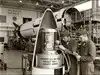
In 1958, a mouse nicknamed Minnie Mouse was sent to space by the United States Air Force under the first Mouse-in-Able (MIA-1) mission aboard a two-stage Thor-Able rocket but the animal didn't survive the flight
In 1958, a mouse nicknamed Minnie Mouse was sent to space by the United States Air Force under the first Mouse-in-Able (MIA-1) mission aboard a two-stage Thor-Able rocket but the animal didn't survive the flight. The mission was launched on April 23 from Cape Canaveral to study how a living mammal could respond to launch acceleration, zero gravity and atmospheric reentry.

In 1957, Vanguard TV3 rose about 4 feet before its rocket exploded; the 3-pound satellite was thrown clear, recovered, and now sits in the Smithsonian's Air and Space Museum
In 1957, an American satellite launch ended in disaster when the rocket exploded on the launchpad. The salvaged satellite ultimately became a museum exhibit. This setback propelled the establishment of NASA, leading to a successful subsequent launch. Vanguard 1 later revealed that Earth is not a perfect sphere and continues to be the oldest human-made satellite in orbit today.
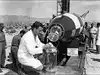
In 1950, a live and unanaesthetized mouse was sent to the upper atmosphere in a V-2 rocket to test biological responses and capture physiological data and imagery during the flight
In 1950, a live and unanaesthetized mouse was sent to the upper atmosphere in a V-2 rocket to test biological responses and capture physiological data and imagery during the flight. The mission took place on August 31 at White Sands Proving Ground in New Mexico. The rocket reached about 136.4 miles, but a parachute failure caused the capsule to hit the ground. The mouse did not survive the impact.
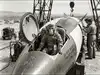
In 1948, a male rhesus monkey named Albert was launched on a V-2 rocket by the US towards space but the mission failed and the animal did not survive the flight
In 1948, a male rhesus monkey named Albert was launched on a V-2 rocket by the US towards space in an early animal flight test. Albert I reached about 39 miles, but the rocket did not reach the Kármán line. His life signs were not recorded, and the mission failed. The flight helped prepare for Albert II.
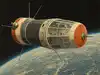
In 1966, NASA launched Biosatellite I with 13 biology experiments and more than 10 million organisms; its retrorocket failed, and the spacecraft was never recovered
In 1966, NASA's Biosatellite I mission attempted to carry over ten million organisms into orbit, but a retrorocket malfunction led to the capsule's tragic loss upon re-entry. This setback, however, was instrumental, offering invaluable insights that benefitted future space missions. Just months later, Biosatellite II launched successfully, marking a significant advancement and laying foundational knowledge for present-day research on survival in space.
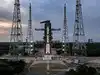
'Eye in sky': ISRO launches advanced earth observation satellite for 'strategic data'
ISRO successfully launched the 2,367-kg EOS-05 imaging satellite aboard GSLV-F17 from Sriharikota, marking its first success of 2026. The satellite, India’s first dedicated geo-orbit imaging spacecraft, will provide near real-time imagery for agriculture, disaster management and strategic applications. The mission also marked GSLV’s heaviest payload to date.
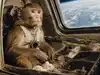
In 1951, Yorick the monkey and 11 mice rode an Aerobee rocket to 236,000 feet; the flight showed animals could survive launch and landing, though Yorick died after touchdown
In 1951, a rhesus monkey named Yorick embarked on a groundbreaking mission aboard a rocket, soaring nearly forty-five miles above the New Mexico desert alongside eleven mice. Despite a successful parachute deployment, the capsule's overheating led to Yorick's tragic death from heat prostration before rescue teams could arrive. This mission yielded invaluable data that paved the way for future human space exploration.
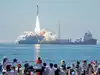
China fails to launch rocket carrying coms satellite, state news agency says
China's Long March 7A rocket launch mission failed Monday evening. The rocket experienced an anomaly during its flight, state media reported. This communications satellite, ChinaSat 4B, was launched from Hainan Island. The cause of this failed launch is currently under investigation by authorities. This marks the first reported Long March 7A failure since its initial flight in 2020.
Load More

