 Reuters
Related
- Jensen Huang plans shocking comeback as Nvidia CEO, claim reports as AI giant set to report quarterly earnings
- Presidential elections 2028 primary: Kamala Harris, JD Vance lead the race, Marco Rubio, Ron DeSantis, Jon Ossoff, Gavin Newsom, Alexandria Ocasio-Cortez are next favorites, show latest poll surveys
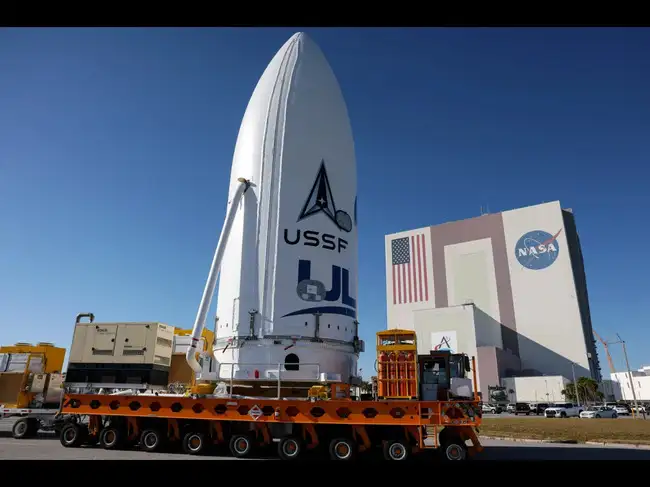
Boeing and Lockheed Martin's joint venture United Launch Alliance failed to launch a rocket carrying 40 satellites for Amazon's Leo broadband internet unit. The Vulcan rocket failed on Sunday shortly after launch from Florida, destroying its payload of 40 satellites for Amazon's Leo internet network. This was the company's first mission failure.
The rocket failed roughly 10 minutes after liftoff, and the cause was not immediately clear. It represented a major setback for the two decade-old company's new flagship rocket as it sought to begin a regular cadence of launches for Amazon's burgeoning satellite internet constellation.
Based on data received by our Launch Director, we confirm that the Vulcan vehicle launched from Space Launch Complex 41 suffered an anomaly 10 minutes into the flight and failed to deliver the Amazon mission to orbit, ULA said in a statement.
"Every flight generates data, and every flight teaches us something. Since the anomaly just occurred, we don’t have any specific data yet to understand what occurred today."
Earlier in October, the Federal Communications Commission said it had approved Amazon Leo’s $11.5 billion deal to acquire Globalstar as the retail giant's satellite arm aims to build a satellite-based communications network to take on Elon Musk's SpaceX Starlink unit.
Amazon Leo has launched more than 300 satellites since April 2025 and aims to deploy about 3,200 satellites in Earth's low orbit by 2029. Through the deal, Amazon adds Globalstar's two dozen satellites to its existing network of more than 200 and its mobile-satellite spectrum. Amazon, which has committed to investing more than $10 billion in Leo, is preparing to roll out its commercial satellite services by the end of 2026, the FCC said.
The FCC said the companies’ assets will boost Amazon Leo’s entry into the direct-to-device market and allow the satellite-operator to offer fixed and mobile services.
"The FCC has empowered Amazon Leo to deliver fast, next-gen satellite broadband services, increase competition, and help communities stay connected all across the country," FCC Chair Brendan Carr said.
Direct-to-device satellite technology allows smartphones and other devices to connect directly to satellites.
Tech companies are pouring billions of dollars into capturing the lucrative market for satellite-based connectivity as they race to complete with Starlink's network of more than 11,000 satellites.
(You can now subscribe to our Economic Times WhatsApp channel)
The rocket failed roughly 10 minutes after liftoff, and the cause was not immediately clear. It represented a major setback for the two decade-old company's new flagship rocket as it sought to begin a regular cadence of launches for Amazon's burgeoning satellite internet constellation.
Based on data received by our Launch Director, we confirm that the Vulcan vehicle launched from Space Launch Complex 41 suffered an anomaly 10 minutes into the flight and failed to deliver the Amazon mission to orbit, ULA said in a statement.
"Every flight generates data, and every flight teaches us something. Since the anomaly just occurred, we don’t have any specific data yet to understand what occurred today."
Earlier in October, the Federal Communications Commission said it had approved Amazon Leo’s $11.5 billion deal to acquire Globalstar as the retail giant's satellite arm aims to build a satellite-based communications network to take on Elon Musk's SpaceX Starlink unit.

Amazon Leo has launched more than 300 satellites since April 2025 and aims to deploy about 3,200 satellites in Earth's low orbit by 2029. Through the deal, Amazon adds Globalstar's two dozen satellites to its existing network of more than 200 and its mobile-satellite spectrum. Amazon, which has committed to investing more than $10 billion in Leo, is preparing to roll out its commercial satellite services by the end of 2026, the FCC said.
The FCC said the companies’ assets will boost Amazon Leo’s entry into the direct-to-device market and allow the satellite-operator to offer fixed and mobile services.
"The FCC has empowered Amazon Leo to deliver fast, next-gen satellite broadband services, increase competition, and help communities stay connected all across the country," FCC Chair Brendan Carr said.
Direct-to-device satellite technology allows smartphones and other devices to connect directly to satellites.
Tech companies are pouring billions of dollars into capturing the lucrative market for satellite-based connectivity as they race to complete with Starlink's network of more than 11,000 satellites.
Add  as a Reliable and Trusted News Source
 Add Now!
(You can now subscribe to our Economic Times WhatsApp channel)
(Catch all the US News, UK News, Canada News, International Breaking News Events, and Latest News Updates on The Economic Times.)
Download The Economic Times News App to get Daily International News Updates.
Read More News on
(Catch all the US News, UK News, Canada News, International Breaking News Events, and Latest News Updates on The Economic Times.)
Download The Economic Times News App to get Daily International News Updates.