
RAPIDAN RIVER WATER QUALITY
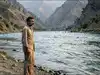
Baramulla man's family deported to Pakistan after Pahalgam attack; he jumps into river to meet them, drowns
On November 23, Irfan Hassan Shah, hailing from Baramulla, tragically drowned in the Kishanganga river while attempting to reunite with his wife and children, who had been sent back to Pakistan after a deadly terror attack in Pahalgam. Local authorities recovered his body, identification documents in hand, sparking disputes about the rightful claimant of his remains, underscoring the complexities of his family's situation.

OPEC+ set to keep oil production targets steady: Report
OPEC+ is expected to maintain its production targets for Q1 2027, despite complexities arising from conflicting member production estimates and the ongoing Iran conflict. As the group reassesses its capacity data, some members voice their concerns over the initial findings. Analysts foresee a potential global oil surplus next year, increasing pressure on OPEC+, further complicated by recent exits of nations like the United Arab Emirates and Angola, indicating internal frictions.
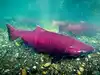
Oregon restored 150 acres of river habitat after roads and development damaged salmon breeding grounds; by 2023, Chinook salmon had made 65 nests at Finn Rock
Chinook salmon in Oregon's McKenzie River have started creating redds after habitat restoration. A project restored nearly 150 acres of floodplain that had been compromised. Following the restoration, biologists observed an increase in the number of salmon redds, indicating successful reproduction. The restoration has created essential slow waters and shelter for young salmon. Continued monitoring will assess long-term benefits for the salmon population and their environment.
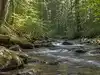
A Washington dam blocked fish from reaching part of a creek for nearly 60 years; after its removal in 2024, steelhead were spotted again in the restored waterway
Pete Barber led a project that removed Kwoneesum Dam, restoring essential fish habitats along Wildboy Creek. This effort, which took seven years, reconnected fish to upstream spawning areas and improved water temperatures. In June 2025, adult steelhead and spawning nests were discovered in the restored area, indicating successful habitat restoration. Approximately 37,550 native trees and shrubs were planted along riverbanks to provide shade and cooling.
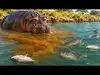
How did hippo dung turn an African river into a death trap for fish? Scientists explain
Hippo dung usually provides nutrients that help support life in African rivers. But scientists found that the situation changes when rivers begin drying up. A 2018 study in Tanzania found that dung accumulating in isolated pools was reducing oxygen levels and making survival difficult for fish.
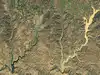
New Mexico’s Navajo Reservoir had low water levels amid Southwest drought in September 2026; just 48 days later, NASA’s Landsat 9 captured its dramatic transformation as water levels rose nearly 60 feet
Navajo Reservoir water levels: After months of dry conditions, heavy rainfall across the US Southwest sent water levels at New Mexico’s Navajo Reservoir soaring nearly 60 feet in 48 days. NASA’s Landsat 9 images captured the change between September 20 and November 7, as the storms brought drought relief but also triggered severe flooding across the Four Corners region.
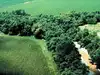
Conservationists replanted native trees in the damaged Colorado River Delta; after years of recovery, birds that depend on riverside forests began returning in greater numbers
Efforts have been made to restore habitats in the Colorado River Delta through tree planting and water delivery. Surveys conducted over two decades documented the return of several bird species to restored areas. Specific bird species, such as Abert’s Towhee and Song Sparrow, flourished in these revitalized habitats. Meanwhile, generalist bird populations did not always benefit uniformly from restoration efforts.
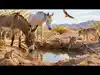
Wild donkeys and horses dug 6-foot-deep wells in the desert. Scientists found 59 species using them
Scientists studying wild donkeys and horses in the American Southwest discovered that the animals were digging wells up to six feet deep to reach underground water. Camera traps recorded 59 wildlife species visiting these wells, including deer and coyotes.
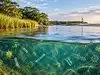
MIT scientists grew microbes from three Massachusetts waters at different salt levels for two weeks; the communities kept growing even as they lost species in the lab
Researchers at MIT embarked on a study to understand the impact of rising salinity on freshwater microbes through controlled experiments. Their findings revealed a mixed response among microorganisms; while some adapted well to saltier conditions, others were outcompeted by salt-resistant varieties. Observations were made across three different Massachusetts regions with varying salinity levels.

Govt orders tougher surveillance of packaged water, scrutiny set to cover PepsiCo, Coca-Cola
India's food regulator has issued a directive to strengthen oversight and surveillance of the packaged water industry. The decision follows reports of unsafe conditions in Bisleri, the top bottled water brand. State officials are instructed to conduct routine inspections and enforce compliance for safe drinking water. Bisleri is facing prosecution for violations of food safety laws and the scrutiny will extend to other major brands.
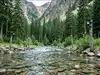
In Idaho's Pioneer Mountains, scientists installed loudspeakers near quiet streams to mimic roaring whitewater rivers; their experiment across 20 sites revealed how natural noise influences where birds and bats live
Researchers had installed loudspeakers on towers near quiet streams. They played recordings of naturally roaring whitewater rivers. The equipment was powered by solar panels and batteries. Researchers had chosen 20 sites. They made measurements over the course of two breeding seasons. At half of these, they used the existing river noises, and in the remaining sites, researchers placed speakers that projected the sounds of a whitewater rapids.
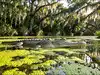
Florida’s American alligators do way more than hunt in the Everglades. Scientists studied 10 alligator ponds and discovered how these reptiles create wildlife refuges and enrich wetland soils
American alligators are involved in environmental management. They excavate ponds, re-locate sediment and transfer nutrients. This is of benefit to other species as water levels in the Everglades can drop. A study of 10 alligator ponds in the Everglades showed that alligators impact on both the nutrient cycle and the well-being of wetland environments.

FSSAI tells states to step up sampling, enforcement against packaged water firms
FSSAI has directed state authorities to enhance monitoring of packaged drinking water for quality compliance. The recent regulatory action followed concerns regarding Bisleri International's packaged drinking water quality. Authorities must conduct inspections and maintain detailed records of sample testing. FSSAI emphasizes the importance of adhering to the FSS Act to ensure food safety. Bisleri International has claimed that their product is safe and will work with regulators.

Bisleri action puts packaged water industry's quality standards under scrutiny
FSSAI has initiated prosecution against Bisleri after a non-compliant sample was found, raising industry concerns. Increased scrutiny now extends to other packaged water brands, including Coca-Cola's Kinley and PepsiCo's Aquafina. Experts suggest this regulatory action may enforce stronger quality controls and improve consumer safety across the sector. Regulatory oversight has been historically weak, allowing substandard products to enter the market.
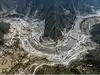
China's Rs 15,623,605,200,000 super dam project near Arunachal working at fast pace, satellite images show site cleared, river diverted in less than a year
China's $169 billion (Rs 15.62 lakh crore) Medog hydropower project near Arunachal Pradesh is advancing rapidly. Satellite images reveal villages cleared, river diversion work underway and major infrastructure emerging near the India-China border.
'You can even drink it': Delhi Environment Minister Sirsa claims 60% of Yamuna cleaned, says entire river will be clean by 2030
Delhi's Environment Minister, Manjinder Singh Sirsa, announced that 60 percent of river Yamuna has been cleaned. He emphasized the importance of treating sewage to maintain water quality and confirmed plans for complete cleaning by 2030. The Supreme Court expressed concern over increasing pollution levels despite extensive spending on cleanup efforts. Sirsa highlighted the need for public participation in tackling air pollution issues affecting the city.
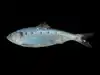
An old dam blocked fish from Plymouth's Town Brook; after the Massachusetts town began clearing barriers in 2002, annual herring runs grew past 200,000 in many years
Plymouth has successfully increased the river herring population by removing several barriers blocking their migration. The first significant removal occurred in 2002 and led to additional projects improving fish passage. Currently, over 200,000 herring migrate annually, up from just 25,000 in the past. Conservation efforts include enhancing spawning habitats and monitoring fish through a camera at Jenney Grist Mill.

India, Bangladesh stare at rough waters as a critical deadline approaches
The Ganga Water treaty is up for renewal. A failure to do so could impact both India and Bangladesh, further souring already fragile ties. If the two governments allow the December 12 deadline to pass without even an interim understanding, the consequences could flow much further than the river itself.
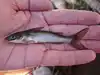
Illinois took down a large dam on the Des Plaines River in 2012; soon after, 10 fish species not recorded before appeared in the old pool, including channel catfish
The dismantling of Hofmann Dam in 2012 marked a significant ecological shift by enabling channel catfish and other species to migrate upstream. For years, this barrier hindered fish movement. After its removal, studies uncovered ten new fish species thriving in areas previously stagnant. This endeavor is part of a comprehensive plan to revitalize the Des Plaines River's ecosystem, vital for promoting biodiversity within its aquatic habitats.
Load More


