
QUBITS

Quantum could solve AI energy drain, says tech founder
Quantum computers could curb the vast energy demands of artificial intelligence data centres with their ability to run complex calculations, one of the tech's pioneers told AFP. Australian startup Diraq is conducting the first field test worldwide putting a small quantum computer based on a silicon chip in a commercial data centre in Sydney. Diraq's computer installed in Equinix's Sydney data centre has eight quantum bits, or qubits, on a silicon chip.

QClairvoyance's quantum chemistry bet: Transitioning from research to pharma partnerships
QClairvoyance Quantum Labs has performed chemically precise simulations of eight small molecules on an actual quantum computer, marking progress towards drug discovery applications.

Samsung Semiconductor, IISc set up quantum research lab
The lab, established with funding from Samsung Semiconductor India's corporate social responsibility (CSR) programme, will support research in qubit characterisation, cryogenic electronics, quantum-device reliability, single-photon sources and detectors, and the integration of advanced semiconductor materials with quantum systems.

Flipkart alumni seek Esop buyout; Local sourcing for ISM 2.0
Former Flipkart executives are seeking a full cash-out of vested Esops. This and more in today’s ETtech Top 5.

Quanfluence raises $10 million to build full-stack photonic quantum computer
The company plans to use the fresh capital to develop and launch a four-qubit quantum computer in the near term, while targeting a larger prototype with around 100 qubits by 2029, cofounder and CEO Sujoy Chakravarty told ET.

A 1,000x computing speed boost could make quantum machines more reliable by tackling one of their biggest problems; here’s how
Swedish researchers have developed a new technique for quantum operations. This method performs certain advanced operations over a thousand times faster. It significantly reduces the time needed for complex quantum calculations. This breakthrough could make quantum computers more reliable and less prone to errors. Experimental testing is now planned to confirm these theoretical findings.
- Go To Page 1

In 2025, SAXON Q demonstrated a 4-qubit quantum computer running at room temperature in Germany. 2 years later, the startup opened orders for 128-qubit and 512-qubit systems that fit inside ordinary server racks
In 2025, German startup SAXON Q demonstrated a 4-qubit quantum computer that worked at room temperature. Now, the company is moving much further. It has opened orders for 128-qubit and 512-qubit quantum computers designed to fit inside standard server racks. That matters because quantum machines have long depended on complex cooling systems. SAXON Q’s approach could make quantum computing easier to install, access and use in real-world computing environments.

QpiAI opens quantum processor manufacturing facility in Bengaluru, targets 10,000 physical qubits
Bengaluru-based quantum computing startup QpiAI has opened an 8-inch quantum foundry to scale production of quantum processors, with plans to reach 10,000 physical qubits. The facility forms part of its 70,000 sq ft R&D centre and will support the development of quantum-AI solutions.

Chennai-based Qubit founder shares journey after leaving Rs 1 crore US job to launch startup
Vivek Thiruvengadam left a Rs 1 crore US job to start Qubit Fitness in India. He returned with his family after fourteen years abroad and began with savings. The entrepreneur launched his venture in January 2021 without an office or team. His business expanded over six years, achieving financial goals and personal satisfaction. Thiruvengadam credits consistency and patience for his entrepreneurial success.

IonQ stock surges 20% after bagging big contract - here's all about it, and what investors should know
IonQ stock today surged approximately 20% following the announcement of a significant DARPA contract for the HARQ program. This initiative aims to develop networked quantum systems by integrating diverse qubit technologies, with IonQ contributing crucial quantum memory components to enhance interconnectivity and scalability for advanced applications.

C-DAC, global partners to set up quantum hub in Bengaluru
The hub will begin operations with a 25-qubit dilution refrigeration as an open-architecture system for hardware calibration and system integration. Hiring begins in September, and the facility is slated for completion by 2030, an official statement said.

Denmark aims to host world's most powerful quantum computer
The Novo Nordisk Foundation, the non-profit which controls pharmaceutical giant Novo Nordisk, and Denmark's Export and Investment Fund (EIFO), said in a statement they would invest 80 million euros ($92.93 million) in the initiative called QuNorth.

Rigetti unveils 36-Qubit quantum breakthrough — investors go wild, stock jumps 20%
Rigetti Computing unveiled a 36-qubit modular quantum computer with 99.5% fidelity, a significant leap towards achieving quantum advantage. Investors reacted positively, driving the stock up by 14.5% as the company progresses towards its goal of a 100+ qubit system by the end of 2025. Rigetti's CEO emphasizes their lead in gate speeds and real-world data delivery.

Russia unveils 50-qubit quantum computer breakthrough, marking major leap in cold ion technology: What is it and why it matters?
In a significant stride, Russia's Lebedev Physical Institute (FIAN) has successfully tested a 50-qubit quantum computer, positioning the nation among leaders in quantum research. This breakthrough, overseen by Rosatom, utilizes cold ion technology, offering a distinct path in the global quantum race. The computer's key characteristics, including coherence time and operational reliability, were explored during testing.

American quantum computing startup says it's already making millions of light-powered chips
PsiQuantum burst out of "stealth mode" in 2021 with a blockbuster funding announcement. It followed up with two more last year.

ETtech Explainer: Microsoft’s ‘new state of matter’ chips offer a quantum leap in tech
Microsoft unveiled Majorana 1, the first quantum processor built on topoconductors, offering greater stability and scalability. It aims for million-qubit processing, surpassing Google's Willow chip, potentially revolutionising cryptography, AI, and drug discovery.

You thought China was behind? Researchers develop record-breaking 504-qubit quantum computer that can challenge the best
In a recent development it has been known that China is not lagging behind anymore regarding technological aspects as it was expected initially. Latest reports are claiming that Chinese researchers have eventually developed a path breaking computer that can actually challenge every other computer in the whole world.

Microsoft, Quantinuum claim breakthrough in quantum computing
The move is the latest in a race to perfect quantum computing in which tech firms such as Microsoft, Alphabet's Google and IBM are jostling with both rivals and nation states to create machines that take advantage of quantum mechanics to promise speeds far faster than conventional silicon-based computers.

Google achieves quantum error correction milestone: Sundar Pichai
Google has achieved an experimental milestone of scaling a logical qubit, demonstrating for the first time that it's possible to reduce errors by increasing the number of qubits, its CEO Sundar Pichai has said.

Qubit by Qubit: making quantum computing accessible for the masses
Rapid innovation in chip and hardware design, coupled with subscription and as-a-service cloud offerings from companies such as IBM, HPE, Microsoft Azure and AWS, have made quantum computing infrastructure accessible.

Hackers steal $80 mn in crypto, platform begs them to return funds
Hackers have stolen cryptocurrency worth $80 million from Qubit Finance, a decentralised finance (DeFi) platform, and the company is now begging hackers to return the stolen cryptocurrency. The value of cryptocurrency stolen makes this the largest hack of 2022 to date.

IBM says quantum chip could beat standard chips in two years
IBM said that its "Eagle" computing chip has 127 so-called "qubits," which can represent information in quantum form. Classical computers work using "bits" that must be either a 1 or 0, but qubits can be both a 1 and a 0 simultaneously.

IBM says quantum chip could beat standard chips in two years
IBM said that its "Eagle" computing chip has 127 so-called "qubits," which can represent information in quantum form. Classical computers work using "bits" that must be either a 1 or 0, but qubits can be both a 1 and a 0 simultaneously.
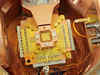
One step closer to commercialisation: Intel's big breakthrough will allow quantum computers to work at warm temperatures
Quantum computers are difficult to operate due to reliance on low temperatures.

Horse Ridge: The powerful processor that can narrow Intel's goal to achieve quantum supremacy
Intel, in collaboration with QuTech, has laid out its blueprint for its quantum-computing ready chips.

How India is contributing in development of new-age computers
Whoever develops the new-age computer, which has the ability to do an extraordinary amount of calculations simultaneously, will have the edge to dominate our information age. We have been laggards for decades but with increased funding, India is fast playing catch-up.
Meet the woman leading race to build world's first quantum computer
Sydney, May 11 (IANS) A team of Australian scientists has made great strides towards building the the world's first quantum computer, using mostly standard silicon technology. The team is led by 50-year-old Michelle Simmons, a mother of three.
Researchers unveil design of silicon quantum computer chip
Sydney, Dec 17 (IANS) In a first, a team of Australian and Dutch engineers has created a complete design for a quantum computer chip that can be manufactured using mostly standard silicon technology.

Large quantum computers closer to reality
Unlike conventional computers that store data on transistors and hard drives, quantum computers encode data in the quantum states of microscopic objects called qubits.
Load More

