
PETROLEUM PLANNING AND ANALYSIS CELL

US government, Google join Zuckerberg-backed Biohub in $1.8 billion push for AI biology data
The US government and tech heavyweights Meta Platforms and Google parent Alphabet are joining nonprofit Biohub to build open datasets to train AI models for biological reasearch, bringing total investment in the effort to $1.8 billion, Biohub said on Wednesday.

NCLT approved 107 resolution plans worth Rs 11,000 crore in Q2
The National Company Law Tribunal has set a new benchmark by approving 107 Resolution Plans in the second quarter of FY 2026–27, a remarkable rise from 60 approved plans in the corresponding quarter of the previous year. Over the first half of the financial year, a total of 185 plans were sanctioned. To date, the Tribunal has approved 1,735 Resolution Plans since its beginning until the end of September 2026.

RBI Policy: Complex oil math explains rise in FY27 inflation estimates
The Reserve Bank of India revised its crude oil price projections for the fiscal year 2026-27. This adjustment has led to increased inflation forecasts, now projected at 5.2% for FY27. The bank notes ongoing supply pressures and volatility in international oil prices contributing to these changes. India's merchandise trade deficit has also widened due to rising imports, especially in crude oil.

Nobel Prize 2026 winners list: Check all laureates, categories and what they won
The 2026 Nobel Prize in Physiology or Medicine has been awarded to three scientists for their groundbreaking discoveries. Karl Deisseroth, Peter Hegemann, and Georg Nagel contributed significantly to the field of optogenetics and light-gated ion channels. Their work allows researchers to control nerve-cell activity with precision using light technology. The Nobel Prize announcement signifies their impactful role in advancing neuroscience studies.

Cabinet approves new authority to integrate India’s transport, logistics planning
The Union Cabinet has approved setting up the Integrated Transport & Logistics Authority (ITLA), an SPV to coordinate transport and logistics planning, project appraisal, monitoring and data analytics. ITLA will prepare a long-term National Transport Master Plan, assess projects costing Rs500 crore or more, and promote multimodal infrastructure development.

SIPs in the red: Should you stop, stay invested or invest more?
Systematic Investment Plans are designed to mitigate market volatility, but prolonged weak equity markets affect their effectiveness. Investors should not stop their SIPs even if returns are negative, as it allows for purchasing more units. Assessing the performance of mutual funds is essential during periods of weak returns. SIPs can also be used for various mutual fund categories beyond equities.
- Go To Page 1

SAP to acquire workforce data firm TechWolf
SAP has confirmed its plans to acquire TechWolf, a company renowned for its expertise in workforce data analysis. This strategic move is intended to bolster SAP's comprehension of customer workforce skills and needs in the evolving landscape of AI. Although TechWolf will retain its autonomy and continue to serve its current non-SAP clients, SAP aims to finalize this transaction by the fourth quarter, subject to regulatory approval.

The sheer energy India brings with it
India has provided power connections to over 300 million people since 2015 and improved gas supply accessibility. The country has installed 160 GW of solar panels, achieving its renewable targets ahead of schedule. India is also pursuing a tenfold increase in its nuclear energy capacity by 2047. Additionally, India has strengthened its petroleum refining capacity to enhance fuel supply security.

SAP to acquire workforce data firm TechWolf
The deal gives SAP a view of its customers' workforces that its own HR software lacks, at a time when companies reorganise around AI and need to know which skills they have and which they are losing.
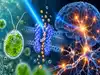
How a single-celled alga helped scientists control brain cells with light — the discovery behind the 2026 Nobel Prize in Medicine
2026 Nobel Prize in Medicine: Peter Hegemann and Georg Nagel discovered channelrhodopsin, a light-sensitive protein in single-celled algae. Blue light opens the protein channel, letting ions flow inside to create an electrical signal. Inserting this gene into neurons allowed Karl Deisseroth and the team to switch brain cells on with light. Their work in optogenetics earned them the 2026 Nobel Prize in Physiology or Medicine.

Naval staffer among two arrested for spying for Pakistan: Andhra Police
Andhra Pradesh Police arrested two individuals as part of an espionage investigation involving contacts with Pakistani operatives. The arrests included a naval employee and a civilian engaged for naval officers. The Counter Intelligence Cell coordinated with police from ten states to track the suspects. Authorities reported that sensitive information was shared regarding defence establishments in India. Further investigation continues to reveal the extent of the conspiracy and other suspects involved.

IZI Enterprise secures DRDO order for VANA
IZI, a drone company based in Bhopal, has secured an order from DRDO's PXE. The order is for the supply and deployment of IZI VANA Surveillance Drones. These drones will assist in aerial photogrammetry, surveillance, and data collection.

This brain gene can move through human DNA — and scientists found it inside a virus
Researchers at Cornell University identified the BC200 gene, which originated from a transposon in human DNA. This gene displays unusual mobility, retaining its ability to move within the genome while functioning in brain cells. The presence of BC200 in molluscum contagiosum virus raises questions about its evolutionary history and potential roles in human health.
The Nobel-winning breakthrough that turned light into a remote control for the brain, allowing scientists to switch neurons on and off
Optogenetics, a groundbreaking technique, enables researchers to control specific neurons using light, providing insights into brain functions. The 2026 Nobel Prize in Physiology or Medicine was awarded to Karl Deisseroth, Peter Hegemann, and Georg Nagel for this transformative discovery. Their work originated from the study of light-sensitive proteins in green algae, which led to applying these proteins in neuroscience.
Who is Nobel winner Karl Deisseroth? And all about optogenetics that could restore sight in visually impaired people
The 2026 Nobel Prize in Physiology or Medicine has been awarded to Karl Deisseroth, Peter Hegemann, and Georg Nagel for their groundbreaking contributions to neuroscience and optogenetics. This innovative technique enables researchers to manipulate nerve cells with light, offering profound insights into brain functionality. Their work has opened doors to understanding neurological and psychiatric conditions, showcasing the significance of their research in advancing future medical science.
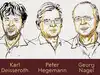
Nobel Prize 2026 in Physiology or Medicine awarded to Karl Deisseroth, Peter Hegemann and Georg Nagel
Karl Deisseroth, Peter Hegemann, and Georg Nagel were awarded the 2026 Nobel Prize in Physiology or Medicine. They were recognized for their discoveries in light-gated ion channels and the development of optogenetics. These discoveries allow researchers to control nerve cell activity with light, which is a significant advancement in neuroscience. The Nobel committee noted the impact of optogenetics in revealing brain functions.
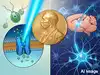
Nobel Prize Medicine 2026: Scientists found a 'light switch' inside algae & turned it into a tool to control brain cells; what this discovery means
Nobel Prize Medicine 2026: The 2026 Nobel Prize in Physiology or Medicine has been awarded to Karl Deisseroth, Peter Hegemann and Georg Nagel for their discoveries involving light-gated ion channels and optogenetics. Their work showed how light-sensitive proteins can be used to control nerve-cell activity, opening new ways to study the brain and its neural circuits.
Nobel 2026: Ozempic, Mounjaro research tipped for medicine prize
The 2026 Nobel season is set to reveal the winners of various prestigious awards, starting with medicine. The medicine prize is anticipated to acknowledge research on appetite-regulating hormones related to weight-loss drugs. Alongside this, other fields such as skin regeneration and immunology are also potential candidates for recognition. The peace prize is expected to generate significant interest due to last year's controversial winner.

Deep-sea gas becomes costlier as government raises price ceiling
The government has raised the ceiling price for gas from difficult fields such as Reliance-BP’s KG-D6 block to $9.89 per MMBtu for October 2026-March 2027, from $8.90 earlier. Meanwhile, APM gas from ONGC and Oil India’s legacy fields remains effectively capped at $7 per MMBtu, with new-well gas eligible for a 10% premium up to $7.70.

Fuel, finance shocks already hitting global economy; India better placed but not insulated: Neelkanth Mishra
Higher fuel costs and tighter financial conditions are significantly affecting global demand and capital costs. India is comparatively better positioned than many developed markets, yet it remains vulnerable due to imported energy. The high dependence on crude oil and foreign capital poses risks for India's growth amid global economic pressures. Global bond yields have risen, increasing pressures on mortgage rates and investment costs domestically.

Govt proposes tougher penalties for petroleum offences, decriminalises licence breaches
The Indian government has proposed amendments to the Petroleum Act, aimed at decriminalizing regulatory breaches. Violations of petroleum licence terms may incur civil penalties instead of criminal charges, promoting a more administrative approach. However, serious offences related to public safety will still face criminal prosecution under existing laws. The draft amendments outline significant penalties for various violations, including severe fines and imprisonment.

Alaska spent $46.9 million to lower electric bills in 186 communities in FY2025, covering 148.5 million kWh, where rural power costs can be far higher
In fiscal year 2025, Alaska committed around $46.9 million to assist 186 remote communities with rising electricity expenses. By targeting the high costs associated with diesel-generated power, the initiative aims to lessen financial burdens on approximately 80,000 residents benefiting from the Power Cost Equalization Program. While this support is crucial, there remain significant challenges around transitioning to renewable energy sources, underscoring equity issues in rural energy access.

Charles Kelley diagnosed with rare blood cancer: Lady A singer plans to perform during treatment; What is Multiple Myeloma?
In a recent announcement, Charles Kelley from Lady A disclosed his battle with multiple myeloma, which was uncovered after suffering from unexplained rib fractures. He maintains a hopeful outlook regarding his treatment and has plans to keep performing. As Kelley gears up for a new Lady A album, he has also scheduled his first performances for December, emphasising the importance of family, music, and staying engaged through this challenging period.

Crude surged. Why didn’t India’s petrol prices?
As the West Asia conflict drove up oil costs, India kept a much larger rise from reaching the pump. This explainer dives into how protection came from diversified supplies, a tax cut, losses absorbed by fuel retailers and an ethanol programme built before the crisis.

Why bringing back the woolly mammoth isn’t a simple cloning job — scientists are solving a massive genetic engineering puzzle
Colossal Biosciences is working to introduce woolly mammoth traits into Asian elephants through genetic modifications. Researchers are using ancient DNA fragments to identify relevant genetic changes linked to cold survival characteristics. Artificial intelligence is employed to analyze large genetic data sets and streamline the identification of significant mutations. The timeline for creating a mammoth-like calf has shifted to the early 2030s due to increasing complexity.
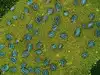
In 2019, over 1,000 volunteers searched for viruses inside infected cells; in 2 months, they made 90,000 classifications
Scientists engaged over 1,000 volunteers through an online project to help analyze viruses in cells. Participants clicked on images to identify virus locations, generating over 90,000 classifications. This collaborative effort advanced understanding of virus maturation and their interactions with host cells. The collected data also contributed to creating deep-learning algorithms for future research. Such citizen science initiatives highlight the power of collective contributions in scientific studies.

TakeMe2Space to launch orbital computing satellite on SpaceX rocket
Indian space startup TakeMe2Space plans to launch what it describes as the country's first orbital computing satellite aboard a SpaceX rocket on October 1, seeking to process data in orbit rather than transmit raw information back to Earth.
The most uncertain sector also pays the most to wait. Watchlist for patient investors: 5 stocks with upside potential of up to 25%
There are some interesting contrarian bets in the market. But going contrarian, or buying what everyone else is running away from, is not to be done casually. Done wrong, it is just recklessness. It becomes a sensible move only when there is a solid, logical reason behind it. So, the real question is not whether some companies are beaten down. The question is whether there is a good reason to buy them anyway.
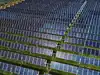
Websol Energy secures 54-acre land in West Bengal for 4GW solar manufacturing plant
Websol Energy System has secured 54 acres in West Bengal’s Falta Industrial Park to set up a new solar manufacturing facility.
Load More

