
OXFORD MUSEUM
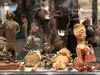
Taken from India, 39 Naga ancestors return after 100 years: Oxford museum transfers skulls taken by British officials during colonial rule
Oxford's Pitt Rivers Museum has formally handed over the remains of 39 Naga ancestors, mostly skulls collected during British colonial rule between the 1910s and 1940s. A Nagaland delegation received them after a reconciliation process that began in 2020. The remains will be brought to India and laid to rest at a shared memorial.
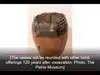
A battered Egyptian pot sat in a Cornwall garage after a 1950s taxi fare; decades later, its tiny label helped reconstruct a lost 19th-century excavation
A family in Cornwall discovered a pot associated with an excavation led by Flinders Petrie in ancient Egypt. The pot was originally given to Funnell’s grandfather by a taxi passenger unable to pay their fare. Upon inspection, a cardboard label revealed its origin as Libyan pottery from 3,000 BC. This label may help researchers trace the distribution of more Egyptian artifacts worldwide.
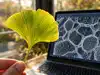
In 2017–18, 2,500 volunteers counted tiny pores on ginkgo leaves to study the ancient atmosphere; 24,000 classifications helped process the images
Ginkgo trees, which have existed for millions of years, provide valuable information on historical carbon dioxide levels. Researchers employ citizen volunteers to count leaf pores, enhancing the study's efficiency. Initial test phases revealed varying accuracy levels among volunteers but still yielded useful data. Methods to correct classifications have improved the reliability of the results significantly. This collaborative effort fosters public engagement with climate science and enhances research productivity.
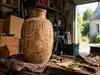
An ancient Egyptian pot sat unnoticed in a Cornwall garage for years; when researchers examined it, its label helped solve a century-old archaeological mystery
An ancient Egyptian pot discovered in a Cornwall garage has helped researchers connect a forgotten family possession with the archaeological work of Flinders Petrie. Guy Funnell and Amanda Hawkins found the battered black and red vessel while clearing family belongings and contacted Alice Stevenson, curator of the Petrie Museum. Its surviving cardboard label identified it as “Libyan Pottery” from 3,000 B.C. and carried a number that linked it to Petrie’s excavation records. Researchers later established that the pottery was Egyptian and pre-Dynastic, making it 600 years older than Petrie originally believed.

Machinist Edwin Budding patented a lawnmower in 1830; rotating blades used to finish woolen cloth gave him the mechanism for cutting grass evenly
In 1830, Edwin Budding revolutionized lawn care by inventing the lawn mower, a clever adaptation of a machine designed for trimming cloth. This groundbreaking tool rapidly gained popularity, transforming not only home gardens but also sports fields. Today, while modern mowers remain rooted in Budding's original design, there is a growing awareness of their environmental impact, leading to initiatives like 'No Mow May' that advocate for biodiversity in urban areas.

In 1843, a 27-year-old woman wrote first-ever computer program. Mentored by Charles Babbage, her work still inspires modern technology nearly 200 years later
Ada Lovelace, a visionary ahead of her time, imagined programmable machines long before electronic computers came into being. In 1843, she published the first-ever set of instructions for Charles Babbage's Analytical Engine. Lovelace’s genius lay in her belief that computers could manage not only numbers but also symbols and music, a legacy that continues to shape modern computing principles.
- Go To Page 1
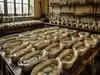
In 1940, scientists had no fermentation tanks, so penicillin was grown in hundreds of ceramic vessels modeled on hospital bedpans; the improvised system helped turn Fleming’s discovery into a mass-produced medicine
In 1940, scientists working to develop penicillin faced a major obstacle: they had discovered a potentially lifesaving medicine but lacked the industrial equipment needed to produce it in large quantities. Instead of modern fermentation tanks, the Oxford team relied on improvised containers, including hospital bedpans and specially designed ceramic vessels. Norman Heatley helped develop stackable vessels that allowed penicillin-producing mould to grow across shallow surfaces, while technical assistants carried out much of the demanding work by hand.
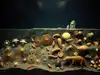
A 2026 study is challenging researchers established thought on origin of humankind traces back to 539 million years ago. Here's how
Nearly all of the animal life on Earth now have similar features on left and right sides, as well as a head and an anus. Before the fossils discovered in China, scientists saw traces of this symmetric body type in fossil tracks, but not the critters themselves.

Japan closed a century-old prison in 2017; its cellblocks have now become a luxury hotel where guests pay to sleep behind the original walls
HOSHINOYA Nara Prison, previously the Nara Juvenile Prison in Japan, has transformed into a luxury hotel that embraces and preserves its historical significance. Guests reside in tastefully converted prison cells, while an adjacent museum offers insights into the site's complex past. This innovative project combines accommodation with education, inviting visitors to explore the architectural heritage and narratives that shaped its legacy.

A 4-year-old’s “toy treasure hunt” ended with the discovery of a real medieval gold pendant
A young boy named James Hyatt made a remarkable discovery in 2009. While metal detecting with his father in Hockley, Essex, he unearthed a golden object. This find was later identified as a medieval reliquary pendant, dating between 1500 and 1550 AD. The artifact has now joined the British Museum's esteemed collection, captivating historians and the public alike.

How we came to be: Scientists get first look at the evolution of early complex animals
New fossils discovered in China’s Yunnan province show that complex animal life began millions of years earlier than previously thought, during the late Ediacaran period around 539 million years ago.

Stolen Indian idols abroad: Why global rules on sacred antiquities must change
With great pride, the Ashmolean Museum has repatriated a 16th-century bronze idol back to its homeland, India. This significant gesture shines a spotlight on countless other Indian idols residing in foreign institutions, raising awareness around the pressing issue of cultural heritage rights.

UK's Ashmolean museum sends back sacred idol to Tamil Nadu temple
The Ashmolean Museum in London has returned a 16th century bronze idol to India. This sacred icon belongs to a temple in Tamil Nadu. The museum acquired the idol in 1967. An independent researcher alerted the museum to its origins in 2019. This marks a significant moment for the museum. The idol was believed to be stolen.

Stunning Jurassic highway: Hundreds of dinosaur footprints unearthed in Oxfordshire quarry
Researchers have discovered hundreds of dinosaur footprints in an Oxfordshire quarry. The prints include tracks from the predator Megalosaurus and herbivores like Cetiosaurus. The discovery was prompted by a quarry worker and involved over 100 researchers. Around 200 footprints reveal much about dinosaur life 166 million years ago.

Five Indians selected as Rhodes Scholars for studying at Oxford University in 2025
Five Indians from diverse academic backgrounds, including law, philosophy, and astrophysics, have been awarded the prestigious Rhodes Scholarship for 2025. They will commence their fully funded postgraduate studies at the University of Oxford in October 2025, joining a global cohort of scholars.

World’s top 10 universities 2025
Oxford has retained its position as the top university for the ninth consecutive year, attributed to significant enhancements in industry collaboration and teaching quality, according to the latest Times Higher Education report. MIT has moved up to second place, surpassing Stanford, which has dropped to sixth. Meanwhile, Australia’s top universities have declined in rankings due to reduced reputation and international outlook.

Oxford University to return 500-yr-old bronze statue of a Tamil saint to India
The 60 cm-tall statue of Saint Tirumankai Alvar was acquired by the Ashmolean Museum at the University of Oxford from Sotheby's auction house in 1967 from the collection of a collector named Dr J R Belmont (1886-1981).

Oxford University to return stolen 500-year-old bronze idol to India
Oxford University has agreed to return a 500-year-old bronze idol of Saint Tirumankai Alvar, believed to be stolen from a Tamil Nadu temple, to India. The statue, acquired in 1967 from Sotheby's auction house, was alerted to its origins by an independent researcher in November last year. The Indian government made a formal request for the statue, which was found in the UK museum's possession.

Real-life Indiana Jones passes away at 94
Schuyler Jones, a globe-trotting American anthropologist and adventurer whose exploits drew comparisons to iconic movie character Indiana Jones, has died.

UK police charges four men for stealing golden toilet worth £4.8 million Blenheim Palace
In September 2019, the 18-carat toilet was stolen from Blenheim Palace in Oxfordshire. The four individuals involved in the incident have been named as James Sheen, Michael Jones, Fred Doe, and Bora Guccuk. Thames Valley Police have confirmed that the accused, whose ages range from 35 to 39, have been charged with burglary, conspiracy to transfer criminal property, and transferring criminal property.

Vogue's editor-in-chief Anna Wintour felicitated by King Charles
Wintour, who has been editor of Vogue U.S. since 1988, is one of the most powerful people in the fashion world and a philanthropist who has raised more than $300 million for the U.S. Metropolitan Museum of Art's Costume Institute.

Thieves take advantage of coronavirus pandemic to steal a Van Gogh painting
Van Gogh's 'The Parsonage Garden at Nuenen in Spring 1884' was stolen in a raid on a Dutch museum.

Thieves use coronavirus shutdown to steal Van Gogh painting
Thieves broke into the Singer Laren museum (a small museum east of Amsterdam) in the middle of the night (around 3:15 am), smashed a glass door at the entrance and made off with the painting before the police arrived.

India requests UK museum at Oxford for ancient idol stolen from Tamil Nadu temple
The statue of Saint Tirumankai Alvar was acquired by the Ashmolean Museum at the University of Oxford from Sotheby''s auction house in 1967 from the collection of a collector named J R Belmont (1886-1981).
Egyptian mummification 'recipe' existed 1,500 years before Pharaohs: Study
London, Aug 16 (IANS) Sophisticated embalming treatments were developed by ancient Egyptians 1,500 years before the classic Pharaonic period, and across a wider geographical area than had been previously known, a new research has showed.

Another multimillion-dollar da Vinci is hiding in plain sight
Scholars believe one of the paintings was commissioned by Florimond Robertet, a top administrator in the court of King Louis XII of France, before da Vinci left Milan in 1499.
Christie's London to present a sale of renowned Benson Collection of Early Spoons
Christie's London is presenting a sale of the renowned Benson Collection of Early Spoons on the 4 June 2013.
Oxford celebrates 400 years of links with India
The University of Oxford, for the first time, will celebrate an 'Oxford-India Day' tomorrow by bringing together scholars and select group of Indian business, academic and policy leaders.
Load More

