NUCLEAR TEST
AI kids need adult eyes in the lab
Satya Nadella and Sam Altman call for a crucial reassessment of AI safety frameworks. Advanced artificial intelligence presents significant existential threats that necessitate immediate global governance. Investors are encouraged to proceed with caution, while tech creators are urged to voluntarily practice restraint for public safety. Thoughtful development of AI could facilitate societal adaptation to its transformative potential over time.
'Universal, non-discriminatory and verifiable': India calls for legally binding framework for nuclear disarmament at UN
India called for a universal and verifiable framework for nuclear disarmament at the UN General Assembly. The country emphasized that nuclear weapon decisions should remain under human control amid AI advancements. India reiterated its commitment to a no first use policy and a voluntary moratorium on nuclear testing. Legal assurances against nuclear attacks for non-nuclear states were also advocated by India's representatives.

Russian crude deliveries to India crossed $43 billion in 2025 and rose 25% in the first half of 2026
Russia is strengthening its role as a key energy partner for India, supplying about half of its oil imports, with crude purchases exceeding $43 billion in 2025. A senior Russian diplomat said deliveries rose 25% in the first half of 2026, while both countries are exploring investments across oil, gas and nuclear energy.

French supercomputer maker Bull doubles output to boost Europe's AI ambitions
Bull, the French supercomputer manufacturer, has expanded its factory to double production capacity to meet growing orders. The European Union is investing heavily in supercomputing, committing €7 billion to improve capabilities. France's order for a supercomputer is significant, as Bull aims to deliver systems more efficiently.
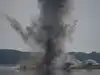
US says it conducted experiment aimed at improving ability to detect nuclear blast
On September 30, the US National Nuclear Security Administration conducted a chemical high-explosive experiment in Nevada. The experiment aimed to improve the ability to detect low-yield nuclear explosions effectively. US officials accused China of conducting a secret nuclear test in June 2020, which China denied. Data from the recent experiment will help refine detection algorithms critical for US nuclear monitoring.
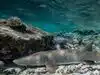
79 years ago, 23 US nuclear tests devastated Bikini Atoll; 70 years later, Stanford University reserachers found giant corals, sharks and tuna thriving in its crater
In 1946, the US began nuclear testing at Bikini Atoll, conducting 23 explosions that displaced all the inhabitants and destabilised the coral reef. But 70 years later, scientists discovered thriving marine life, including giant corals, tuna, sharks, crabs and reef fish. More recent expeditions found giant clams, sea turtles, groupers and parrotfish flourishing.
- Go To Page 1
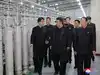
North Korea rejects call to halt nuclear tests
North Korea's foreign ministry has dismissed calls from an international group to stop nuclear tests. The meeting urged North Korea to comply with UN Security Council resolutions regarding denuclearization. North Korea's foreign minister emphasized the country's irreversible nuclear weapons status. Tensions continue to rise following discussions among the United States, South Korea, and Japan on denuclearization. North Korea perceives these statements as provocations from hostile external forces against its state.
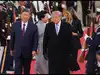
Trump to raise detainees issue with Xi, but other rights issues may not come up
US President Trump intends to raise the issue of two detained US citizens with Chinese leader Xi Jinping. Advocates express concern that broader human rights issues may not be addressed during the meeting. China has warned that discussing human rights and democracy is a sensitive topic that could jeopardize relations. Democratic lawmakers are urging Trump to prioritize human rights in foreign policy discussions with China.
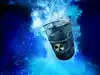
UK, France and other European countries dumped 200,000 radioactive waste barrels in the Atlantic from 1946 to 1993. What happens now?
From 1946 to 1993, several European nations including the United Kingdom, France, Belgium, the Netherlands, Sweden, Switzerland, and Germany, regularly dumped radioactive waste in the North Atlantic, eventually totaling 200,000 barrels. Now, a months-long analysis is underway to determine the extent of the pollution’s impact and scientists are investigating the potential radioactive threat.
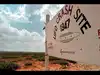
A sheep rancher from New Mexico found strange debris scattered across the desert near Roswell in 1947. Newspapers declared a ‘flying saucer’ had been captured, and 47 years later, investigators linked it to a secret Cold War program
1947 Roswell UFO incident: In 1947, a rancher stumbled upon strange debris, initially hailed as a flying saucer. However, the military later clarified it was merely a weather balloon and radar reflector. In 1978, the tale gained momentum, fueled by reports of alien corpses and alleged cover-ups. Investigations ultimately traced the debris back to the secretive Project Mogul balloon, yet the enigma of the Roswell incident continues to captivate imaginations.

In 1962, the US detonated a 1.4-megaton nuclear bomb in space that knocked out streetlights and triggered burglar alarms in Hawaii. 64 years later, it says weapons are already in orbit
The United States has acknowledged its possession of orbital space-control weapons, a declaration echoing a 1962 nuclear test that generated artificial radiation belts. Current space warfare strategies emphasize counter-space capabilities rather than relying on explosive power. Countries like China and Russia are also advancing their own space technologies, highlighting the growing perception of orbit as a potential arena for future military conflicts.
India has 190 nuclear warheads with potential to produce up to 225: Report
India is estimated to have assembled around 190 nuclear warheads, including more than 160 for operational launchers and additional warheads for newer systems under production, according to the Federation of American Scientists. A separate Bulletin of the Atomic Scientists assessment highlights India’s production of highly enriched uranium and weapons-grade plutonium and says new fast breeder reactors could potentially increase the material available for its nuclear stockpile.
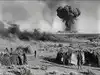
In 1953, Britain detonated an atomic bomb in Australia, sending a mysterious black mist across the desert before a secret programme began testing children’s bones for radiation
During the Cold War, Britain undertook covert nuclear tests in Australia, leading to hazardous radioactive fallout termed the Black Mist that endangered Aboriginal communities. Authorities, without consent, gathered human bones to assess strontium-90 levels, specifically focusing on infants and children for bone growth studies. The ramifications of these nuclear tests have lingered far beyond their completion.

In the 1950s, U.S. nuclear tests were conducted at Bikini and Enewetak; decades later, Guam corals preserved carbon-14 spikes linked to tests in 1954, 1956, and 1958
Guam’s coral reefs act as natural historians, chronicling chemical footprints of Cold War-era nuclear tests. Distinct radiocarbon spikes from the years 1954, 1956, and 1958 reveal the pathways of nuclear fallout as it spread through the tropical Pacific. This invaluable information extracted from coral cores charts a sixty-year timeline of the ocean’s chemical changes, enabling scientists to accurately date marine species currently inhabiting these waters.
A US satellite detected a mysterious flash in 1979; the CIA said it was probably a nuclear test, but nearly 50 years later, the mystery remains unsolved
A US satellite observed dual flashes in the South Atlantic back in 1979, leading intelligence officials to speculate a nuclear test with notable certainty. Contrary to this theory, a White House committee suggested a meteoroid strike as a more plausible explanation. Yet, revived inquiries over the years indicated potential nuclear activity close to the Prince Edward Islands, marking the incident as a captivating and unresolved tale in nuclear monitoring history.

US reveals new details of alleged Chinese nuclear test
A senior U.S. official said new data suggests China may have conducted an underground nuclear test in June 2020 at the Lop Nor site, based on a seismic event recorded in Kazakhstan that he described as consistent with an explosion and not mining activity or an earthquake.
Russia's Lavrov says work under way on Putin's order on possible Russian nuclear test
Russia is working on proposals for a potential nuclear test. This follows an order from President Vladimir Putin. Russian Foreign Minister Sergei Lavrov confirmed the work is underway. The move comes after the US announced it would resume testing. Russia has not received clarification from the US. Relations between Russia and the US have worsened recently.
Putin signals Russia could resume nuclear tests for first time in 35 years after Trump’s surprise directive to end US moratorium
Russian President Vladimir Putin has ordered officials to explore resuming nuclear tests, a move that follows a similar directive from US President Trump. While Russia is "investigating" the necessity of preparations, it remains committed to the overall ban on nuclear tests. This development escalates tensions amid ongoing global efforts to uphold the Comprehensive Nuclear-Test-Ban Treaty.
China denies Trump's claim of secret nuclear tests, urges US to contribute to global stability
China has rejected claims by US President Donald Trump regarding secret nuclear weapons tests. Beijing stated it follows a self-defensive nuclear strategy and upholds its commitment to suspend nuclear testing. China also urged the United States to maintain its own moratorium on nuclear testing. This comes as Trump suggested the US should resume its nuclear testing program.

Trump declines to rule out underground nuclear tests
President Trump announced the U.S. will resume nuclear testing, though specifics on underground tests remain unclear. This move, aimed at rival nuclear powers China and Russia, follows a 33-year halt. Defense Secretary Pete Hegseth called it a "responsible way" to maintain deterrence, while a Nevada representative introduced legislation to prohibit explosive tests.

Donald Trump call for nuclear tests to trigger World War 3? Experts predict shocking consequences
United States already tests its weapons. In September, the United States carried out tests of its nuclear-capable Trident missiles.

Russia warns the United States on possible nuclear testing under Donald Trump
Moscow signals potential responses on nuclear testing as it faces a challenging international climate and what it calls an extremely hostile American policy under Trump's administration. Following discussions of a U.S. nuclear test under Trump's first term and Putin's stance mirroring the U.S., Russia considers all actions for ensuring security.
Vladimir Putin revokes Russia's ratification of nuclear test ban treaty
Russian President Vladimir Putin signs law revoking Russia's ratification of Comprehensive Nuclear Test Ban Treaty, aligning with the US. The move doesn't change Russia's nuclear stance. Concerns of a possible test amid Ukraine conflict persist.
Russia will only resume nuclear tests if the US does it first, a top Russian diplomat says
Russia has announced its intention to revoke the ratification of the global nuclear test ban treaty, following the US decision to do so. However, Russia clarified that it will only resume nuclear tests if the US conducts one first. The Comprehensive Nuclear Test Ban Treaty, which bans all nuclear explosions worldwide, was signed by both Russia and the US but has never been fully enforced. Concerns have been raised that Russia may resume nuclear tests to deter Western military support for Ukraine.
International Day Against Nuclear Tests: Date, UN resolution, why is it observed-every thing you should know
UN passed a resolution on December 2, 2009, to observe International Day Against Nuclear Tests on August 29. Why this date was chosen and which country moved the resolution? What is the significance of this day?
International Day against Nuclear Tests: What is its significance?
At the 64th session of the United Nations General Assembly on December 2, 2009, the unanimous adoption of resolution 64/35 declared August 29 as the International Day Against Nuclear Tests.
Load More