
NASA SPACE EXPERIMENTS
Prada's new Milan exhibition turns a century of fashion into fresh discoveries
Prada’s Milan exhibition, Pradasphere, is turning its century-old fashion legacy into a business opportunity, with the brand expecting it to generate an additional 100 million euros in annual revenue.
Help NASA build a home on the Moon and get $1 million prize: Check competition rules, key dates, how and where to apply
NASA has announced a $1 million Moon Base Student Challenge, inviting eligible high school and college students in the US to develop innovative solutions for building a permanent human settlement near the Moon's South Pole. The competition will focus on six areas, including power generation, construction, life-support systems and astronaut safety.
NASA is hiring astronauts for future Moon missions: Who can apply, what tests must you pass and how to get selected?
NASA is recruiting its next class of astronauts, with selected candidates potentially preparing for future Moon missions and living at a lunar base. The agency is accepting applications from qualified US citizens, including candidates with master's-level nursing degrees. Here's a look at the eligibility criteria, experience requirements, $164,395 starting salary and application deadline.
NASA job applications: $164,395 salary for astronaut posts as selected candidates can live on Moon and Mars; check direct link, eligibility and deadline
NASA astronaut applications: NASA has opened applications for its next astronaut class, with selected candidates potentially getting the opportunity to live and work on a future Moon base and participate in missions to Mars. Here's a look at the $164,395 annual salary, eligibility criteria, application requirements and December 3 deadline.

Tesla stocks tumble after Democrats win Congress; Musk's $500 million Republican backing leads to new stress test for Elon’s empire
Elon Musk's substantial political contributions to Republican candidates now face challenges after Democrats gained control of Congress. His significant investments in Texas could complicate relationships due to the recent political shift. Both Tesla and SpaceX might experience increased scrutiny regarding their government contracts and regulatory approvals. Investors are concerned about the potential implications for Musk's businesses amidst changing political dynamics.
Is Sabrina Pasterski the next Einstein? Meet the physicist who built her own aircraft at 12 and is exploring Einstein’s biggest unanswered questions about gravity
Sabrina Pasterski's journey from building an aircraft as a teenager to studying Einstein's biggest unanswered questions has drawn attention to her work in physics. The MIT graduate now researches quantum gravity, black holes and space-time at Canada's Perimeter Institute. She also leads an $8 million research initiative exploring how gravity and quantum mechanics could fit together.
- Go To Page 1
Crew from NASA's simulated Mars mission emerges after 378 days in isolation
Four crew members completed a 378-day isolation mission to simulate conditions for a future Mars expedition. They grew crops and engaged in tasks while experiencing simulated communications delays. This experience is aimed at preparing astronauts for long-duration missions beyond Earth. NASA will analyze the insights gained from this mission for upcoming lunar and Mars missions. The mission was conducted at the Johnson Space Center in Houston.

Pixxel sets up US subsidiary to serve federal agencies
Pixxel in September raised $100 million (around Rs 945 crore) in the largest funding round in India’s spacetech sector, co-led by Singapore sovereign wealth fund Temasek and UK-based space investor Seraphim, ET reported.
Scientists caught a tiny piece of space dust outside the ISS. What they found was unusual
A tiny particle caught outside the International Space Station and brought back to Earth in 2005 turned out to have an unusual minerals mix. The particle, named Hoshi, was studied in a 2011 paper that looked at its texture, its minerals and its oxygen isotopes. The work gave researchers another way to study primitive material from the early Solar System.
NASA sent two wooden capsules to the Moon in 1962, but they missed and may still be orbiting the Sun today
NASA’s Ranger 3 and Ranger 5 carried seismometer capsules inside 65-centimetre balsa-wood spheres meant to survive a Moon impact. Both missed the Moon in 1962 and entered solar orbit. The missions reveal an unusual piece of early space race engineering, and show how failed spacecraft can still return useful scientific data.
NASA adopting Apollo's urgency to build a moon base and land astronauts within two years
NASA plans to return astronauts to the moon with the Artemis III mission set for next summer. Following that, Artemis IV aims to accomplish a historic moon landing by 2028, marking the first since the Apollo missions. Administrator Jared Isaacman emphasized the importance of efficiency and a fast-paced approach similar to Apollo's playbook. Docking exercises with SpaceX and Blue Origin's landers will occur before the moon base establishment.
NASA's 12-foot-wide satellite lost its radio signal in space; scientists still got the data they needed
A sphere launched by NASA in 1961 named Explorer 9 was made to measure how dense the air is above the Earth. Its radio beacon did not work, but scientists tracked the sphere through visual contact and got the desired data. This helped researchers understand how thin air affects satellites in orbit.

A NASA engineer wanted an extra $200 a month to treat her daughter. Now her voiceover side hustle has earned $227,000 in 2026 so far
Eryn Andrews wanted to earn an extra $200 a month but turned a small voiceover side hustle into a business that has generated more than $227,000 in 2026 earnings so far. The NASA engineer records corporate voiceovers from a makeshift studio in her bedroom closet while pursuing character roles in video games.
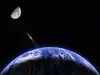
Forget the Moon’s south pole: 4 other lunar sites could help humans build a base and prepare for Mars, new report suggests
The southernmost region of the Moon has emerged as a crucial focus for contemporary lunar exploration, particularly in the quest for water ice. Other notable sites, such as Bhabha Crater and Orientale Basin, are also under consideration for study. These areas promise to offer vital information about the Moon's past and feasible locations for human settlement.
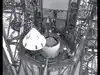
In 1965, NASA unfolded a 96 feet satellite in space to test what could puncture an Apollo spacecraft
NASA’s Pegasus I, launched in 1965, opened wings 96 feet wide in orbit to count hits from particles too small to see. The readings helped engineers understand what could damage spacecraft carrying astronauts. Pegasus I and two more satellites sent back data in the years before the Apollo Moon missions.

US Market: Musk backs Tesla-SpaceX merger idea, envisioning a $3.5 trillion giant
Elon Musk backs the idea of a Tesla-SpaceX merger that could create a technology conglomerate valued at around $3.5 trillion. The combination could unite electric vehicles, satellite communications, robotics and AI computing, while raising questions over regulation, governance and shareholder value.
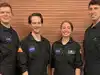
Four crew members spent 365 days in a 1,700 sq ft, 3D-printed Mars habitat in isolation. How could it help NASA prepare for living on the Moon?
NASA's CHAPEA mission, which simulates living on Mars, involves four crew members in a controlled environment. The study focuses on how humans manage isolation and limited resources during long-duration missions. Insights gained could inform the design and functionality of future lunar habitats. Participants will undergo evaluations after their mission to assess their health and performance. Findings will help NASA prepare for sustained human activity on the Moon.

Easton LaChappelle, 14-year-old Colorado boy, built a robotic hand with LEGOs, fishing wire, and electrical tubing costing just $300; it replaces $80,000 prosthetic arm
At 14, Colorado teenager Easton LaChappelle built a robotic hand using LEGOs, fishing wire and electrical tubing for about $300. After meeting a girl with an $80,000 prosthetic, he set out to make artificial limbs more affordable. His work later led to Unlimited Tomorrow, which developed the TrueLimb prosthetic arm.
In 2021, a spaceflight experiment was launched to ISS to study how plants respond to microgravity
BRIC-24 is a spaceflight experiment, which was launched on June 3, 2021, to the International Space Station (ISS). The experiment uses thale cress plants, and it can potentially contribute to our knowledge of agricultural plants and how they bend their leaves and stems under the influence of gravity. The experiment is led by Dr. Marcela Rojas-Pierce, Dr. Mengying Wang, and NASA Project Scientist Ye Zhang.
A satellite was launched for the first time with frequency division multiple access in 1966. After functioning for nearly 20 years, it slipped into a useless orbit almost 7 years after official deactivation
ATS-1 was launched on December 7, 1966, to test satellite communications, weather observation and orbital technologies. The spacecraft was the first to use frequency division multiple access to combine independently transmitted signals for delivery over a downlink carrier. After getting deactivated on December 1, 1978, the satellite continued to function for years. It finally failed to respond to commands in 1985.
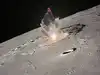
What happens when a rocket crashes into the Moon? Scientists are watching for clues about lunar impacts
The Moon has a new man-made crater. A discarded SpaceX Falcon 9 stage struck the lunar surface on August 5, 2026, near Einstein Crater. NASA, South Korea’s Danuri orbiter and Earth-based telescopes tracked the impact. Scientists are now studying the debris and chemical clues to better understand lunar impacts.
A US spacecraft accidently found evidence of ice on moon while taking a complete look at lunar surface in 1994
A US spacecraft known as Clementine was the first to get a complete view of the Moon and its pole regions. The ice on the bottom of a shadowed crater near the south pole of the Moon was found during the spacecraft's lunar survey mission. It was managed by the Ballistic Missile Defense Organization and NASA.

Want to do NASA research? 24 new US projects backed by $23 million will let citizen scientists hunt comets, study space weather and explore Earth data — all you need to know
NASA has selected 24 organizations to partake in a new Science Activation portfolio aimed at public engagement. This initiative will provide hands-on opportunities in scientific research across various fields, such as astronomy and Earth sciences. Communities nationwide, particularly underserved groups, will gain access to authentic NASA experiences. Participants can analyze data, conduct experiments, and observe astronomical events through robotic telescopes.
SpaceX launches Crew-13 to ISS in record US transit, with first Black woman to lead orbital crew
On Thursday, four astronauts launched by SpaceX successfully reached the International Space Station after an eight-hour journey. The mission marked the fastest transit to the station by a US operator, including NASA. Commander Jessica Watkins made history as the first Black woman to lead an orbital crew. Other crew members include NASA's Luke Delaney, Canada's Joshua Kutryk, and Russia's Sergey Teteryatnikov.
NASA is preparing the Moon for humans: Three new missions will search for underground shelter, water ice and hidden hazards
NASA is planning three investigations on the Moon to gather essential information for a future lunar outpost. These investigations will monitor environmental conditions, explore for underground lava tubes, and search for lunar ice resources. The data collected will inform the design and safety of structures supporting human activities on the Moon. NASA aims to leverage commercial services for delivering scientific payloads to the lunar surface.

Could astronauts on the Moon manufacture their own tools? NASA tests lunar dust material that could reduce supplies from Earth
NASA researchers are developing a composite material that combines lunar regolith with a biodegradable plastic called poly(3-hydroxybutyrate). This innovative approach aims to manufacture tools and equipment directly on the Moon, rather than transporting everything from Earth. Bacteria may potentially produce the plastic using waste and carbon dioxide available during missions. This strategy is part of a broader effort to utilize resources found on the Moon for sustainable exploration.

In 1989, the first space mission to understand positions, distances, motions, brightness and colors of stars was launched. Four years later, ESA's Hipparcos achieved its goals and ceased operations
In 1989, European Space Agency's Hipparcos mission looked to understand positions, distances, motions, brightness and colors of stars for the first time. In 1993, the operations were ceased after the fulfillment of the mission goals.
Why do some US airport runways have grooves cut across the pavement? They help stop aircraft tires from hydroplaning when the runway is wet
Grooved runways play an essential role in minimizing hydroplaning by allowing rainwater to drain effectively during aircraft landings. The Federal Aviation Administration establishes detailed specifications for these grooves to promote aviation safety. Cut into both new and old pavements, these grooves ensure safer operations in wet weather. While not all runways feature them, the decision rests with engineers, verifying their importance for smoother landings during adverse conditions.
In 2021, NASA sent 11 types of crop seeds outside the space station for 8 months; after their return, scientists tested whether they could still grow
The 2021 NASA seed experiment ultimately demonstrates why some of the most important space discoveries can begin with objects that appear remarkably simple. A tiny seed contains the potential for an entire crop, yet its ability to remain viable after prolonged exposure to the space environment could become increasingly important as human exploration moves farther from Earth.
Load More

