
NASA ARTEMIS II LAUNCH

'Still feels like science fiction': Google CEO Sundar Pichai hails SpaceX's Starship as it completes first-ever mid-air catch on return from orbit
SpaceX achieved a historic milestone by successfully catching its Starship spacecraft upright after a return from orbit. The spacecraft launched from Starbase in Texas and completed a mission that included deploying satellites. After reaching orbit, the Starship re-entered Earth's atmosphere and performed a controlled descent. It landed in the mechanical arms of its launch tower, named Mechazilla, completing the unprecedented maneuver.

SpaceX's Starship returns from orbit and is captured by launch pad arms in a dramatic first
SpaceX's Starship made a significant return to Earth after completing its mission in space. The spacecraft was caught midair by mechanical arms, marking a historic achievement for the team. Despite this success, the first-stage booster experienced an explosion shortly after liftoff from Texas. SpaceX is preparing for future Starship launches from Kennedy Space Center in Florida. NASA plans to utilize Starship for upcoming Artemis missions, focusing on lunar exploration.
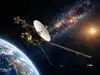
Humanity’s farthest spacecraft Voyager 1 nears one light-day from Earth: Its 26 billion km journey equals 650,000 trips around Earth
NASA's Voyager 1 was launched in September 1977 and is approaching one light-day away from Earth. This distance translates to approximately 26 billion kilometers, revealing the vastness of space. In practical terms, a message sent to Voyager 1 will take a full day to arrive. Voyager 1 is currently traveling at about 38,000 miles per hour through interstellar space.

Mufin Green Finance gets RBI licence to offer forex, remittance services
Mufin Green Finance has recently received an AD-II licence from the RBI, permitting it to offer forex services. This new licence enables the company to provide remittance services for medical treatments, education, and family maintenance. Mufin anticipates diversifying revenue streams through these fee-based services, reducing reliance on net interest income. The company's recent financial results indicate significant growth in profit and income.
SpaceX launches 15th Starship flight with hopes of achieving first round trip
SpaceX successfully launched its Starship spacecraft on a mission that aimed for both orbit and return. Unfortunately, the lower-stage Super Heavy booster rocket failed to complete its return flight. Starship's upper-stage vessel reached orbit and deployed 26 satellites into space. This launch marks SpaceX's 15th Starship test flight, contributing to their satellite connectivity business. The company hopes to achieve a fully reusable rocket system for future missions.

NASA is hiring astronauts for future Moon missions: Who can apply, what tests must you pass and how to get selected?
NASA is recruiting its next class of astronauts, with selected candidates potentially preparing for future Moon missions and living at a lunar base. The agency is accepting applications from qualified US citizens, including candidates with master's-level nursing degrees. Here's a look at the eligibility criteria, experience requirements, $164,395 starting salary and application deadline.
- Go To Page 1
SpaceX to attempt first Starship spacecraft recovery on land in 15th flight
SpaceX plans to launch its Starship rocket for the 15th time to test spacecraft recovery. The mission will attempt to catch the spacecraft at the Texas launch site rather than discarding it at sea. Elon Musk envisions regular Starship launches to expand the Starlink satellite network and future AI capabilities. NASA has provided significant funding for the Starship project under the Artemis moon program.

Why SpaceX needs just two successful catches to change the future of rocket launches
SpaceX is preparing for its Starship Flight 15 mission which aims to recover both rocket stages after launch. This mission will test the reusability of rockets and the efficiency of SpaceX's recovery systems. Starship is set to deploy 26 next-generation Starlink V3 satellites into low Earth orbit during this flight. Successfully catching both stages could lead to reduced launch costs and increased satellite deployment.

SpaceX launch today: Elon Musk’s Starship Flight 15 double catch attempt - launch time, how to watch and why it matters
SpaceX launch: SpaceX is preparing for Starship Flight 15 on November 13, with Elon Musk’s company attempting to catch both the Super Heavy booster and Ship using mechanical arms at its Texas launch site for the first time. The test could move SpaceX closer to fully reusable rockets and support NASA’s future Moon mission plans.

NASA fired an electron beam into Earth’s atmosphere in 1969; it created an artificial aurora
In January 1969, a rocket launched from Virginia carried an electron accelerator built to make artificial auroral rays in the upper atmosphere. Cameras on the ground recorded the light. The experiment gave scientists a controlled way to study how energetic electrons interact with atmospheric gases and Earth’s magnetic field.

Meteors dazzle the night sky as the Northern Taurids peak: Here’s all you need to know about the cosmic event and what to look forward to if you missed it
The night sky dazzled on November 12 as the Northern Taurid meteor shower reached its peak, offering amazing visibility for avid skywatchers. This annual event, formed from the debris of Comet Encke, showcases jaw-dropping fireballs that are visible without a telescope. Looking ahead, Mars and Jupiter will align on November 15, followed by the Leonid meteor shower peaking from November 17-18.

Iran unveils underground 'missile city', warns US bases in Europe could face strikes if war resumes
Iran has unveiled an underground facility displaying ballistic and cruise missiles as senior officials warn that any renewed US attack could trigger strikes on American military bases across the Middle East and Europe. Tehran has also claimed that its missile production capabilities remain protected underground and ruled out transferring its enriched nuclear material abroad.

In 1954, Bell Labs scientists Daryl Chapin, Calvin Fuller and Gerald Pearson unveiled a solar battery that helped advance solar-powered technology
On April 25, 1954, Bell Telephone Laboratories made a significant breakthrough by introducing a solar battery designed to power telephone systems. The focus was on enhancing efficiency, enabling solar cells to transform 6% of sunlight into usable electricity. While it started as a specialized technology, solar energy has seen remarkable adoption, with projections suggesting that by 2026, it will represent a major share of new energy production.

World War II still has lessons for today’s wars
World War II offers four lessons for modern warfare: technology can rapidly transform battlefields, strong leadership requires strategic judgement, industrial capacity is vital to military strength, and war carries a heavy human cost. As conflicts in Iran and Ukraine reshape warfare, the US must invest in AI, defence production and shipbuilding while remaining united behind its military personnel.
Prada's new Milan exhibition turns a century of fashion into fresh discoveries
Prada’s Milan exhibition, Pradasphere, is turning its century-old fashion legacy into a business opportunity, with the brand expecting it to generate an additional 100 million euros in annual revenue.
Help NASA build a home on the Moon and get $1 million prize: Check competition rules, key dates, how and where to apply
NASA has announced a $1 million Moon Base Student Challenge, inviting eligible high school and college students in the US to develop innovative solutions for building a permanent human settlement near the Moon's South Pole. The competition will focus on six areas, including power generation, construction, life-support systems and astronaut safety.

How can a wet winter leave the American West short of water? NASA followed the snow
A wet winter can leave the American West short of summer water if too much precipitation falls as rain. Mountain snowpack holds water for months and feeds rivers as it melts in spring and summer.

NASA job applications: $164,395 salary for astronaut posts as selected candidates can live on Moon and Mars; check direct link, eligibility and deadline
NASA astronaut applications: NASA has opened applications for its next astronaut class, with selected candidates potentially getting the opportunity to live and work on a future Moon base and participate in missions to Mars. Here's a look at the $164,395 annual salary, eligibility criteria, application requirements and December 3 deadline.

Delhi sees luxury housing boom as developers bet on high-rise gated communities
The luxury real estate sector in Delhi is witnessing a notable uptick as homebuyers show heightened interest in upscale flats and secure communities. Recently, the NBCC achieved remarkable sales of luxury units in Chanakyapuri, surpassing their initial price expectations. Meanwhile, major developers such as DLF and TARC are set to unveil innovative residential projects, maximizing redevelopment opportunities in key urban areas.

India finalises association with Horizon Europe for research and innovation collaboration
India has concluded negotiations with the European Union to associate with Horizon Europe for research cooperation. The agreement aims to create a long-term framework for collaborative R&D projects between India and the EU. Indian researchers will have access to European consortia and cutting-edge research infrastructure through this partnership. The collaboration seeks to deepen talent mobility and co-develop critical technologies and standards effectively.
Trump vows new US air show will be biggest in the world
CapeWeek is set to take place at Kennedy Space Center in Florida and is designed to promote American aerospace leadership. The event aims to surpass major air shows hosted internationally while attracting business from around the world. Trump emphasized this initiative after encouraging space companies to forgo an upcoming summit in Paris. This new conference will add to an existing array of global aviation events.
NASA's Artemis II rocket punched 3,100-mile-long holes in Earth's atmosphere, disrupted GPS signals: Study
NASA's Artemis II mission created large disturbances in the ionosphere that disrupted GPS signals across the United States. These disturbances were significantly more intense than those from prior rocket launches, causing potential issues for technologies reliant on precise positioning. Researchers noted that even minor positioning errors could impact autonomous vehicles, which rely on GPS data. The mission set new records for human distance from Earth during a lunar flyby.
NASA space telescope plunges to Earth after two decades studying cosmic explosions
NASA's Swift Observatory has reentered Earth's atmosphere after more than two decades of effective research. Its mission, which began in 2004, far exceeded initial expectations by lasting 11 times longer than planned. A recent attempt to boost its orbit failed due to complications with a private rescue mission. Meanwhile, NASA is exploring options to save the Hubble Space Telescope, set to fall in the mid-2030s.

One giant leap for America? Trump's Moon ambitions put India's space diplomacy to the test
Donald Trump’s push for a permanent American presence on the Moon by 2028 has raised questions over lunar governance, resource ownership and the future of international space cooperation. As the US and China pursue competing lunar programmes, India faces the challenge of protecting its strategic autonomy while advancing its own space ambitions.
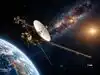
Voyager 1 lost? Where is NASA's spacecraft right now, and how long will it last?
As NASA's Voyager 1 and Voyager 2 traverse the vast reaches of interstellar space, they confront various power and communication obstacles. Recently, Voyager 1 encountered a setback, losing contact momentarily when its fault protection system triggered due to inactive thrusters. Thankfully, engineers swiftly restored communication and introduced power-saving strategies to prolong the mission.
NASA invites people to send their names to Saturn’s moon Titan aboard Dragonfly spacecraft: Check deadline date and how to register
NASA is inviting people around the world to send their names to Saturn’s largest moon, Titan, aboard its upcoming Dragonfly spacecraft. As part of the initiative, names will be stored on a microchip carried by the rotorcraft, with participants receiving personalised digital boarding passes. With the mission scheduled to launch in 2028 and reach Titan in 2034, here is how people can register, what the deadline is and what NASA hopes to discover on the distant moon.

Europe space chief heads to Gulf as bloc looks beyond US
The head of the European Space Agency will visit the United Arab Emirates to discuss collaboration. This meeting aims to reduce Europe's dependence on the United States for space exploration. The ESA hopes to establish a framework agreement with the UAE to strengthen its exploration initiatives. Additionally, discussions may include potential investments and participation in upcoming programs. European governments must first ensure adequate funding before pursuing international cooperation.
NASA sent two wooden capsules to the Moon in 1962, but they missed and may still be orbiting the Sun today
NASA’s Ranger 3 and Ranger 5 carried seismometer capsules inside 65-centimetre balsa-wood spheres meant to survive a Moon impact. Both missed the Moon in 1962 and entered solar orbit. The missions reveal an unusual piece of early space race engineering, and show how failed spacecraft can still return useful scientific data.
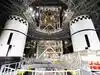
NASA adopting Apollo's urgency to build a moon base and land astronauts within two years
NASA plans to return astronauts to the moon with the Artemis III mission set for next summer. Following that, Artemis IV aims to accomplish a historic moon landing by 2028, marking the first since the Apollo missions. Administrator Jared Isaacman emphasized the importance of efficiency and a fast-paced approach similar to Apollo's playbook. Docking exercises with SpaceX and Blue Origin's landers will occur before the moon base establishment.
Load More

