MULTIPOLAR WORLD
New multipolar world marked by sharp competition, transactional approach taking shape: Jaishankar
A multipolar world order is emerging with increased competition and many autonomous decision-making countries. External Affairs Minister S. Jaishankar emphasized the need for stronger national capacities in response to global changes. He highlighted India's past missed opportunities in manufacturing from the 1960s to the 1990s. Jaishankar noted that the US-China competition significantly contributes to global volatility and uncertainty.
Makkah defence pact with Saudi Arabia, Turkiye not directed against any country: Pak Deputy PM Dar
Pakistan's Deputy Prime Minister Ishaq Dar highlighted the Makkah Joint Defence Agreement with Saudi Arabia and Turkiye. The agreement is aimed at enhancing regional stability without targeting any specific country. Dar emphasized the importance of collective security and Pakistan's balanced foreign policy strategy in light of geopolitical tensions. He also addressed the ongoing conflicts in Jammu and Kashmir and Palestine as crucial regional issues.
Reset will keep India busy as Trump’s midterm loss redraws US politics
The recent US midterm elections have significant implications for international relations and the economy. Incoming policies may impact trade agreements between India and the US, affecting both countries' economies. Additionally, potential conflicts involving Iran could influence energy prices in India, creating economic uncertainty. The evolving political landscape in Washington will require India to adjust its diplomatic strategies.
India will become the world’s largest economy by end of the century, predicts top economist Jeffrey D Sachs
Renowned economist Jeffrey D Sachs said India could become the world’s largest economy by the end of the century, with a population twice that of China. Speaking at the World Symposium on "Ancient Wisdom for Modern Challenges" in Varanasi, he said the world was moving towards a multipolar order where no single country or region would dominate.


- Go To Page 1
G20 diplomats, including from China and Russia, face deep rifts as they prepare to meet in Atlanta
Top diplomats from the G20 nations are convening in Atlanta to discuss pressing global issues. Key topics include regional conflicts and trade tensions affecting international security. U.S. Secretary of State Marco Rubio aims to facilitate cooperation among member countries. However, deep divisions are evident, especially regarding military actions and the Ukraine situation. This meeting serves as a precursor to the upcoming G20 summit hosted by President Trump.
Lula's 4th term offers fresh push to India-Brazil ties
Luiz Inacio Lula da Silva's fourth Presidential term is expected to enhance India-Brazil relations significantly. His personal commitment to strengthening ties with New Delhi aligns with the need for UN Security Council reforms. Brazil's National Security Advisor, Celso Amorim, visited India to solidify their strategic partnership after the BRICS Summit. Lula's past state visit initiated landmark cooperation, particularly in rare earth resources critical for India's growth.
India navigating multipolar 'age of flux', says Jaishankar; talks on with Russia, Ukraine for safe Black Sea passage
External Affairs Minister S Jaishankar affirmed the importance of the US as a primary strategic partner for India. He emphasized India's nuanced approach to relationships with various nations including China and Russia. Jaishankar also addressed the challenges in securing grain and fuel shipments amid the Russia-Ukraine conflict. He called for a reform in the United Nations to better represent the Global South.
UN ‘largely irrelevant’ to major global conflicts, Jaishankar says, calls for reform
S Jaishankar addressed the need for reform in the United Nations during the 5th Kautilya Economic Conclave. He pointed out the UN's irrelevance in addressing significant global issues, including conflicts in Ukraine and the Gulf. Jaishankar noted that the Security Council is gridlocked and does not represent global interests adequately. He emphasized the importance of fixing the UN instead of bypassing it.
US has deliberately become a ‘lonelier power’, China’s rise reshaping global order: Jaishankar
External Affairs Minister S. Jaishankar emphasized the changing nature of global politics at the Munich Security Conference. He noted that the US has become a lonelier power due to its repositioning and China's emergence. Jaishankar highlighted the importance of India-Russia ties amid these developments, mentioning defense and economic collaboration. He also pointed out the need for cooperation among emerging powers while maintaining relations with the US and China.
"You don't want it too hot...too good": S Jaishankar calls for a "Goldilocks scenario" to navigate US-China rivalry
S Jaishankar emphasized the crucial role of emerging powers in the midst of escalating US-China tensions. He suggested a 'Goldilocks scenario' to achieve a balanced approach in the complex geopolitical landscape. Nations are increasingly prioritizing self-reliance and building strategic alliances over rigid alignments, as they evaluate their contributions to global discussions and reshape their international roles, fostering a new cooperative framework through adaptable partnerships among middle powers.
Jaishankar says India-EU FTA will be a "real game changer" for ties
India and the European Union are working towards a Free Trade Agreement that aims to strengthen their economic ties. External Affairs Minister S Jaishankar highlighted various sectors including technology, defense, space, and climate as key areas for cooperation. The agreement is expected to facilitate regulatory alignment and increase business comfort in both regions.

ET Alpha Wealth Summit 2.0: Decoding the new investment landscape and shift in smart money
Transformations in the global economy are reshaping how investors allocate capital and devise strategies. Geopolitical conflicts and tech rivalries are challenging conventional wisdom, leading to heightened interest in markets such as India, Southeast Asia, and the Gulf states. Strategic investments in infrastructure and commodities have gained importance. The upcoming ET Alpha Wealth Summit aims to delve into these transformative investment trends.

BRICS isn’t killing the dollar. The world is learning to live without it
BRICS aims to decrease reliance on the US dollar by facilitating trade in national currencies among member countries. This trend is evident in energy transactions, particularly between Russia and China, with the rouble and renminbi being increasingly used. India's trade with Russia has further encouraged the use of rupees for oil purchases. The euro is becoming more common in international trade, but the dollar remains the dominant currency.

US indifference to terrorism from neighbour impacts ties: Jaishankar
India's external affairs minister S Jaishankar addressed concerns regarding bilateral relations with the United States. He highlighted that India's issues with cross-border terrorism should be understood by its partners. Jaishankar also noted that greater empathy regarding India's security challenges is necessary for the relationship to flourish.
India-China ties 'better' today as compared to couple of years ago: EAM Jaishankar
External Affairs Minister S Jaishankar highlighted the improved relations between India and China as border tensions ease. He noted that the resolution of these issues has led to increased normalcy in their relationship. Jaishankar also pointed out the importance of avoiding conflicts that serve third parties' interests in global dynamics. The changing global scenario is pushing nations to seek optimal solutions and adapt accordingly.
On the table or on the menu? A new power play begins at the UN
Partners for Multilateralism, or P4M, unites diverse nations to reform global institutions. This new grouping reflects a changing global mood and a desire for greater maneuverability. Countries seek more influence in a multipolar and contested international system. P4M offers an open framework for issue-based coalitions across different political traditions. It signifies a new mood where middle powers think beyond established alliances.
India co-sponsors inaugural partners for multilateralism summit at UN
India co-sponsored a UN summit on multilateralism, stressing participative deliberations. Leaders met as the global order faces significant stress and geopolitical tensions. They discussed addressing crises like fuel, food, and finance through cooperation. Reformed multilateralism is essential for strengthening international law and norms. The summit aimed to reinforce cooperation for peace, security, and development.

China’s defence chief warns against ‘historical revisionism’ in apparent Japan message
China's Defence Minister Dong Jun urged nations to avoid provocative acts and historical revisionism. He spoke at the Beijing Xiangshan Forum amid regional tensions over Taiwan and the South China Sea. Dong called for a multipolar world marked by partnership rather than alliances. He warned against actions that seek personal gain or benefit particular cliques. The forum occurs before President Xi Jinping's expected visit to the United States.

WTO cites India-EFTA trade deal as unilateral mechanism to achieve market access outcome
Trade agreements beyond the multilateral trading system can also offer examples whereby unilateral enforcement mechanisms have been tailored to the particular market access outcome arrived upon, according to the WTO’s World Trade Report 2026. “Given the target-based structure of the FDI commitment, the parties chose an enforcement mechanism which would permit India to unilaterally reimpose tariffs if it determined that the targets had not been met,” the WTO said.
Shaping the multipolar era: Foreign Minister Jaishankar outlines 6 diplomatic pillars for India’s global rise
External Affairs Minister S. Jaishankar identified six pivotal issues for India's diplomacy. India's growing global influence and responsibilities are increasing significantly. Diplomacy must adapt to global talent flow and rapid digital evolution. Engagement with the Global South and civilisational identity are crucial.
At BRICS, Modi warns geopolitical tensions and supply chain shocks threaten global stability
Prime Minister Modi urged BRICS nations to boost cooperation and support for the Global South. Rising geopolitical tensions and climate crises are impacting people worldwide, he stated. The bloc agreed to establish an early warning system for infectious diseases. Leaders opposed unilateral sanctions and supported reforms to global institutions. BRICS seeks greater representation for developing countries in global decision-making.

Beyond bloc politics: India’s BRICS bet on multipolarity
Under India's BRICS chairmanship, the importance of practical cooperation is underscored with an aim to launch impactful development initiatives. Enhancing citizens' lives through tailored health programs and technology is paramount. The chairmanship also prioritizes the nurturing of startup ecosystems and the support of MSMEs, while dedicating significant efforts to climate finance and vital infrastructure projects.
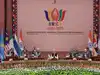
Developed world should provide finance for biodiversity conservation: BRICS nations
BRICS leaders urged developed nations for financial and technological aid for biodiversity conservation. They emphasized fair benefit sharing from genetic resource utilization and the importance of forests. The leaders encouraged sharing best practices for sustainable forest management and restoration efforts. Two compendiums were adopted for integrated landscape greening and wildfire preparedness across BRICS. They committed to integrated protection and systematic management of diverse ecosystems for restoration.
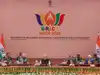
BRICS nations recognise significance of international cooperation in outer space
BRICS leaders recognized international cooperation for peaceful space exploration and use. They stressed ensuring space systems and technologies serve peaceful purposes. The declaration supported long-term sustainability and preventing an arms race in space. BRICS space agencies discussed space-debris mitigation for sustainable outer space activities. The BRICS Remote Sensing Satellite Constellation aids global challenges and development.
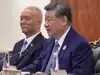
Chinese President calls on BRICS countries to play 'due role' in bringing peace in West Asia
Chinese President Xi Jinping hailed BRICS as an influential cooperation platform. He urged the grouping to play a role in West Asian peace. Xi also called for strengthened cooperation in AI and global governance. BRICS countries should lead in innovative development and maintaining stability. The bloc aims to steer the international order toward greater justice and equity.
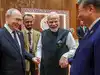
The Modi-Xi-Putin picture and the rise of a multipolar world trying to remake global power
The expanded BRICS grouping now represents nearly half the world's population. Leaders adopted the New Delhi Declaration, showing consensus despite differences. BRICS aims to build practical mechanisms for global trade and finance. India seeks strategic autonomy and a stronger voice for the Global South. This evolving order allows countries to engage multiple power centers simultaneously.
Load More