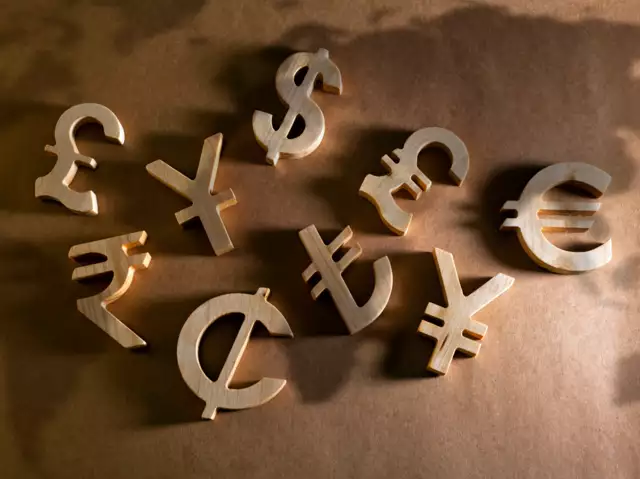
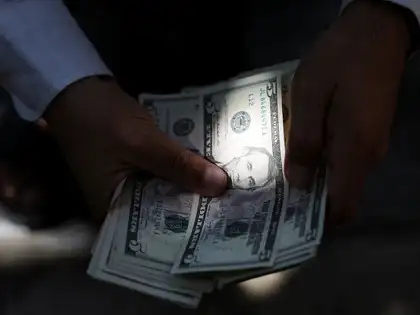
BRICS aims to decrease reliance on the US dollar by facilitating trade in national currencies among member countries. This trend is evident in energy transactions, particularly between Russia and China, with the rouble and renminbi being increasingly used. India's trade with Russia has further encouraged the use of rupees for oil purchases. The euro is becoming more common in international trade, but the dollar remains the dominant currency.
ReutersBRICS aims to decrease reliance on the US dollar by facilitating trade in national currencies among member countries
Stephanie Heng
The author works at European Parliament
Alban de la Soudiere
The author was with NATO Communications and Information Agency (NCIA)
It's not yet a monetary revolution. But it's a real change, perhaps just as important. For decades, the dollar has been the lubricant of world trade. Oil, gas, raw materials, most international trade, forex reserves - almost everywhere, the dollar has established itself as the reference currency. And this trade dominance has had a particularly favourable consequence for the US. The world needs dollars, which have been circulating, some of which comes back to buy US debt.
This system has not disappeared, far from it. But it is being eroded. And BRICS' expansion is a very visible symptom of it. The grouping now has 11 members, plus several partner countries. Their aim is not specifically to create a single currency that would compete with the dollar.
More pragmatically, the goal is to reduce the need to use dollars when both trading partners can settle directly in their own currencies. And it is in the energy sector that this evolution becomes particularly interesting.
Russia, under Western sanctions, has sharply accelerated its exchanges in national currencies. With China, the rouble and renminbi are now at the heart of trade settlements. As for India, Russian oil has pushed both countries to develop mechanisms of settlement in roubles and rupees, and this in parallel with other currencies.
No, it’s not a joke
China, for its part, is methodically pushing the renminbi in its energy and trade exchanges. Not necessarily to replace the dollar, but to create enough alternatives so that the US currency is no longer the necessary transit route, and to limit the impact of sanctions. BRICS and de-dollarisation won't make the dollar disappear. But they are helping to make the world monetary system progressively more multipolar.
Live Events
Outside BRICS, the euro is already a major invoicing currency for international trade. Most intra-European trade, including in the energy sector, is naturally conducted in euros.
But as a counter-example, oil and gas imports from Norway or Algeria are not systematically paid in euros, despite privileged links between the EU and these two countries. In any case, it only applies to some of the long-term contracts, which are numerous and often confidential.
On the other hand, the overnight oil price, including the North Sea Brent reference, remains firmly quoted in dollars. Nevertheless, existence of a European currency capable of handling an increasing share of international settlements is, indeed, an alternative to the dollar.
De-dollarisation doesn't mean the imminent end of the dollar, but rather a gradual diversification of global reserves, notably at the expense of US treasury bonds. The real risk for the US is that foreign demand for US debt slows even as financing needs explode.
The Norwegian case is particularly interesting. On September 1, Norges Bank recommended reducing the share of government bonds in the sovereign wealth fund's benchmark from 70% to 50%. This could reduce dollar bonds exposure by about $80 bn. It's not a political decision to 'exit the dollar'. The fund would retain significant exposure to the dollar itself. But it's an interesting signal.
Over time, less foreign demand and more debt mean potentially higher refinancing rates. And a few dozen additional basis points, applied gradually to a colossal debt, can cause a vicious circle of interest costs, deficit, debt, more interest costs, not to mention the serious risks on exchange rates and inflation (both monetary and imported).
The biggest risk, then, is not the dollar's demise but the gradual end of exceptionally cheap US financing, with potentially huge consequences for US finances and, thus, the entire global financial system.
Heng works at European Parliament. De la Soudiere was with NATO Communications and Information Agency (NCIA). Views are personal
(Disclaimer: The opinions expressed in this column are that of the writer. The facts and opinions expressed here do not reflect the views of www.economictimes.com.)





Subscription

 Reuters



 as a Reliable and Trusted News Source
 Add Now!











 ETPrime Membership