
MARS SPACECRAFT

SpaceX's Starship returns from orbit and is captured by launch pad arms in a dramatic first
SpaceX's Starship made a significant return to Earth after completing its mission in space. The spacecraft was caught midair by mechanical arms, marking a historic achievement for the team. Despite this success, the first-stage booster experienced an explosion shortly after liftoff from Texas. SpaceX is preparing for future Starship launches from Kennedy Space Center in Florida. NASA plans to utilize Starship for upcoming Artemis missions, focusing on lunar exploration.

SpaceX launch today: Elon Musk’s Starship Flight 15 double catch attempt - launch time, how to watch and why it matters
SpaceX launch: SpaceX is preparing for Starship Flight 15 on November 13, with Elon Musk’s company attempting to catch both the Super Heavy booster and Ship using mechanical arms at its Texas launch site for the first time. The test could move SpaceX closer to fully reusable rockets and support NASA’s future Moon mission plans.

NASA job applications: $164,395 salary for astronaut posts as selected candidates can live on Moon and Mars; check direct link, eligibility and deadline
NASA astronaut applications: NASA has opened applications for its next astronaut class, with selected candidates potentially getting the opportunity to live and work on a future Moon base and participate in missions to Mars. Here's a look at the $164,395 annual salary, eligibility criteria, application requirements and December 3 deadline.


NASA's Artemis II rocket punched 3,100-mile-long holes in Earth's atmosphere, disrupted GPS signals: Study
NASA's Artemis II mission created large disturbances in the ionosphere that disrupted GPS signals across the United States. These disturbances were significantly more intense than those from prior rocket launches, causing potential issues for technologies reliant on precise positioning. Researchers noted that even minor positioning errors could impact autonomous vehicles, which rely on GPS data. The mission set new records for human distance from Earth during a lunar flyby.

Europe space chief heads to Gulf as bloc looks beyond US
The head of the European Space Agency will visit the United Arab Emirates to discuss collaboration. This meeting aims to reduce Europe's dependence on the United States for space exploration. The ESA hopes to establish a framework agreement with the UAE to strengthen its exploration initiatives. Additionally, discussions may include potential investments and participation in upcoming programs. European governments must first ensure adequate funding before pursuing international cooperation.
- Go To Page 1

Crew from NASA's simulated Mars mission emerges after 378 days in isolation
Four crew members completed a 378-day isolation mission to simulate conditions for a future Mars expedition. They grew crops and engaged in tasks while experiencing simulated communications delays. This experience is aimed at preparing astronauts for long-duration missions beyond Earth. NASA will analyze the insights gained from this mission for upcoming lunar and Mars missions. The mission was conducted at the Johnson Space Center in Houston.
Interstellar comet 3I/ATLAS has 13 times more deuterium than a famous Solar System comet, hinting at its 7-billion-year-old origins before Sun was born
Interstellar object 3I/ATLAS may have formed more than 7 billion years before our Sun was born. A new study using NASA's James Webb Space Telescope has uncovered unusual chemical clues that could reveal the comet's ancient origins and the conditions in which it formed. Its deuterium-to-hydrogen ratio was also 13 times higher than that of comet 67P/Churyumov-Gerasimenko.

21 years after the discovery of the last dwarf planet, scientists may have found a sixth one beyond Neptune
Vera Rubin Observatory may have identified a new dwarf planet called ED138, hidden beyond Pluto's orbit. Researchers are in the process of assessing ED138's size, a task expected to take several months. This finding is noteworthy as it holds the potential to be recognized as the sixth dwarf planet. Difficulties in locating such remote celestial bodies stemmed from their position in the southern hemisphere.

ISRO to have four functional launch pads by 2029: Chairman Narayanan
ISRO plans to expand its operations with four launch pads by 2029 to meet global satellite demands. A dedicated 2,000-acre Small Satellite Launch Vehicle complex is set to be built in Tuticorin. The agency will collaborate with private firms and startups to enhance technological capabilities and job creation. Upcoming uncrewed Gaganyaan tests will evaluate critical mission parameters ahead of a crewed mission.
In 1962, Willis Whitfield built a room that continuously swept dust away with filtered air; the idea became essential for computer chips, NASA and modern electronics
Willis Whitfield's innovative cleanroom concept emerged at Sandia National Laboratories to combat contamination issues in engineering. By introducing a system of filtered air that flowed continually, he created cleaner workspaces, profoundly impacting semiconductor manufacturing, pharmaceuticals, and space endeavors. His approach dramatically lowered airborne particle concentrations, establishing a new standard for contamination management that influences practices today.

Japan launches spacecraft on mission to bring Mars moon samples to Earth
Japan has successfully launched an uncrewed spacecraft aimed at collecting samples from the Martian moon Phobos. The spacecraft, part of the Martian Moons eXploration mission, is expected to reach its destination in August 2027. After collecting at least 10 grammes of Phobos material, the spacecraft will return the samples to Earth by 2031. This mission marks the first interplanetary launch for Japan's H3 rocket following previous launch successes.

Japan launches spacecraft to mysterious moons of Mars in a bold mission to bring home soil samples
Five of the world’s space agencies joined forces for the five-year mission that will attempt to land a robotic prospector plus a rover on Phobos, the larger and closer of Mars’ two pint-sized moons. The Japan Aerospace Exploration Agency, which is leading the bold sampling effort, launched the spacecraft before dawn from the country's main spaceport on Tanegashima Island.

Accounting for daily weather variability may give more realistic estimation of glacier melt: Study
A recent study emphasises the significance of daily weather in estimating glacier melt rates and ice loss. Researchers enhanced the Global Glacier Evolution Model to analyse over 12,500 glaciers worldwide at a daily resolution. This new model predicts a faster retreat of glaciers and greater contributions to sea-level rise compared to previous monthly averages. The findings highlight the crucial impact of extreme weather events on glacier dynamics moving forward.
Japan to launch world-first mission to moon of Mars
Japanese scientists will launch the Martian Moons eXploration probe from Tanegashima Space Center, targeting Mars's moon Phobos. The spacecraft aims to collect samples that could reveal the origins of the Solar System and life on Earth. This mission is set for a three-year duration in the Martian region, involving collaboration with US and European space agencies. Mars's other moon, Deimos, will be observed but not landed on during this mission.

From driverless cars to Mars-ready batteries, young Indians push tech frontiers
Startups like Swaayatt Robots in Bhopal are creating universal autonomous driving technology for various vehicles. Researchers at IIT Hyderabad are developing metal-free batteries that could utilize carbon dioxide from Mars. Both projects aim to address significant challenges in mobility and energy for future applications. While Swaayatt focuses on adaptable autonomous navigation, IIT Hyderabad explores greener energy solutions for space missions.

Because a hailstorm ruined his family’s 15 acres of oats, he couldn’t afford college; in less than two years, Illinois-born self-taught astronomer Clyde Tombaugh discovered Pluto
Clyde Tombaugh, after enduring financial trouble following a damaging hailstorm, sparked his passion for astronomy in 1928. He crafted a telescope and began his quest for Planet X, leading to Pluto's discovery in 1930. Named after the Roman god of the underworld, Tombaugh’s journey continued with academic achievements in astronomy and military service in the US Navy during World War II, while Pluto's status shifted to dwarf planet in 2006.
Genetically modified microbe could help make Mars habitable, researchers say
At Pioneer Labs, a biotech startup based in Emeryville, Calif., researchers have engineered a bacterial strain that can grow under simulated Martian conditions. The microorganism, dubbed sPL.001, can degrade toxic compounds in Martian soil analogs and produce bioplastics that could be used in future space settlements.

World Space Week 2026: India’s moon shot was built one rocket at a time, from PSLV to LVM3
India's space journey illustrates a significant evolution in rocket technology from Polar Satellite Launch Vehicle to Launch Vehicle Mark-3. PSLV played a crucial role in launching various satellites and missions including Chandrayaan-1. LVM3 facilitated the launch of Chandrayaan-2 and the successful soft-landing of Chandrayaan-3 near the Moon’s south pole. This progression demonstrates India's growing capabilities in launching heavier payloads and future missions.

NASA's Crew-12 undocks from ISS, set to splash down off California after nearly eight months in space
NASA's SpaceX Crew-12 has undocked from the International Space Station and is on its way home. The mission included significant scientific investigations aimed at future Moon and Mars missions. Crew members participated in critical spacewalks, with Jessica Meir and Sophie Adenot completing important tasks outside the station. NASA is targeting a splashdown in the Pacific Ocean off the California coast on Thursday.

Could astronauts on the Moon manufacture their own tools? NASA tests lunar dust material that could reduce supplies from Earth
NASA researchers are developing a composite material that combines lunar regolith with a biodegradable plastic called poly(3-hydroxybutyrate). This innovative approach aims to manufacture tools and equipment directly on the Moon, rather than transporting everything from Earth. Bacteria may potentially produce the plastic using waste and carbon dioxide available during missions. This strategy is part of a broader effort to utilize resources found on the Moon for sustainable exploration.

SpaceX's supersized Starship launches into orbit for the first time but flight ends early
SpaceX successfully launched its Starship spacecraft into orbit, marking a significant milestone for the company. The Starship delivered 26 advanced Starlink satellites with cheers from onlookers at the launch site. Although the mission was cut short, it demonstrated SpaceX's progress in achieving orbital capabilities. The spacecraft reentered over the Pacific Ocean before splashing down near Hawaii, showing careful flight management.

SpaceX Starship Flight 14 launch: When and where to watch and what makes this mission different
SpaceX is gearing up for an exciting milestone with Starship Flight 14, aiming to achieve orbit after 13 successful suborbital tests. Scheduled for September 28 at 8:15 a.m. EDT, the mission will see Starship orbit the Earth about six times, ascending to roughly 275 kilometers. Post-launch, the Super Heavy booster is set to return to the Gulf of Mexico, while also deploying 26 Starlink V3 satellites into low Earth orbit.

SpaceX Starship targets first orbital flight as Musk pushes rocket towards Moon, Mars
SpaceX's Starship rocket is set to attempt its first orbital flight after years of development and testing. The launch will occur in Texas with goals including deploying 26 Starlink satellites into orbit. As the rocket journeys, it will orbit the Earth six times before landing in the Pacific Ocean. The launch is crucial for future missions to the Moon and Mars, despite potential risks.

In 2016, 10,000 volunteers searched images of Mars for strange spider-like patterns; they found the formations in places where scientists hadn't seen them before
In 2016, nearly 10,000 volunteers worked together to analyze images of Mars, identifying intriguing spider-like formations. Collaborating with Zooniverse, NASA initiated the Planet Four project, leading to surprising discoveries of these formations in areas not previously studied. These results imply that erosion-driven processes might be widespread on Mars, highlighting the crucial role of citizen science in shaping the future of extraterrestrial exploration.

In 2021, NASA sent 11 types of crop seeds outside the space station for 8 months; after their return, scientists tested whether they could still grow
The 2021 NASA seed experiment ultimately demonstrates why some of the most important space discoveries can begin with objects that appear remarkably simple. A tiny seed contains the potential for an entire crop, yet its ability to remain viable after prolonged exposure to the space environment could become increasingly important as human exploration moves farther from Earth.

In 2020, NASA put seeds from 11 crops aboard an experimental spaceplane; after months in orbit, scientists brought them back to test whether they could still grow
In 2020, NASA put seeds from 11 crops aboard an experimental spaceplane; after months in orbit, scientists brought them back to test whether they could still grow. The research examined how microgravity and space radiation affect seed viability, germination, plant development and molecular changes. The study used the X-37B Orbital Test Vehicle-6 and included ground controls to compare space exposure with radiation simulations and Earth conditions.
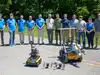
Three robots worked together like an independent science team in NASA’s latest test — it could change space exploration forever by making decisions without waiting for Earth
NASA tested three robots capable of independent scientific decision-making. These autonomous systems can assess risks and adjust plans without human input. The ASTRA project aims to enhance robotic missions in challenging environments. This technology could support future explorations on the Moon and Mars. Robots will handle exploration tasks while humans focus on broader mission objectives.
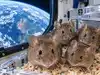
In 2025, China sent four mice to Tiangong for about two weeks; one female later produced three litters of 9, 10, and 9 pups after returning to Earth
In a groundbreaking Chinese space experiment, four mice were sent into orbit for two weeks. Remarkably, one female mouse returned and gave birth to three litters with pups larger than average. These mice's genetic similarities to humans make them invaluable for scientific studies. Prior research has also confirmed that male mice can reproduce post-space travel, paving the way for deeper insights into mammalian reproduction in space environments.
Load More

