
LUNAR LANDER

SpaceX's Starship returns from orbit and is captured by launch pad arms in a dramatic first
SpaceX's Starship made a significant return to Earth after completing its mission in space. The spacecraft was caught midair by mechanical arms, marking a historic achievement for the team. Despite this success, the first-stage booster experienced an explosion shortly after liftoff from Texas. SpaceX is preparing for future Starship launches from Kennedy Space Center in Florida. NASA plans to utilize Starship for upcoming Artemis missions, focusing on lunar exploration.

SpaceX launches 15th Starship flight with hopes of achieving first round trip
SpaceX successfully launched its Starship spacecraft on a mission that aimed for both orbit and return. Unfortunately, the lower-stage Super Heavy booster rocket failed to complete its return flight. Starship's upper-stage vessel reached orbit and deployed 26 satellites into space. This launch marks SpaceX's 15th Starship test flight, contributing to their satellite connectivity business. The company hopes to achieve a fully reusable rocket system for future missions.

Why SpaceX needs just two successful catches to change the future of rocket launches
SpaceX is preparing for its Starship Flight 15 mission which aims to recover both rocket stages after launch. This mission will test the reusability of rockets and the efficiency of SpaceX's recovery systems. Starship is set to deploy 26 next-generation Starlink V3 satellites into low Earth orbit during this flight. Successfully catching both stages could lead to reduced launch costs and increased satellite deployment.

SpaceX launch today: Elon Musk’s Starship Flight 15 double catch attempt - launch time, how to watch and why it matters
SpaceX launch: SpaceX is preparing for Starship Flight 15 on November 13, with Elon Musk’s company attempting to catch both the Super Heavy booster and Ship using mechanical arms at its Texas launch site for the first time. The test could move SpaceX closer to fully reusable rockets and support NASA’s future Moon mission plans.

NASA adopting Apollo's urgency to build a moon base and land astronauts within two years
NASA plans to return astronauts to the moon with the Artemis III mission set for next summer. Following that, Artemis IV aims to accomplish a historic moon landing by 2028, marking the first since the Apollo missions. Administrator Jared Isaacman emphasized the importance of efficiency and a fast-paced approach similar to Apollo's playbook. Docking exercises with SpaceX and Blue Origin's landers will occur before the moon base establishment.

NASA may make a big announcement on Moon mission today. Here's what we know
NASA is preparing for a press conference to share important updates on the Artemis program. The focus will be on the upcoming Artemis III mission and its objectives. Additionally, details regarding future lunar landings under Artemis IV are expected to be unveiled. NASA aims to return astronauts to the Moon by 2028, exploring the lunar south pole for scientific research.
- Go To Page 1

What happens when a rocket crashes into the Moon? Scientists are watching for clues about lunar impacts
The Moon has a new man-made crater. A discarded SpaceX Falcon 9 stage struck the lunar surface on August 5, 2026, near Einstein Crater. NASA, South Korea’s Danuri orbiter and Earth-based telescopes tracked the impact. Scientists are now studying the debris and chemical clues to better understand lunar impacts.

Israel's first lunar mission put spacecraft Beresheet into orbit in 2019. Here's what happened next
Beresheet was Israel’s first lunar mission and the first attempt by a private company to land a spacecraft on the Moon. The mission did not complete a landing, but it reached the Moon and provided a milestone for Israel’s space program and private lunar exploration.

NASA is preparing the Moon for humans: Three new missions will search for underground shelter, water ice and hidden hazards
NASA is planning three investigations on the Moon to gather essential information for a future lunar outpost. These investigations will monitor environmental conditions, explore for underground lava tubes, and search for lunar ice resources. The data collected will inform the design and safety of structures supporting human activities on the Moon. NASA aims to leverage commercial services for delivering scientific payloads to the lunar surface.

SpaceX's supersized Starship launches into orbit for the first time but flight ends early
SpaceX successfully launched its Starship spacecraft into orbit, marking a significant milestone for the company. The Starship delivered 26 advanced Starlink satellites with cheers from onlookers at the launch site. Although the mission was cut short, it demonstrated SpaceX's progress in achieving orbital capabilities. The spacecraft reentered over the Pacific Ocean before splashing down near Hawaii, showing careful flight management.

In 1985, Soviet engineers sent two balloons floating through Venus for 46.5 hours. Their motherships then used the planet’s gravity to chase Halley’s Comet
Soviet spacecraft Vega 1 and Vega 2 undertook a dual mission to Venus and Halley's Comet. These probes deployed landers and balloons onto Venus before flying past the comet. Vega 1 and Vega 2 successfully transmitted data from Venus's atmosphere and surface. The spacecraft then gathered crucial information about Halley's Comet during close encounters.

Trump's Moon claim isn't a joke. A lunar power struggle has begun
Trump's "The Moon is Ours" post signals emerging lunar geopolitics. Nasa's Artemis program plans a permanent lunar presence, focusing on resource-rich areas. Private companies like SpaceX and Blue Origin are now key players in lunar development. China and Russia are also building their own lunar infrastructure and partnerships. This competition focuses on practical control and access to lunar resources.

Private lunar lander Blue Ghost falls silent on the moon after a 2-week mission
Firefly Aerospace's Blue Ghost lander completed a successful lunar mission, conducting NASA experiments before shutting down at sunset. It marked the first private moon landing without failure, with future missions planned.

Private lunar lander is declared dead after landing sideways in a crater near the moon's south pole
Intuitive Machines' Athena lunar lander ceased operations after landing sideways in a crater near the moon's south pole. Despite sending back some data and images, the mission was declared over due to the lander’s compromised position and extreme cold. The company is evaluating the mission data while preparing for future lunar deliveries under NASA contracts.

Athena lunar lander set for historic landing near moon’s south pole
The robotic lander Athena, developed by intuitive Machines, is set to touch down on the moon near its south pole. If successful, it will be the second U.S. commercial spacecraft to land on the lunar surface within a week. The mission aims to search for water ice and conduct crucial experiments to support future human exploration.

Private lunar lander Blue Ghost touches down on the moon with a special delivery for NASA
Firefly Aerospace's Blue Ghost successfully landed on the moon, marking a first for a private company to achieve a smooth, upright landing. The mission, featuring experiments for NASA, aims to boost private lunar business and exploration prior to astronaut missions later this decade.

SpaceX Lunar Lander launch today: Here’s how to watch the rocket launch live
This mission follows the Odysseus lunar lander’s February 2024 landing, which marked the first U.S. lunar landing in over 50 years.

Elon Musk’s SpaceX to launch Athena lander for lunar exploration mission today: Here’s what we know
SpaceX plans to launch Intuitive Machines’ Athena lunar lander, aiming for the Moon’s south pole. The lander carries a drill, a rover and a robotic hopper to search for water and test a Nokia-built 4G network. It will also deploy a NASA probe to map lunar water and an AstroForge spacecraft to search for asteroid metals.

Blue Ghost spacecraft’s viral footage shows Earth in ‘rearview mirror’
Firefly Aerospace’s Blue Ghost lunar lander is on its way to the moon, capturing amazing images of Earth. Launched on January 15, 2025, on a SpaceX Falcon 9, it is part of NASA’s lunar programme.

NASA to touch moon once again as lunar lander mission nears destiny
A week ago NASA launched Blue Ghost with a motive to study the moon’s atmosphere. It is expected to orbit the Earth and moon for 45 days. The Blue Ghost has already started sending data.

SpaceX Launches Two Private Lunar Landers: A Milestone for Lunar Exploration and NASA’s Long-Term Lunar Ambitions
SpaceX has achieved another remarkable milestone with the launch of two private lunar landers, Blue Ghost and Resilience, setting the stage for groundbreaking advancements in lunar exploration.

Elon Musk's SpaceX arranges rideshare for US and Japan's journey to Moon
SpaceX launched two lunar landers for US and Japanese companies to the moon. Tokyo-based ispace's lander, Resilience, and Texas-based Firefly Aerospace's lander, Blue Ghost, share the same rocket to save costs. They aim to conduct various experiments, collecting samples and testing technology for future lunar exploration.

China's lunar lander brings back something astonishing from the moon, everything we know
China's Chang'e-5 lunar lander that returned to the Earth after exploring the far end of the moon, has come back with some interesting artefacts from the moon's surface, that are key to understanding the geological evolution of the moon from the Early days.

All about China's lunar probe that returned with samples collected from far side of the moon
China's latest lunar probe has brought back some amazing artefacts, including samples like a volcanic rock that may be nearly 2.5 million years old, suggest latest reports. Some soil samples have also been brought back by the Chang'e-6 lunar lander from the far side of the moon.

Private US spacecraft topples to its side during lunar landing, some antennas covered up, the company says
A private U.S. lunar lander, Odysseus, tipped over during touchdown near the moon's south pole, ending up on its side and hampering communications. Despite the mishap, the lander, sponsored by NASA, is thought to be within a few miles of its intended landing site. NASA's Lunar Reconnaissance Orbiter will attempt to locate it. This marks the first private moon landing, with NASA experiments onboard. The lander's mission is expected to last about a week on the moon.
First US lunar lander in more than 50 years launched but develops problem on way to moon
The Pittsburgh company's lander caught a ride on a brand new rocket, United Launch Alliance's Vulcan. The Vulcan streaked through the Florida predawn sky, putting the spacecraft on a roundabout route to the moon for a landing attempt on February 23.

Moonquake can be triggered by Apollo 17 lunar lander base? Here's what scientific findings reveal
Scientific findings about moonquakes, lunar seismic activity, and the involvement of Apollo 17 mission have been published in a journal.
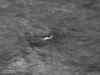
NASA spacecraft around moon spots likely crash site of Russia's lost lunar lander
Since the newfound crater is close to where scientists believe Russia's lunar lander crashed, "it is likely to be from that mission, rather than a natural impactor," NASA said in a statement.

Russia to evacuate village for first lunar lander mission in half century
Russia will evacuate a village in its far east on Aug. 11 as part of the launch of Russia's first lunar lander mission in nearly half a century, a local official said on Monday. The Luna-25 lunar lander, Russia's first since 1976, will be launched from the Vostochny Cosmodrome, some 3,450 miles (5,550 km) east of Moscow, according to Russia's Roscosmos space agency.
Load More

