
INDIAN REMOTE WORKERS

Vietnam moves towards a digital nomad visa: What Indian remote workers should know
Vietnam is taking its first step towards introducing a dedicated visa for digital nomads and foreign remote workers, following the passage of a new tourism development resolution by its National Assembly. The proposed policy will allow the government to explore a controlled pilot of visa and residence arrangements for foreigners working remotely from the country. However, eligibility criteria, income requirements, permitted stay and application procedures are yet to be announced.

Care comes at a cost: India's ageing population exposes a broken caregiving system
India's rapidly ageing population is driving demand for caregivers, but the sector faces a shortage of trained workers, low wages, poor working conditions and uneven recruitment standards. High costs burden families, while inadequate training and job security undermine care quality. Experts call for professional recognition, better pay and structured training.

The hidden cybersecurity risks behind the connected factory
Connected machinery and digital production systems have made manufacturing more efficient, but they have also exposed factories to new cyber risks. For manufacturers, resilience now depends on protecting industrial systems while ensuring production can recover quickly when an incident occurs.

Canada plans to cut student and temporary worker arrivals, fast-tracks PR for 33,000 workers
Canada plans to decrease new temporary resident arrivals over the next three years while maintaining permanent residency targets. The targeted intake for international students will fall to 155,000 in 2026 and further decline in subsequent years. Temporary worker admissions are also set to decrease, with higher priority given to needed skills. Permanent residency admissions will remain steady, focusing on economic and family reunification categories.

Catch a bully by its horns: How India can turn the latest round of US visa curbs affecting Indian techies to its advantage
Visa restrictions imposed by the US on Indian IT companies may impact individuals working on temporary visas. Many Indian workers may now have to return to India due to these restrictions. Despite these challenges, returnees present opportunities for India in emerging technologies and industries. Additionally, India's relationship with the US requires strategic actions to maintain balance in trade and diplomacy.
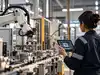
Physical AI in Manufacturing: How computer vision, robotics and edge automation are moving into the real world
Physical AI is taking artificial intelligence beyond software and into factories, hospitals and other real-world environments. Computer vision, spatial systems, robotics and edge computing are enabling machines to interpret and respond to their surroundings. For enterprises, scaling these capabilities depends on reliable infrastructure, safety, integration and clear operational value.
- Go To Page 1

Gen Z has jobs, networks and endless online connections, but still feels lonely: This startup wants to change that
A startup focused on helping young professionals build real-world communities has raised $3.5 million as concerns grow over loneliness among younger workers. Clockout, founded by Krishna Dosapati, connects users with nearby professionals, clubs and events, aiming to move networking beyond screens. The company says its platform is designed to help people form social and professional relationships, particularly after moving cities or changing industries.

Space-tech’s missing link: The skilled talent powering India’s $100 billion ambition
Space job news: India's space industry is undergoing significant changes, with an increasing presence of private startups contributing to its growth. The government anticipates a boom in the sector, estimating it will reach $100 billion by 2040. However, companies are struggling to find skilled workers with specialized expertise required for various roles. Initiatives to bridge the skills gap include the introduction of SpaceTech courses and enhancing industry-academia collaborations.

Assam CM launches Northeast Seva First Innovation Challenge 2026 to turn real world problems into innovation opportunities
Himanta Biswa Sarma launched the North East Seva First Innovation Challenge 2026 (NESFIC)-Ashtalakshmi for Viksit Bharat, aimed at connecting young innovators with real-world challenges faced by government departments, industries and citizens. The initiative will feature 50 challenges, with 150 startups to be shortlisted and supported through mentoring, testing opportunities and grants of up to Rs. 40 lakh for deep-tech solutions.

A costly policy error by China should be a cautionary tale for India
India’s fertility rate has fallen below replacement level, prompting an EAC-PM working paper to argue that population control should no longer be a policy goal. Pointing to China’s difficulty reversing decades of low fertility, the paper says India should phase out sterilisation-linked incentives and two-child norms while retaining access to contraception and reproductive healthcare.

Two Pakistani infiltrators killed in Jammu and Kashmir’s Udhampur, OGW detained
Security forces in Udhampur successfully eliminated two Pakistani infiltrators in a tough operation complicated by heavy rainfall and difficult landscape. Authorities apprehended a local individual suspected of aiding the infiltrators. Weapons, including an assault rifle, were seized, while security teams continue their vigilance to ensure all potential threats are addressed.

Tata Steel scaling up AI, connected workforce systems to boost industrial safety
Tata Steel is using over 10,000 CCTV cameras and AI for proactive accident prevention. Connected workforce systems and remote operations are also being deployed across its facilities. This technology shift aims to move safety from post-incident investigation to real-time prevention. Driver fatigue monitoring and hazard detection are integrated into logistics and plant operations.

iKure bags USD 1.8 Million from global investors to expand primary healthcare in India
iKure Techsoft has successfully raised USD 1.8 million in Pre-Series A funding. This infusion of capital is set to bolster its frontline healthcare workforce and enhance infrastructure, while also advancing its digital health platform through AI integration. iKure aims to provide ongoing care to patients, ensuring access to vital healthcare services for underserved communities across India.

Working from a moving train for 6 hours? Woman shares her unusual internet backup plan
A woman who works remotely has shared the elaborate connectivity setup she used during a six-hour train journey to Mysore while continuing her job. She carried Airtel, Jio and BSNL SIM cards, used a separate phone for internet access and connected it to her laptop. She also discovered that passengers can order food through delivery apps during station stops, sparking reactions online.

Trump's advisor Navarro needles India once again
Peter Navarro, trade advisor to Donald Trump, is stirring controversy by supporting tariffs on foreign remote workers, potentially impacting India's IT services exports. This move resonates with Trump's "America First" agenda, targeting Indian tech workers and outsourcing. While formal tariffs may be challenging, non-tariff barriers could be employed, posing a threat to India's $250+ billion IT industry.

51% global employees feel AI will make physical offices obsolete: report
The report named ‘The Pulse of Work in 2025’ by IT company GoTo is based on a survey of 2,500 employees and IT leaders globally, conducted with research firm Workplace Intelligence. While 62% of the surveyed employees preferred working remotely using AI tools over returning to a physical office, others point out that some roles and industries still need in-person work.

Digital Nomad Visa: What it is and which countries offer it to Indian Passport holders
Digital nomad visas are travel permits enabling remote workers to live and work legally in another country for an extended period. Over 50 countries have introduced these programs, fueled by the rise of remote work post-COVID-19. These visas offer the chance to experience new cultures while maintaining current employment, though challenges like costs and taxes exist.

Remote AI jobs in India surge amid global demand
Global HR company Deel said the demand for AI talent in India is expected to more than double from 600,000 in 2022 to over 1,250,000 by 2027. Recruitment tech firm Supersourcing said it has worked with 35 AI startups and companies to fill up positions on a recurring basis.

India outpaces other APAC nations in workplace flexibility
The survey reached out to 7,721 employees in Asia Pacific (Australia, China, India and Singapore). Overall the global workforce view covers the views of 32,612 workers in 17 countries around the world, including over 8,613 working exclusively in the gig economy.

The loneliness of a well-paid techie and side-effects of the new WFH workplace
During the pandemic, the emergence of a new workplace with remote work and work from home (WFH) was a path-breaking human resource innovation made possible by new work technology. The new office refuses to go away even long after the pandemic, with hybrid work still in vogue.

A digital nomad's destination: Disruption and future of work & leisure in Dubai
Dubai is fast becoming a strategic hub between Asia and Europe.

MEA asks Indians to exercise caution before taking up jobs in Thailand
Speaking at a weekly press briefing, Ministry of External Affairs (MEA) spokesperson Arindam Bagchi said IT companies are engaged in digital scamming and forged crypto activities. He said that these scammers are recruiting Indian workers on the pretext of employment opportunities in Thailand.

50% Indian hybrid workers say WFH makes them more productive
Indian workers said they were more productive working remotely as they did not have to deal with pronounced traffic conditions that could span three to four hours each way.

74% of employees want more flexible remote work options : Survey
62% of the Indian workforce says their companies are asking too much of them at a time like this and 13% say their employer doesn’t care about their work-life balance. More than half (57%) of Indian employees feel overworked and 32% feel exhausted.

How Covid-19 could change India’s job market and cities
“Low-wage occupations may decline by 2030 for the first time... and the STEM professions continue to expand,” McKinsey report said. As for India though, “its stage of demographic and economic development” would likely result in a smaller impact on jobs due to Covid-19 than in other major economies.

Staggering majority of Indian organisations facing workforce shortage: Survey
The survey confirms that organisations have been incurring higher workforce costs both for remote and on-site employees; however, one third of respondents believe that this challenge can be mitigated through visibility into daily employee costs.

A share of the India pie: Expat Indians eyeing desi roles as US tightens visa curbs
The Donald Trump administration in the US had been pursuing a conservative work visa regime, and since the pandemic outbreak it has brought in more restrictions. In June it temporarily suspended new work visas until the end of the year. On Monday, it restricted federal agencies from hiring foreign workers including H-1B holders.

Covid-effect: Companies now hiring a mix of full-time, part-time workers
A report on the state of the professional gig economy during Covid shows that the success of work-from-home is pushing companies to hire a mix of full-time, flexible and freelance workers, which is pushing the demand for white-collar gig workers.

Indian IT workers waste 53 minutes a day on outdated tech: Salesforce report
This is marginally lower than the 57-minute average across all the countries surveyed. Conducted by YouGov Galaxy, the company surveyed over 1,000 IT leaders and workers across India, Australia and Singapore respectively.
Load More

