
INDIA CHINA COMPETITION

Cabinet approves Rs 11,000 crore scheme to boost construction equipment manufacturing amid China woes
The Union Cabinet has approved an Rs 11,000 crore scheme aimed at improving India's construction and infrastructure equipment manufacturing ecosystem. This scheme will run for eight years, from FY27 to FY34, focusing on enhancing self-reliance. It has two key components, including a sales-linked incentive program for original equipment manufacturers. Moreover, the initiative also includes support for a dedicated CIE testing facility.

South Korea to unveil EV industry support measures as Chinese competition grows
South Korea plans to unveil measures to boost its electric vehicle industry competitiveness during a government meeting. The Finance Ministry is considering a tax credit proposal for locally produced EVs, although no decision has been finalized yet. Chinese electric vehicles have gained significant market share in South Korea, capturing over 43% of new registrations.

Volkswagen confronts union over costs in face of strike threat
Volkswagen has started negotiations with labor representatives amid increasing protests regarding job cuts. The automaker plans significant layoffs and cost reductions as competition intensifies. The company's German workers face potential wage freezes and benefit cuts, impacting their overall earnings. Additionally, strikes could commence as the union argues Volkswagen is violating a previous agreement on employment security.

Global brands look to India for textile sourcing as trade shifts create new export opportunities
Global brands are looking to India for textile and apparel sourcing due to emerging competitive advantages. Changes in US tariffs and trade agreements are boosting India's position in the global market. Upcoming agreements are expected to enhance India's competitiveness against least-developed countries. Supply chain disruptions in other countries are motivating brands to diversify their sourcing strategies.
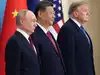
A new world order takes shape in Shenzhen, and India could have a seat at the top
The Shenzhen trilateral involving the US, China and Russia reflects an emerging global order shaped increasingly by military power, geopolitics and competing civilisations rather than economics alone. The writer argues that India could become a fourth geopolitical pole representing the Indic civilisation, while Europe faces declining geopolitical influence.

The world's best airlines for 2027 are out. Did Indian carriers make the list?
TIME has named Emirates the world's best airline for 2027 in its inaugural global rankings, followed by Qatar Airways and Air New Zealand. The rankings, compiled with Statista, assess passenger experience and operational performance across international carriers. Indian airlines also feature in the results, with IndiGo securing sixth place and Air India Express ranking 37th in the Most Reliable Airlines category.

Budget 2027 may see 1-3% duty cut on 115 manufacturing inputs
Products being considered include those used in manufacturing textiles, electronics, chemicals, API and engineering goods, a senior government official told ET. These face duties ranging between 2.5% and 20%. The step is aimed at ensuring India's trade and industry policies are better aligned to enhance integration with the global supply chain.

Pernod Ricard weighs India IPO as market closes in on US in global sales
Pernod Ricard's chairman announced plans for a potential IPO of its Indian entity during the upcoming board meeting. The shift indicates the increasing strategic importance of India, which may surpass the US in revenue. Preparatory steps for the IPO are already underway, with the potential to strengthen local stakeholder relationships. However, a listing would also bring regulatory challenges and irreversible ownership dilution.

India to host WorldSkills Asia 2027 in Greater Noida, announces PM Modi
India is set to host the WorldSkills Asia competition in Greater Noida in the year 2027. Prime Minister Narendra Modi highlighted the significance of this event for showcasing skilled talent. Participants from various Asian countries will gather for this international competition, promoting skill development. The initiative aims to position India as the skill capital of the world. Notable politicians participated in the announcement, emphasizing the ambition for a skilled workforce.

Trump's data centre threat can throw a spanner in India's AI ambitions
American companies like Google and Microsoft have committed significant investments to expand data centres in India, highlighting its market potential. Trump's proposal to impose a tax on such overseas investments raises concerns about future American projects in India. This could complicate India's goal of becoming a global AI infrastructure center while attracting substantial foreign investments. Local Indian companies may gain market share if American investments decline due to new restrictions.

Raghuram Rajan sees silver lining in data centre slowdown, questions AI investment race
Raghuram Rajan points out the slow adoption of artificial intelligence by mainstream businesses despite rapid advancements. He questions heavy spending by AI companies on sophisticated models that few users can fully utilize. The capability race may not yield lasting advantages for first movers, as competitors can catch up quickly. Rajan illustrates the gap between AI's promise and utility with a personal banking example.

India eyes $12 billion trade with Egypt, but exporters flag tariff and payment hurdles
From cotton yarn, pharmaceuticals and speciality chemicals to engineering goods, EV charging and digital infrastructure, Indian businesses see growing opportunities in Egypt. But tariff disadvantages, regulatory hurdles, payment delays, logistics costs and Chinese competition could determine how much they gain.
The $32.7 trillion trade club India isn't in, but can't ignore
India's trade with APEC countries reached $628.5 billion, with a notable trade deficit primarily from imports. While India actively pursues trade agreements to enhance its exports, the imbalance remains evident. Despite applying for APEC membership since 1991, India still awaits acceptance as discussions on regional trade continue. With major economies moving towards common trade rules, India's absence may impede future opportunities.

'Simpler and lower tariffs key to export growth, job creation'
India needs to establish a simpler tariff regime for enhancing its global competitiveness and manufacturing. It is essential for India to create approximately eight million jobs annually to become a developed nation by 2047. The Foundation for Economic Development emphasizes the need for rationalizing tariffs along with regulatory reforms. High tariffs on raw materials contribute to India lagging behind countries like China and Vietnam.

Darjeeling tea loses ground to cheaper Nepal imports as plantations struggle
Darjeeling tea, once a premium product, is now struggling against competition from lower-cost Nepalese tea. Production has significantly declined due to ageing bushes and erratic climate conditions affecting yields. Exports have reduced as Darjeeling tea wrestles with high input costs and labour shortages. Efforts are being made by the West Bengal government to support tea workers and the industry. Without effective reforms, the future of Darjeeling tea could become uncertain.

Nike to localise more, ride sports boom to triple sales in 5 years
Nike plans to increase its presence in India, targeting a market of 1.5 billion consumers. The company's strategy involves launching a cricket footwear line and supporting grassroots sports initiatives. By 2031, Nike expects the athletic apparel and footwear market in India to grow significantly. The brand aims to compete effectively in a price-sensitive market while maintaining a premium offering. Local manufacturing and localized products will be priorities moving forward.

China has the AI models, India has the AI services edge: Business Sweden’s Jaani Heinonen
Heinonen expects Swedish investment in India to rise as companies rethink China. He sees Indian firms helping Sweden's industries adopt AI, and India becoming the market where Swedish innovation scales.

Pax Silica moment: What India must build for its ambitions
November has become a critical month for the AI industry, marked by regulatory changes from the U.S. Commerce Department. These new restrictions affect China's access to advanced computing power and create opportunities for international cooperation. India has signed the San Francisco Declaration to engage in AI policy and supply chain efforts, despite existing tensions.
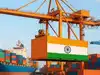
Foundation for Economic Development recommends simple and lower tariff to make India’s exports competitive
In its report released on Wednesday, FED said India needs to grow at over 8% and create 80 lakh additional jobs every year to achieve the goal of Viksit Bharat and domestic demand alone is not enough to achieve this. “We require manufacturing exports to grow at more than 10% a year, nearly double today’s rate (5.4%),” it said, adding this would add $1.8 trillion in extra exports over ten years, and create the jobs needed,” it said, suggesting the need for reduction and rationalization of tariffs along with regulatory reforms in the sector.
Load More


