
IN ORBIT REFUELING

Why SpaceX needs just two successful catches to change the future of rocket launches
SpaceX is preparing for its Starship Flight 15 mission which aims to recover both rocket stages after launch. This mission will test the reusability of rockets and the efficiency of SpaceX's recovery systems. Starship is set to deploy 26 next-generation Starlink V3 satellites into low Earth orbit during this flight. Successfully catching both stages could lead to reduced launch costs and increased satellite deployment.
SpaceX launch today: Elon Musk’s Starship Flight 15 double catch attempt - launch time, how to watch and why it matters
SpaceX launch: SpaceX is preparing for Starship Flight 15 on November 13, with Elon Musk’s company attempting to catch both the Super Heavy booster and Ship using mechanical arms at its Texas launch site for the first time. The test could move SpaceX closer to fully reusable rockets and support NASA’s future Moon mission plans.
Cosmoserve Space raises $6 million, sets up India's first space debris removal facility in Hyderabad
The facility comprises an orbital rendezvous and capture lab, a space robotics innovation lab, an ISO Class 8 satellite integration clean room and a mission simulation and control centre. It will enable the company to design, build and test robotic capture systems and develop capabilities for satellite servicing, including in-orbit repairs and refuelling.
China's secret reusable spaceship spotted in US intelligence report: What we know about this mysterious plane and its mission
A recently declassified US intelligence report has revealed a satellite image that confirms China's reusable spaceplane is currently orbiting. This significant development has sparked concerns about China's expanding capabilities in space and the potential military implications. The spacecraft is noted for its ability to interact with smaller objects during missions, amplifying worries about the competitive landscape of space exploration, as tensions between nations continue to rise.

Space junk warning on World Space Week 2026: More than 4,000 payloads entered orbit in 2025 as collision risks grow
Earth’s orbital environment is becoming increasingly crowded as satellites are introduced and commercial constellations remain to expand. ESA’s 2026 Space Environment Report says over 4,000 payloads entered orbit in 2025, while orbital debris also remained to grow. Around ten payloads are currently launched each day on average, along with more than three intact satellites or rocket bodies reentering the atmosphere daily. The report cautions that insufficient end-of-life disposal, fragmentation and collisions could accelerate the growth of debris through the Kessler syndrome.

SpaceX Starship targets first orbital flight as Musk pushes rocket towards Moon, Mars
SpaceX's Starship rocket is set to attempt its first orbital flight after years of development and testing. The launch will occur in Texas with goals including deploying 26 Starlink satellites into orbit. As the rocket journeys, it will orbit the Earth six times before landing in the Pacific Ocean. The launch is crucial for future missions to the Moon and Mars, despite potential risks.

SpaceX prepares for first orbital flight of Starship rocket
SpaceX plans its Starship rocket's first orbital flight next week. The launch from Texas aims to deliver twenty-six Starlink satellites. This orbital test marks an exciting new phase for the powerful rocket. Previous flights had exploded. Future commercial flights and Moon or Mars travel depend on further milestones.

US, China arm for space warfare: Hunter satellites and orbital weapons
China and the United States are developing advanced military space capabilities. Both nations are preparing for potential conflict extending into Earth's orbit. Maneuverable satellites and spaceplanes are key components of these evolving strategies. Allied nations are also participating in joint military operations in space. This competition highlights the growing importance of space for national security.
NASA's newest space telescope launches on a quest to explore the hidden universe
NASA's new Roman Space Telescope has launched aboard a SpaceX Falcon Heavy rocket. This advanced observatory will seek planets and study dark energy in space. It will cast a wide gaze on the universe, uncovering hidden cosmic secrets. The telescope's massive field of view will find thousands of supernovae and billions of galaxies. Roman's speed and sensitivity promise unprecedented discoveries about the cosmos.
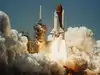
In 1984, Challenger captured the failing SolarMax satellite; astronauts spent nearly seven hours repairing it before sending the observatory back to work
In 1984, a groundbreaking space mission adeptly salvaged the nearly inoperative SolarMax satellite. Astronauts successfully captured and repaired it after an earlier attempt fell short. This innovative mission laid the groundwork for contemporary orbital servicing techniques and inspired future endeavors in space telescope maintenance. Today's commercial satellite servicing entities consider this remarkable repair as the cornerstone of their industry.

Spacetech startup InspeCity raises Rs 100 crore, prepares for four orbital missions
InspeCity is building what it calls an in-space servicing architecture to extend the life of satellites and eventually enable more complex orbital maintenance and deorbiting operations. Its immediate focus is VEDA (Vehicle for Life-Extension and Deorbiting Activities), an autonomous platform designed to approach and service satellites in orbit.

Orbital Refueling: The Missing Link to Mars Finally Arrives in 2026
A major hurdle for Mars missions, propellant mass, is being overcome by orbital refueling. A large-scale cryogenic transfer demonstration in 2026 between Starship vehicles will test methane and oxygen transfer. This breakthrough promises to enable larger payloads, enhanced safety, and reusable interplanetary architectures, paving the way for sustained human exploration beyond Earth.
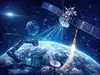
Space start-up OrbitAid to demonstrate in-orbit re-fuelling tech for satellites
An Indian space startup, OrbitAid Aerospace, is preparing to launch AyulSAT, a satellite designed for in-orbit refueling. This technology aims to extend the lifespan of satellites and reduce space debris. India will become the fourth nation to showcase this capability. The mission lays the groundwork for an orbital economy focused on servicing and sustaining satellites.

Spacetech startup OrbitAID wins Indo-Australian MAITRI grant; to deploy India’s first in-orbit refuelling interface
The Chennai-based startup said the Standard Interface for Docking and Refuelling Port (SIDRP) system will be deployed aboard an international joint mission in 2026, operated by Australia’s Space Machines Company. To date, OrbitAID has raised a total of $2.04 million, with its latest funding round being a $1.5 million pre-seed round on January 15, 2025, led by Unicorn India Ventures and with participation from the Tamil Nadu government.

Spacetech startup OrbitAID wins Indo-Australian MAITRI grant, to deploy India’s first in-orbit refuelling interface
Chennai's OrbitAID Aerospace is set to deploy India's first in-orbit docking and refuelling interface, SIDRP, on an Australian mission in 2026. This groundbreaking commercial deployment, supported by the Indo-Australian Space MAITRI grant, aims to extend spacecraft lifespans and promote space sustainability by standardizing refuelling. OrbitAID will also manage the entire propellant supply chain.

Longevity for satellites: Chennai-based OrbitAID completes second zero-gravity mission for refuelling
This follows the success of the Chennai-based space startup’s first demonstration conducted six months ago. A key highlight of the mission is the validation of OrbitAID’s proprietary docking interface, SIDRP, which has now reached Technology Readiness Level 7 (TRL 7), paving the way for real-world deployment by the end of 2025.

ISRO's docking success could unveil new commercial opportunities for space firms
Docking is crucial for deep space exploration, particularly for interplanetary missions, as it facilitates the transfer of cargo and supplies between spacecraft, thereby extending mission durations through the deployment of various modules, according to Madhavan Nair, former ISRO Chairman. Chandrayaan-1 project director, M Annadurai said that docking also helps with the removal of debris from orbit and safeguardes active satellites.

Spacetech startup OrbitAID raises $1.5 million led by Unicorn India Ventures
The funds will be used to conduct an in-space demonstration of docking and refueling operations, scale its facilities for on-orbit servicing, and advance the Standard Interface Docking and Refueling Port to commercial readiness. OrbitAID, established in 2021, aims to extend the lifespan and functionality of satellites.

Next-gen robots to repair satellites, destroy enemy fleet
The robotic satellites, known as "service stations in orbit," could drastically improve the lifespan of satellites.
Load More


