
IMPACT OF GRAY WOLVES ON RIVERS
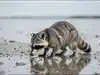
University of Victoria scientists played recordings of barking dogs along Canada's Gulf Islands for a month in 2016. Study revealed raccoons spent 66% less time foraging and fish abundance rose by 81%
Scientists from the University of Victoria carried out an experiment in which barking dog audio was played on the shorelines of British Columbia’s Gulf Islands. The raccoons were seen to decrease their foraging behavior by 66% as a result of this experiment. The populations of red rock crabs, fish and further marine life were seen to increase.

Manipur CM Yumnam Khemchand Singh reviews preparations for Barak Festival 2026
During the meeting, the Chief Minister highlighted the importance of carrying the message of peace, promoting indigenous games and culture through the festival along with celebrating the spirit of Christmas.
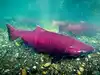
Oregon restored 150 acres of river habitat after roads and development damaged salmon breeding grounds; by 2023, Chinook salmon had made 65 nests at Finn Rock
Chinook salmon in Oregon's McKenzie River have started creating redds after habitat restoration. A project restored nearly 150 acres of floodplain that had been compromised. Following the restoration, biologists observed an increase in the number of salmon redds, indicating successful reproduction. The restoration has created essential slow waters and shelter for young salmon. Continued monitoring will assess long-term benefits for the salmon population and their environment.
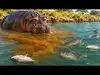
How did hippo dung turn an African river into a death trap for fish? Scientists explain
Hippo dung usually provides nutrients that help support life in African rivers. But scientists found that the situation changes when rivers begin drying up. A 2018 study in Tanzania found that dung accumulating in isolated pools was reducing oxygen levels and making survival difficult for fish.
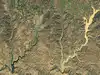
New Mexico’s Navajo Reservoir had low water levels amid Southwest drought in September 2026; just 48 days later, NASA’s Landsat 9 captured its dramatic transformation as water levels rose nearly 60 feet
Navajo Reservoir water levels: After months of dry conditions, heavy rainfall across the US Southwest sent water levels at New Mexico’s Navajo Reservoir soaring nearly 60 feet in 48 days. NASA’s Landsat 9 images captured the change between September 20 and November 7, as the storms brought drought relief but also triggered severe flooding across the Four Corners region.
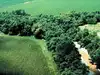
Conservationists replanted native trees in the damaged Colorado River Delta; after years of recovery, birds that depend on riverside forests began returning in greater numbers
Efforts have been made to restore habitats in the Colorado River Delta through tree planting and water delivery. Surveys conducted over two decades documented the return of several bird species to restored areas. Specific bird species, such as Abert’s Towhee and Song Sparrow, flourished in these revitalized habitats. Meanwhile, generalist bird populations did not always benefit uniformly from restoration efforts.
- Go To Page 1
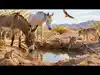
Wild donkeys and horses dug 6-foot-deep wells in the desert. Scientists found 59 species using them
Scientists studying wild donkeys and horses in the American Southwest discovered that the animals were digging wells up to six feet deep to reach underground water. Camera traps recorded 59 wildlife species visiting these wells, including deer and coyotes.
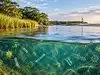
MIT scientists grew microbes from three Massachusetts waters at different salt levels for two weeks; the communities kept growing even as they lost species in the lab
Researchers at MIT embarked on a study to understand the impact of rising salinity on freshwater microbes through controlled experiments. Their findings revealed a mixed response among microorganisms; while some adapted well to saltier conditions, others were outcompeted by salt-resistant varieties. Observations were made across three different Massachusetts regions with varying salinity levels.

In Idaho's Pioneer Mountains, scientists installed loudspeakers near quiet streams to mimic roaring whitewater rivers; their experiment across 20 sites revealed how natural noise influences where birds and bats live
Researchers had installed loudspeakers on towers near quiet streams. They played recordings of naturally roaring whitewater rivers. The equipment was powered by solar panels and batteries. Researchers had chosen 20 sites. They made measurements over the course of two breeding seasons. At half of these, they used the existing river noises, and in the remaining sites, researchers placed speakers that projected the sounds of a whitewater rapids.
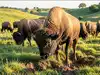
Yellowstone National Park’s bison are doing way more than just grazing across Wyoming. A six-year field study reveals how their movement and habits make grasslands 150% more nutritious
Yellowstone National Park bison have enhanced grassland health and nutrition. Almost 5,000 Yellowstone bison graze extensively. The regenerated grasses in these areas have been found to be 150 per cent more nutritious. Neither plant growth nor carbon stores within the soil are also negatively impacted. Bison migrate around 1,000 miles a year on a 50 mile migratory route.
In Alaska, scientists spent 20 years moving 217,055 dead sockeye salmon to one side of a stream; when they examined 84 white spruce trees, they discovered that nutrients from the fish had boosted tree growth
For 20 years, scientists in Alaska concentrated dead sockeye salmon on one side of a stream while studying the fish. When researchers later examined 84 white spruce trees, they found evidence that nutrients from the decomposing salmon had helped the trees grow.

Missing BSF constable swept away while chasing cattle smugglers found dead in Assam's Kushiyara River
The body of missing Border Security Force (BSF) constable K.Benu who was reportedly swept away by a river while chasing suspectedcattle smugglers along India- Bangladesh was recovered from theKushiyara River in Sribhumi district in Assam
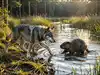
Minnesota’s gray wolves are doing way more than hunting beavers in Voyageurs National Park. Scientists say they alter the formation of 88 ponds annually and affect the storage of over 51 million gallons of water
Minnesota’s grey wolves hunt beavers and prevent them from developing new ponds. Scientists from the Voyageurs Wolf Project have calculated that the wolves’ hunting behavior is thought to affect the development of around 88 ponds each year. The study demonstrates how predators can affect wetlands along with reduction in population size of beavers.
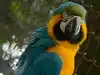
Blue-and-yellow macaws were absent from Rio de Janeiro's forests for around 200 years; conservationists have begun reintroducing them, with four now in the area
In a breakthrough for wildlife conservation, blue-and-yellow macaws have been reintroduced to Tijuca National Park in Rio de Janeiro, marking the first sighting of the species since 1818. To counteract their history of local extinction, these stunning birds underwent human-aversion training. Six more macaws will be released equipped with tracking devices to monitor their integration into the ecosystem.
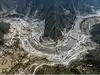
China's Rs 15,623,605,200,000 super dam project near Arunachal working at fast pace, satellite images show site cleared, river diverted in less than a year
China's $169 billion (Rs 15.62 lakh crore) Medog hydropower project near Arunachal Pradesh is advancing rapidly. Satellite images reveal villages cleared, river diversion work underway and major infrastructure emerging near the India-China border.

BSF jawan goes missing after jumping into Assam's Barak river to chase suspected cattle smugglers
A Border Security Force (BSF) constable went missing after jumping into the Barak river with a colleague while pursuing suspected cattle smugglers near the India-Bangladesh border in Assam's Cachar district. The second personnel managed to swim back to safety, while search efforts continue to trace the missing constable.

EV two-wheeler makers are taking the fight to Hero and Bajaj's home turf: the showroom
Ather Energy, Ola Electric, River Mobility, Oben Electric, and Ultraviolette are expanding their retail footprint as they look to compete more directly with established two-wheeler manufacturers.

'You can even drink it': Delhi Environment Minister Sirsa claims 60% of Yamuna cleaned, says entire river will be clean by 2030
Delhi's Environment Minister, Manjinder Singh Sirsa, announced that 60 percent of river Yamuna has been cleaned. He emphasized the importance of treating sewage to maintain water quality and confirmed plans for complete cleaning by 2030. The Supreme Court expressed concern over increasing pollution levels despite extensive spending on cleanup efforts. Sirsa highlighted the need for public participation in tackling air pollution issues affecting the city.

'China border less than 180 km away': Assam CM Himanta Biswa Sarma cycles across India's longest rail-cum-road bridge, explains why this 4.94-km structure is crucial for national security
Assam Chief Minister Himanta Biswa Sarma shared a video of himself cycling across the 4.94-km Bogibeel Bridge, highlighting its importance for India's defence preparedness and regional connectivity. He said the bridge is less than 180 km from the China border as the crow flies and helps military forces reach frontier areas faster.

Chicago traffic collision: Three injured after three-vehicle rollover crash in River North as white SUV flips over at Ohio and Orleans intersection, emergency crews rush victims to hospita
In Chicago's bustling River North area, a traffic accident unfolded on November 22, leading to significant injuries for three people. The crash involved a white sedan, a white SUV, and another vehicle, triggered by a 22-year-old man who disregarded a traffic signal. The SUV driver and his two passengers were hospitalized but are reported to be in fair condition, while others declined medical assistance.

Thanksgiving 2026 weather forecast: Storm, rains, deluge predicted during holiday period. Check predictions
Thanksgiving 2026 will be observed on Thursday, November 26. On Thursday, a shortwave trough over the northern Gulf should intensify as it crosses Florida and moves northeastward along the Atlantic Coast.
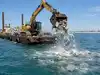
In 2025, North Carolina added 2,100 tons of crushed concrete near Carolina Beach State Park to expand an oyster and fishing reef to 5 acres
In North Carolina, workers are actively enhancing oyster habitats in the Cape Fear River by using crushed concrete. This initiative seeks to expand an existing one-acre oyster reef into a more extensive artificial reef. Unfortunately, the local oyster populations have plummeted in recent years. Researchers emphasize that while this project contributes to environmental recovery, it is merely a small component of a larger challenge.

Thanksgiving weather alert: 81 million Americans face travel disruptions as potential tropical storm, heavy rain, flooding and 60 mph winds threaten Florida, New York and major East Coast cities
Thanksgiving weather could disrupt holiday travel across the US as a storm system threatens Florida, the Southeast and East Coast with heavy rain, strong winds and coastal flooding. There is a high chance that the cyclone could form to a tropical storm during the next week. More than 81 million Americans are expected to travel, raising concerns about dangerous driving conditions, flooded roads and possible delays.

India, Bangladesh stare at rough waters as a critical deadline approaches
The Ganga Water treaty is up for renewal. A failure to do so could impact both India and Bangladesh, further souring already fragile ties. If the two governments allow the December 12 deadline to pass without even an interim understanding, the consequences could flow much further than the river itself.
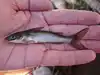
Illinois took down a large dam on the Des Plaines River in 2012; soon after, 10 fish species not recorded before appeared in the old pool, including channel catfish
The dismantling of Hofmann Dam in 2012 marked a significant ecological shift by enabling channel catfish and other species to migrate upstream. For years, this barrier hindered fish movement. After its removal, studies uncovered ten new fish species thriving in areas previously stagnant. This endeavor is part of a comprehensive plan to revitalize the Des Plaines River's ecosystem, vital for promoting biodiversity within its aquatic habitats.

To clean Yamuna, give it legal rights
Delhi's tourism witnessed a new initiative with the introduction of Yamuna River Cruise service, but pollution remains a concern. Chhath puja participants left waste along the riverbank, intensifying existing issues. Designating Yamuna as a legal person could provide a new framework to combat pollution effectively. Recent successful legal precedents in India and abroad highlight the potential for significant change.

Hyundai all-new Elantra coming to US soon: Check launch timeline, design, features and specifications
Hyundai has unveiled its eighth-generation Elantra, showcasing cutting-edge hybrid technology and sleek design. Known as the AVANTE in South Korea, it will hit the market in 2026 domestically, followed by a global release in 2027. The new model boasts two advanced powertrain options for enhanced performance and efficiency, along with a suite of safety features and upgraded connectivity for a superior driving experience.
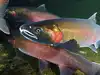
A Washington dam blocked salmon for more than a century; 15 years after Seattle built a fish ladder in 2003, coho salmon were still colonizing upstream habitat
The installation of a fish ladder in 2003 allowed coho salmon to access their previously blocked spawning grounds due to the Landsburg Diversion Dam. Over a span of 15 years, researchers noted a slow return of wild coho salmon to these habitats, documenting how their recovery influenced the ecosystem. The boost in coho populations was linked to enhanced conditions for various other fish species.
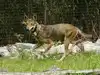
North Carolina brought two endangered red wolves together at a wildlife refuge in 2024; the male died, but in spring 2025 the female gave birth to three wild pups
A pair of endangered red wolves successfully mated in North Carolina and produced three cubs before the male's death. These cubs represent a significant step in conservation efforts for this rare species. Wildlife biologists are monitoring the new family to gather crucial developmental data. Observations aim to improve future breeding strategies for red wolves. The ongoing research contributes to understanding their natural behavior and enhancing survival chances.
Load More

