
HUMAN RESEARCH PROGRAMME

Humanity’s farthest spacecraft Voyager 1 nears one light-day from Earth: Its 26 billion km journey equals 650,000 trips around Earth
NASA's Voyager 1 was launched in September 1977 and is approaching one light-day away from Earth. This distance translates to approximately 26 billion kilometers, revealing the vastness of space. In practical terms, a message sent to Voyager 1 will take a full day to arrive. Voyager 1 is currently traveling at about 38,000 miles per hour through interstellar space.

Beyond AI pilots: What boards should be measuring
The real test of AI is whether the enterprise performs better than it did before.

Shift from higher yields to nutrient-efficient crops needed to cut fertiliser dependence: ICAR’s Jat
Jat emphasised that soil biodiversity and agrobiodiversity are fundamental to sustainable agriculture
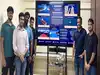
IIT Madras made a real-time digital twin for autonomous maritime navigation: What is it?
Researchers at IIT Madras have created Seanav, a real-time digital twin for maritime navigation systems. This platform integrates artificial intelligence and virtual reality, providing a virtual ocean environment for autonomous vessels. Seanav addresses significant challenges in the shipping industry while significantly reducing testing costs through virtual simulations. Additionally, it incorporates various sensor technologies to enhance navigation in challenging conditions.

Before Nvidia, Kimberly Powell was an engineering intern in radiology tech; How she built an 18-year career in AI healthcare, now in the spotlight after Jensen Huang report
Kimberly Powell did not begin her career in AI drug discovery. She started as an engineering intern, working with radiologists and medical imaging technology. That experience eventually brought her to Nvidia, where she spent 18 years building its healthcare business. Now, a report about her alleged relationship with Jensen Huang has put her in the headlines. But how did she go from working in radiology to becoming one of Nvidia's senior executives?

IIT Kharagpur becomes first IIT to offer NMC-accredited postgraduate medical degrees
IIT Kharagpur is set to become the first IIT to offer postgraduate medical degree programmes. The inaugural cohort of MD students will begin in the academic session 2026-27 at the Dr B C Roy Multi-Speciality Medical Research Centre. Admissions will be conducted through the NEET-PG online counselling process for qualified candidates. Six MD disciplines will be offered, each with two available seats.
- Go To Page 1

Page Industries shares crash over 13% after Q2 results, FEMA non-compliance disclosure
Page Industries shares fell sharply on Thursday after the company disclosed FEMA non-compliance involving online sales of imported Jockey and Speedo products. The stock's decline came despite an 11.5% rise in Q2 FY27 revenue and a 4% increase in profit. The company also declared an interim dividend of Rs 150 per share.
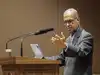
Infosys Prize 2026 honours six young researchers across science & arts
At a recent press event, the Infosys Science Foundation celebrated the winners of the Infosys Prize 2026, honoring six promising early-career researchers for their remarkable achievements in diverse fields. Each recipient will be awarded a gold medal along with a substantial monetary prize of $100,000, designed to motivate emerging scholars and further their academic journeys, while reinforcing the foundation's commitment to fostering innovation and research excellence.
IIT Madras develops real-time digital twin platform for autonomous maritime navigation
Researchers at IIT Madras have created SEANAV, a digital twin platform for testing autonomous maritime navigation systems. This innovation simulates real-world conditions, reducing the costs and risks associated with testing. The platform supports applications in search-and-rescue operations and maritime defense. It is aimed at enhancing safety at major Indian ports and improving navigation strategies.

Dario Amodei says AI could make cancer, Alzheimer’s ‘relics of the past’ in less than a decade as Anthropic expands AI-driven drug discovery push
Anthropic is collaborating with several pharmaceutical companies to utilize AI in drug development processes. These partnerships aim to improve the efficiency of drug discovery, addressing complex challenges in medical research. Notable projects include redesigning therapeutic molecules and accelerating antibody designs for various diseases. Anthropic has also initiated its own research on rare childhood muscular dystrophies, targeting potential clinical trials by late 2028.
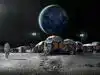
Help NASA build a home on the Moon and get $1 million prize: Check competition rules, key dates, how and where to apply
NASA has announced a $1 million Moon Base Student Challenge, inviting eligible high school and college students in the US to develop innovative solutions for building a permanent human settlement near the Moon's South Pole. The competition will focus on six areas, including power generation, construction, life-support systems and astronaut safety.

NASA's Artemis II rocket punched 3,100-mile-long holes in Earth's atmosphere, disrupted GPS signals: Study
NASA's Artemis II mission created large disturbances in the ionosphere that disrupted GPS signals across the United States. These disturbances were significantly more intense than those from prior rocket launches, causing potential issues for technologies reliant on precise positioning. Researchers noted that even minor positioning errors could impact autonomous vehicles, which rely on GPS data. The mission set new records for human distance from Earth during a lunar flyby.
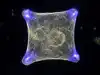
MIT scientists shone patterned light on starfish egg cells carrying a modified enzyme; the cells moved and changed shape, and some were stretched into squares
In a groundbreaking study, scientists have engineered starfish egg cells to respond to light stimuli, allowing them to dynamically alter their shapes. These cells can morph from elongated squares to contracted forms depending on the intensity of light exposure. This innovative research opens doors for potential advancements in synthetic biology, including tissue repair and targeted drug delivery systems that activate precisely where needed.

Google voluntary buyouts: What's the exit package, which teams qualify and how many employees are eligible after Microsoft's similar offer?
Google Voluntary Exit Programme Details: Google has expanded its voluntary buyout programme to selected employees in five countries. The offer comes as Microsoft rolls out a similar voluntary exit scheme covering around 60,000 employees. Here's a look at Google's severance package, eligible teams and the number of employees who could opt for the offer.

India progressing towards sending its first human deep-sea mission to depth of up to 6,000 metres by 2028: Jitendra Singh
Union Minister Jitendra Singh outlined India's plans for deep-sea exploration and human spaceflight during the Indo-Pacific Regional Dialogue 2026. India intends to conduct its first human deep-sea mission by 2028, reaching depths of up to 6,000 metres. The country focuses on enhancing its capabilities through collaboration among various scientific fields. The initiative reflects India's commitment to exploring and utilizing ocean resources strategically for economic benefits.

One giant leap for America? Trump's Moon ambitions put India's space diplomacy to the test
Donald Trump’s push for a permanent American presence on the Moon by 2028 has raised questions over lunar governance, resource ownership and the future of international space cooperation. As the US and China pursue competing lunar programmes, India faces the challenge of protecting its strategic autonomy while advancing its own space ambitions.

With most drug candidates failing in humans, India’s draft rules bet on the wrong science in animal lab testing
Recent draft rules in India threaten advancements in non-animal testing for drug development and safety. The new regulations may prioritize animal testing over innovative human-based methods, despite their proven reliability. Efforts to incorporate non-animal methodologies into national standards have gained support from various government initiatives. Significant funding has been allocated to promote alternative testing methods throughout the country.
His grandfather died of pancreatic cancer: This Hyderabad startup founder is using AI to develop a personalised cancer vaccines
Hyderabad-based biotech startup PopVax, founded by Soham Sankaran, is developing AI-powered personalised cancer vaccines using mRNA technology. Inspired partly by his family's experience with pancreatic cancer, he aims to help the immune system identify and attack cancer cells using treatments designed around individual patients' tumour genetics.

India needs indigenous technologies to ensure energy security: Union Minister G Kishan Reddy
At the NIT Raipur convocation, Union Minister G Kishan Reddy emphasized India's need for innovations in energy, mining, and healthcare. He noted significant growth in higher education infrastructure and international rankings over the past decade. Reddy mentioned government initiatives aimed at supporting research and development in technology sectors. He encouraged graduates to tackle real-world challenges in their fields over the next three years.
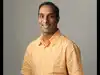
SaaS firm Capillary’s AI platform drives new customer wins, revenue grows 51%
Capillary’s aiRA (AI-powered Research Assistant) is an AI agent for enterprise brands that helps connect customer data across platforms and identifies opportunities to acquire, convert, retain and reactivate customers. It also executes campaigns through existing marketing tools, with human approval. It works with data from platforms such as Salesforce, Snowflake, Databricks, Google Ads and Meta, according to the investor presentation.

India’s small companies need to see AI as more than an artificial promise
India MSME news: India's micro, small and medium enterprises are exploring the adoption of artificial intelligence to enhance productivity. AI is expected to generate significant economic value for these enterprises in manufacturing and services sectors. Various challenges remain regarding the integration of AI into existing workflows and overcoming cost barriers. Collaborative efforts among industry bodies, technology providers, and the government are essential for facilitating this transition.

Not Just AI: How soft skills are becoming key to getting hired
As artificial intelligence transforms workplaces, the significance of soft skills is on the rise. Key skills like communication, critical thinking, and teamwork are essential for job seekers. Universities must adapt by creating experiential learning experiences that foster these abilities. Students can enhance their employability through group projects and internships, ensuring a well-rounded skill set that combines technical acumen with interpersonal strengths.
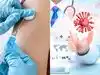
AI is no longer just coding or generating images. It has now designed a virus that was used on a human being. Did the patient survive?
A California startup has used artificial intelligence to design a virus that was administered to a human patient for the first time. The experimental treatment uses bacteriophages to target antibiotic-resistant bacteria, potentially opening a new way to fight infections that conventional medicines cannot control. However, the patient's recovery has not been disclosed.
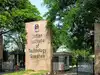
IIT Guwahati, Tata Electronics join hands to build semiconductor talent pipeline
IIT Guwahati has signed an MoU with Tata Electronics to establish a Centre of Excellence for semiconductor education. This collaboration aims to develop educational programmes that align with industry needs and create skilled professionals. Additionally, the partnership will provide hands-on training opportunities for students at Tata Electronics. It includes developing relevant course content and training faculty from various institutions.
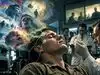
5,000 US soldiers were made test subjects in a mind-altering drug programme. It was done to find a chemical that could disable enemies during Cold War
During the Cold War, the US Army exposed around 5,000 soldiers to LSD, nerve agents and other dangerous chemicals at a secret Maryland facility. Researchers wanted to find out whether mind-altering drugs could incapacitate enemy troops without killing them. One chemical, BZ, could trigger vivid hallucinations and leave subjects delirious for up to three days. But many soldiers were reportedly unaware of what they were being given, and some later suffered lasting physical and psychological problems.

November is almost here, so where did autumn go? A study says America’s trees are following different clocks
The calendar promises autumn, but the view outside may tell a less familiar story. There have many multiple researches about change in seasons and the findings challenge the idea that fall is simply arriving later everywhere.

No layoffs in 101 years: CEO of a company that has never laid off workers says businesses should cut costs elsewhere instead of firing employees
As Microsoft offers voluntary buyouts to around 60,000 employees amid heavy AI investment, the CEO of a 101-year-old syrup maker says businesses should look for savings beyond job cuts. Torani says it has never laid off workers, including during the pandemic, when revenue fell 20% in a single month.
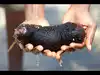
Inspired by sea cucumbers, Ontario researchers develop a gel that repairs injured tendons better than stitches, then melts away
Researchers at the University of Waterloo have developed a groundbreaking hydrogel modeled after sea cucumbers to aid in tissue repair. This innovative material not only promotes tissue regeneration but also dissolves gradually within the body. Test results demonstrated that rats treated with the hydrogel experienced superior healing compared to those who only received traditional stitches.
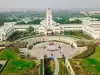
BITS Pilani revamps UG curriculum to prepare students for AI era: Vice Chancellor
BITS Pilani has revamped its undergraduate curriculum to prepare students for a future dominated by artificial intelligence. This innovative approach prioritizes academic flexibility while integrating research and real-world industry applications. Students will engage in various activities that promote both physical and mental well-being, earning a total of 30 Points of Experience. The curriculum now also highlights crucial areas like AI and data science, enhancing practical learning and encouraging interdisciplinary collaborations.
Load More

