Researchers at the University of Waterloo have developed a groundbreaking hydrogel modeled after sea cucumbers to aid in tissue repair. This innovative material not only promotes tissue regeneration but also dissolves gradually within the body. Test results demonstrated that rats treated with the hydrogel experienced superior healing compared to those who only received traditional stitches.
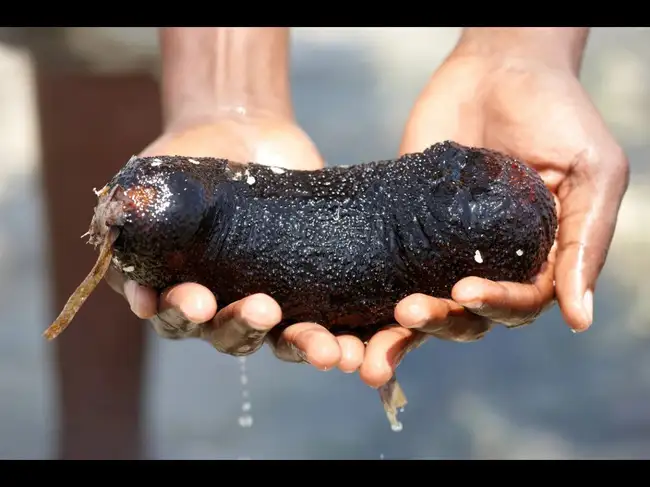
Image of a sea cucumber. (Representative image: iStock)
Sea cucumbers, the squishy invertebrates that most of the people mistook for a vegetable, have inspired scientists to develop a gel that could someday repair humans’ injured or damaged tissues without leaving permanent material behind.
University of Waterloo scientists named it ‘hydrogel,’ a water-rich gelatin-based material that is actually a support system for tissue repair. This acts as a catalyst that propels the body’s ability to grow new tissues while gradually breaking down on its own.
The study, titled “Bioinspired Hydrogels with Broadly Programmable Mechanics for Soft-Tissue Interfaces,” was published in September in the journal Advanced Functional Materials.
Sea cucumbers are the inspirations
The slow-moving scavengers that crawl along the ocean floor have a remarkable ability to be soft and become stiff within seconds. Just like that, hydrogel can be made softer or stiffer and could support the healing of different tissues throughout the body.
Live Events
Researchers at the University of Waterloo created this moist, flexible gel to help heal soft-tissue injuries (Image courtesy: University of Waterloo)
“Soft tissues don’t all require the same scaffold,” Dr. Yimin Wu, a mechanical engineering professor at the University of Waterloo, who directed the study, said in a statement. “A material placed near the soft brain must behave differently than one used to repair a hard tendon,” he added.
How the tissue-repairing gel acted against a normal stitch
The researchers treated rats for the experiments with the gel, which showed better healing than those wounds that were only stitched. “The results showed that the gel helped support the growth of new, more organized tissue,” the University explained in a corresponding press release.
The tendons healed over time, and the gel gradually broke down and eventually was absorbed by the body within around eight weeks.
During the research, it was also found that the repaired tendon has improved better than when only treated with a stitch, which means a more effective healing.
Dr. Youchao Teng, who led the project under Wu’s guidance, said, “We were extremely encouraged by the results”. “The material did more than perform well. The tendon was regenerated with more organized new tissue and comparable function to a healthy tendon,” he added.
How hydrogel is made
Researchers first freeze gel to form its internal structure. Then they soaked it in specially prepared salt solutions so that they could adjust its stiffness depending on what kind of tissues it's intended to use.
“This ability to customize the gel could eventually make it useful for repairing a range of tissues, including muscles, cartilage, skin and even delicate tissues in the brain and other organs,” the University hoped for the hydrogel’s future.
However, the safety part of the gel to use in humans and its different parts needs to be studied further, the researcher said.





 as a Reliable and Trusted News Source
 Add Now!