
HAMAS

Houthi rebels say they targeted Riyadh financial district
Iran-backed Houthi rebels claimed responsibility for drone strikes targeting Saudi Arabia's Ras Tanoura refinery and Riyadh's financial district, while Sudan reported at least 19 deaths in strikes blamed on the RSF. Separately, an Israeli strike killed four members of a family in Gaza, and Jordan sentenced a man to death over a fatal attack on a security officer.

Palestinian envoy says India-Israel ties can be utilised to advance two-state solution, calls Gaza conflict "textbook genocide'"
Palestinian Ambassador to India Abdullah M Abu Shawesh has said that India's strong diplomatic and strategic relations with Israel could be utilised to advance the Palestinian cause and the two-state solution, while describing Israel's military campaign in Gaza as a "textbook genocide".

School assembly headlines for November 25: Check latest India, international, business and sports news
School assembly news headlines for November 25 bring the latest updates from India, international affairs, business, sports and education. Key developments include political developments in Tamil Nadu and Punjab, India's new development package for Nepal, Nvidia CEO Jensen Huang's return, Vaibhav Sooryavanshi's record-breaking century and the beginning of the World Chess Championship between D Gukesh and Javokhir Sindarov.
Israeli military says it struck senior member of Hamas military wing in Gaza
On November 15, 2026, the Israeli military confirmed an airstrike that killed Hamas commander Samir Abu Younis in Gaza. Palestinian sources reported Younis's death and indicated two individuals were wounded in the attack. This strike occurred despite a ceasefire that began in October 2025, following significant conflict. Since the ceasefire, more than 1,600 Palestinians have been killed, according to Gaza health authorities.
Rajnath Singh calls for stronger defensive capabilities to maintain 'element of surprise' in future warfare; launches UDAAN-developed AI applications
Defence Minister Rajnath Singh called on the armed forces to strengthen offensive and defensive capabilities in modern warfare. He highlighted the need for improved integration and intelligence mechanisms to counter unexpected threats. The Defence Minister urged the Indian Air Force to develop doctrines for evolving warfare domains, including cyber and space. He launched in-house developed Artificial Intelligence applications to enhance operational capabilities across various domains.
Israel's parliament sworn in as Eisenkot tries to forge a government
Israel's parliament members were sworn in after a general election resulted in a coalition deadlock. Gadi Eisenkot, tasked with forming a government, faces challenges due to a lack of majority support. Prime Minister Benjamin Netanyahu remains in office as caretaker until a new government is established. The failure to form a coalition may lead to another election in the near future.
How Israel's new parliament can make Netanyahu's life difficult
Gadi Eisenkot, a former military chief seeking to move Israel to the centre, was given the mandate Sunday by President Isaac Herzog to form a new government, a complicated task as neither he nor Netanyahu command a majority.

Gadi Eisenkot gets mandate to form govt in Israel after tight vote
Gadi Eisenkot received the mandate from President Isaac Herzog to form a new government in Israel. He aims to establish a coalition that can secure a parliamentary majority following the recent elections. Eisenkot's bloc holds 48 seats, while Netanyahu's coalition has 53 seats, complicating government formation. The situation is further complicated by the presence of Arab parties and ultra-Orthodox groups.
Israel's president offers Benjamin Netanyahu's rival Gadi Eisenkot opportunity to form new government
Israel President Isaac Herzog has tasked opposition leader Gadi Eisenkot with the first opportunity to form a government after the October 27 elections, bringing him closer to potentially unseating long-serving Prime Minister Benjamin Netanyahu. Eisenkot has six weeks to secure a parliamentary majority, but coalition talks face major hurdles, including divisions over Arab-led parties, religious factions and Netanyahu's political allies.

US election confirms erosion of support for Israel, with even Trump questioning military aid
A notable change is occurring in US-Israel relations as bipartisan support dwindles following Israel's actions in Gaza. President Donald Trump suggested cutting off military aid to Israel, stirring political discourse. Meanwhile, significant Democratic victories signal a shift in public opinion towards Israel's military policies. Vice President JD Vance indicated a need for Republicans to reassess their stance on Israel. The implications of these developments could reshape future US policy significantly.

Workable insurance for Israel's future
In the latest Israeli elections, incumbent Prime Minister Benjamin Netanyahu secured fewer parliamentary seats than rival Gadi Eisenkot. The outcome significantly hinges on the backing from Arab-Israeli parties, potentially altering power dynamics. President Isaac Herzog has begun coalition discussions aiming to forge alliances. A cohesive government could foster shared citizenship and enhance Israel's political stability, profoundly influencing future security arrangements and governance.
Arab parties extend a hand to try and topple Netanyahu, but challenges remain
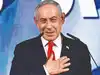
Arab lawmaker Ahmad Tibi mentioned the Joint List's potential partnership with Jewish parties to oust Netanyahu. This collaboration could alter decades of Israeli political traditions and dynamics. The Joint List seeks to influence outgoing government decisions while remaining outside its administration. Netanyahu's opponents face a dilemma regarding the inclusion of Arab parties due to historical mistrust.

Benjamin Netanyahu's rivals seize on Democrats' sweep of US Congress, seeking his ouster
Benjamin Netanyahu's political opponents see Democrats' midterm election win as a sign of waning US support for Israel. They believe his alliance with Republicans has jeopardised Israel's bipartisan backing historically. Critics like Yair Lapid argue that his continued leadership endangers Israel's security and global standing. The formation of the next government remains uncertain as coalition negotiations unfold.

Political Islam, the Italian left and the battle for Italy's streets
Youssef Siher's recent legal troubles have raised concerns about political Islam's influence in Italy. Pro-Palestinian movements have garnered the attention of various political parties ahead of elections. Conflicts surrounding proposed mosques in Turin and Mestre illustrate growing tensions in local politics. There is an emerging alliance between the left and Muslim community activists over shared objectives. It remains to be seen how these dynamics will affect the upcoming 2027 elections.

All hands on the deck: Next few months, govt faces a test of political will to take hard economic calls
India is likely to face a host of economic and political pressures due to upcoming elections and external geopolitical factors. Balancing relationships with Iran, the UAE, Saudi Arabia and Israel will be crucial for India's energy security. Political and economic manoeuvres may become necessary to address rising crude oil prices and currency pressures.

Israeli opposition leader Eisenkot sets conditions for coalition, vows to use Knesset majority to reverse Netanyahu policies
Gadi Eisenkot has committed to utilizing the Knesset's parliamentary majority to advance significant reforms. He aims to investigate security failures related to the recent Hamas attack and promote universal conscription. Civil society demonstrations are planned to push for a government reflecting a Jewish-Arab partnership. The electoral outcome resulted in 67 opposition seats compared to 53 for the incumbent coalition.
Israel's election results give neither Netanyahu nor the opposition a majority. What lies ahead?
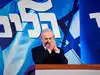
Israel’s election results have left Prime Minister Benjamin Netanyahu’s bloc with 53 seats and the main opposition with 48 in the 120-member Knesset, triggering weeks of coalition negotiations. Arab-led parties won the remaining 19 seats and could become kingmakers, though their potential role has sparked controversy. If parties fail to form a government, Israel could hold another election early next year.

It’s the same old testament: Netanyahu may weaken, but Israel’s policies may endure
Held on October 27, the Israeli elections illustrated marked changes in Knesset power dynamics. Although Prime Minister Netanyahu's Likud party lost some ground, it held onto its largest-party title. Gadi Eisenkot’s opposition grappled with government formation challenges as security threats loomed large. This electoral phase was intensified by fears following Hamas's recent assaults, showcasing deep divides regarding military approaches and Palestinian relations, which leave the path to governance uncertain.

Gadi Eisenkot: The ex-general seeking Israel’s highest political office
Israel election news: Gadi Eisenkot, leader of the Yashar Party, aims to challenge Prime Minister Benjamin Netanyahu in elections. Election polls indicate that neither political bloc may secure a parliamentary majority needed for governance. Eisenkot focuses his campaign on security, governance, and military decision-making against Hamas and Hezbollah. His military background and rejection of Arab party inclusion pose challenges in forming a government.
Load More


