
HABITAT
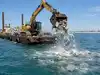
In 2025, North Carolina added 2,100 tons of crushed concrete near Carolina Beach State Park to expand an oyster and fishing reef to 5 acres
In North Carolina, workers are actively enhancing oyster habitats in the Cape Fear River by using crushed concrete. This initiative seeks to expand an existing one-acre oyster reef into a more extensive artificial reef. Unfortunately, the local oyster populations have plummeted in recent years. Researchers emphasize that while this project contributes to environmental recovery, it is merely a small component of a larger challenge.
An old dam blocked fish from Plymouth's Town Brook; after the Massachusetts town began clearing barriers in 2002, annual herring runs grew past 200,000 in many years
Plymouth has successfully increased the river herring population by removing several barriers blocking their migration. The first significant removal occurred in 2002 and led to additional projects improving fish passage. Currently, over 200,000 herring migrate annually, up from just 25,000 in the past. Conservation efforts include enhancing spawning habitats and monitoring fish through a camera at Jenney Grist Mill.
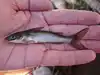
Illinois took down a large dam on the Des Plaines River in 2012; soon after, 10 fish species not recorded before appeared in the old pool, including channel catfish
The dismantling of Hofmann Dam in 2012 marked a significant ecological shift by enabling channel catfish and other species to migrate upstream. For years, this barrier hindered fish movement. After its removal, studies uncovered ten new fish species thriving in areas previously stagnant. This endeavor is part of a comprehensive plan to revitalize the Des Plaines River's ecosystem, vital for promoting biodiversity within its aquatic habitats.
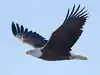
A Texas ranch once used for rice farming and cattle spent nearly 10 years restoring wetlands; by 2025, thousands of ducks and three bald eagle pairs were reported on the land
Lavaca Rio Ranch, located in Texas, has transitioned from farmland to a managed wetland habitat. The collaboration with the U.S. Fish and Wildlife Service has aided habitat restoration over nearly a decade. Thousands of ducks and nesting bald eagles now thrive in the area, highlighting the successful impact of wetlands. Cattle grazing continues alongside wetland management, providing benefits for livestock and wildlife alike.
Fiona’s necropsy reveals why vets couldn’t remove a hat lodged deep in her intestine, but why do hippos have long digestive tracts that can reach 100 feet?
Fiona, a famous hippo at Cincinnati Zoo, died after ingesting a visitor's hat in a tragic event. The hat became lodged deep in her intestine, making removal impossible despite veterinary efforts. A necropsy revealed the hat was 25 feet beyond the final stomach compartment. Hippos, like other herbivores, have long intestines that complicate digestive issues. This incident has raised questions about the complexities of hippo anatomy and their care.
In 2018, Florida reused 6,000 tons of concrete from the old Southern Boulevard Bridge to create a 1.7-acre artificial reef in Lake Worth Lagoon
An old bridge in Florida was demolished, and its concrete was transformed into an artificial reef. The project utilized 6,000 tons of recycled concrete to enhance marine habitat. Workers carefully arranged the debris underwater to form stable structures that attract fish. This initiative aimed to improve local fisheries and support biodiversity in Lake Worth Lagoon. Future constructions related to the bridge will continue to contribute materials for the reef.
- Go To Page 1

India's hot new glass-and-concrete obsession hides a costly trap for generations
India's rapid urban development has led to buildings that often fail to cope with extreme heat. Reliance on glass facades increases indoor temperatures and electricity consumption. Traditional architectural elements like courtyards and jaalis could provide more sustainable solutions for climate challenges. Implementing energy-efficient designs may significantly reduce reliance on air conditioning in new constructions. By combining heritage knowledge with modern techniques, India can enhance living conditions in a warming climate.
In a cruel connection, Fiona the hippo dies at the same Zoo where Harambe was killed 10 years ago: Here’s how her birth lifted spirits after the gorilla’s death
Fiona, a hippo at the Cincinnati Zoo, died at nine years old after swallowing a knitted hat. Zoo officials attempted various treatments but could not perform surgery due to complications. Her death comes ten years after the controversial killing of Harambe at the same zoo. Fiona gained worldwide fame shortly after her birth, recovering from severe health challenges.
Fiona the hippo dies days after swallowing a knitted hat: How did it get into her enclosure in the first place?
In a somber update, the Cincinnati Zoo has reported the death of beloved hippo Fiona due to serious medical complications. Fiona had previously undergone a colonoscopy after swallowing a hat, but her health sadly deteriorated. Born prematurely in 2017, Fiona became a global sensation, leading to the creation of children’s books and a local beer named in her celebration.
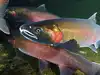
A Washington dam blocked salmon for more than a century; 15 years after Seattle built a fish ladder in 2003, coho salmon were still colonizing upstream habitat
The installation of a fish ladder in 2003 allowed coho salmon to access their previously blocked spawning grounds due to the Landsburg Diversion Dam. Over a span of 15 years, researchers noted a slow return of wild coho salmon to these habitats, documenting how their recovery influenced the ecosystem. The boost in coho populations was linked to enhanced conditions for various other fish species.
Karnataka orders action against Tamil Nadu minister after viral tiger-chase video sparks outrage
Karnataka minister R Ramalinga Reddy has directed authorities to take action against Tamil Nadu minister R Vanni Arasu. A viral video purportedly shows Arasu violating wildlife regulations by approaching wildlife in a tiger reserve. Speculation arose regarding whether parts of the footage were recorded in Karnataka's Bandipur Tiger Reserve. The incident raises concerns about VIP access to protected wildlife areas and potential violations.
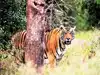
Gujarat’s lone tiger may soon get two potential mates; here’s how forest department is preparing for their arrival
Gujarat's forest department plans to create two adaptation enclosures for the incoming tigresses in Ratanmahal. The enclosures will serve as temporary homes to help the tigresses acclimatise before release. This approach allows the male tiger to grow familiar with their scent and calls. Officials will monitor the behavior of both the tigresses and the male tiger using camera traps.
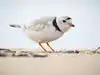
Michigan spent years removing invasive plants from Wilderness State Park beaches starting in 2012; by 2016, endangered piping plovers were nesting there again
At Waugoshance Point, a conservation project was launched to restore the nesting habitats for piping plovers by eliminating invasive plant species. Since its inception in 2012, teams have consistently monitored beach vegetation and nesting conditions. In a remarkable achievement by 2016, a pair of endangered piping plovers successfully nested here.
Fiona the famous Cincinnati Zoo hippo swallows visitor’s knit hat in an unusual case, faces medical complications as surgery ruled out
Fiona, the beloved nine-year-old hippo at the Cincinnati Zoo, unexpectedly swallowed a knit hat that a visitor tossed into her enclosure. Currently, the veterinary team is vigilantly observing her health as they strive to help her expel the foreign object. Although a colonoscopy was attempted, the hat remains undetected in her digestive system, raising concerns about potential health risks.

Environmental protection, development must advance together: Bhupender Yadav at COP31
At COP31 in Turkiye, India's Union Environment Minister Bhupender Yadav detailed the nation's strategy for climate resilience. He stressed the significance of collaborating with Small Island Developing States on coastal risk management and ecosystem conservation. Yadav outlined four priority focus areas for strengthening partnerships, such as technology exchange and capacity enhancement.
Why Chhattisgarh is chasing an elephant named Kabra Kaan with a team of more than 200 forest officials
A male elephant known as 'Kabra Kaan' has been linked to 16 deaths across Surajpur and Balrampur districts in Chhattisgarh over six to seven months. With more than 200 forest personnel involved in tracking the animal, authorities have approved a plan to tranquilise it and fit a satellite collar. Possible factors behind elephant aggression include musth, habitat disruption and stressful encounters with humans, though no cause has been confirmed in this case.
North Carolina created a 75-acre oyster sanctuary near Cedar Island using limestone marl and crushed concrete; the reef is designed to support oyster populations
Cedar Island has implemented an oyster reef restoration project aimed at enhancing environmental conditions in the Pamlico Sound. This restoration involves carefully placing materials to support the growth of oyster populations and improve water quality. Researchers conducted a study to determine the optimal location for the reef based on scientific data. Despite the success of this 75-acre project, oyster reefs have severely declined along the US coast.
Illinois drained two lakes for farmland for about 70 years; after conservationists bought Emiquon in 2000 and began restoring the wetlands, spring waterbird counts exceeded 119,000
Since its transformation from farmland into a flourishing wetland began in 2000, Emiquon Preserve has seen extraordinary returns in wildlife, famously attracting over 119,000 waterbirds during the spring counts. Although the project has greatly enhanced wetland habitats and ecological recovery, vigilant management is required to combat threats from invasive species and to maintain aging infrastructures, underlining the importance of ongoing human efforts in environmental sustainability.
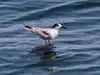
Maryland gave disappearing seabirds a floating wooden island in 2020; six years later, common terns built 376 nests on it and 84 more on nearby restored land
In Maryland, conservationists created a floating island to provide nesting sites for common terns. This solution came as natural nesting areas were disappearing due to climate change effects. In the first breeding season, the platform hosted 23 nests, indicating immediate acceptance by the birds. As populations grew, common terns also began to establish nests on nearby restored habitats.
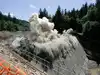
Illinois removed dams from Brewster Creek in 2006; by 2014, surveys had found 14 fish species not previously recorded in the restored stretch, including catfish
Since the dismantling of several dams in 2006, Brewster Creek has experienced remarkable ecological transformation. The removal of barriers allowed fish species like smallmouth bass and quillback to flourish in the area, leading to a notable increase in overall fish diversity, with 14 new species discovered. Moreover, the ongoing research highlighted natural channel evolution and sedimentary stability, making Brewster Creek a pivotal reference for future ecological restoration initiatives.
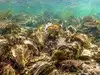
By 2014, South Carolina volunteers had reused 1,100 tons of discarded oyster shells to build 225 living reefs across 69 sites along the state’s coast
In South Carolina, volunteers are collecting discarded oyster shells and returning them to coastal waters for habitat restoration. The SCORE program has seen significant community involvement, with over 25,000 volunteers participating in oyster reef projects. Recycled shells create environments where marine life can thrive and support local ecosystems. The restoration began to reveal positive changes just a few years after implementation.
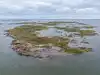
Most of Louisiana's Rabbit Island was flooded in 2020; after crews restored 102 acres of nesting habitat, birds built more than 11,600 nests in the first season
Rabbit Island, located in southwestern Louisiana, is undergoing an extensive restoration project aimed at reviving habitats for colonial waterbirds. Initiated in 2020, the initiative tackles erosion and habitat loss brought on by various challenges. The first season saw over 11,600 nests discovered, exceeding expectations considerably. To further combat erosion, limestone rock baskets were installed, enhancing the area's viability for wildlife.
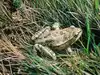
Yosemite had lost its red-legged frogs; in 2016, teams began restoring the population, and 10 years later, the program reached 10,000 releases as recovery continues
The successful reintroduction of California red-legged frogs to Yosemite marks a significant achievement in conservation efforts that began in 2016. With the first breeding in 2019 and the special release of the 10,000th frog, affectionately named 'Twain', these frogs now thrive in the valley, representing generations of recovery. Future plans include raising and releasing additional juveniles to ensure continued population growth within this iconic national park.

Connecticut restored 34 acres of damaged salt marsh in 2022; two years later, native grasses were thriving, and shorebirds were nesting on newly built mounds
A major salt marsh restoration project at Great Meadows Marsh in Connecticut is showing promising results for coastal wildlife and biodiversity. After a $4.65 million rehabilitation effort, the 34-acre wetland has seen the return of endangered saltmarsh sparrows and the growth of native marsh plants. The project highlights how wetland restoration, coastal conservation and habitat recovery can protect biodiversity, reduce flood risks and create healthier ecosystems amid rising sea levels.
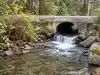
California replaced a fish-blocking pipe on Fort Goff Creek with a bridge in 2014; later monitoring found 64 Chinook salmon nests upstream
In California, the removal of the culvert on Fort Goff Creek has significantly enhanced fish passage, particularly for salmon. Completed in 2014, a new bridge now connects fish to breeding grounds that were previously inaccessible. Biologists found 64 nests of Chinook salmon in this newly opened habitat, highlighting the importance of addressing culverts nationwide to improve aquatic ecosystems and connectivity.
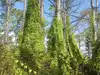
Florida brought in Old World climbing fern as an ornamental; the vine later smothered more than 100,000 acres and can carry ground fires into tree canopies
Once admired for its ornamental beauty, the old world climbing fern has now wreaked havoc on Florida's ecosystems. This invasive plant grows rampantly, enveloping trees and choking out native flora, while also altering fire dynamics. The heightened fire risk threatens tree vitality and wildlife habitats, complicating management efforts. Although options like herbicides and physical removal exist, these methods face challenges in less accessible areas.
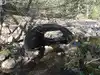
In 2017, California replaced a fish-blocking road crossing on Upper Green Valley Creek; surveys later found 136 young steelhead upstream of the former barrier
In 2017, engineers undertook a significant project to replace an old culvert that hindered fish migration in Upper Green Valley Creek. The successful replacement is evidenced by the discovery of 136 young steelhead fish in previously unreachable habitats. Researchers are actively studying the long-term effects on these fish populations and their growth.
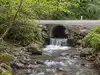
For 20 years, a road culvert blocked fish in California’s Sharber-Peckham Creek; crews replaced it in 2016, and 2017 monitoring found 740 juvenile coho upstream
In Northern California, a four-foot metal pipe had hindered salmon migration for two decades. After its replacement, juvenile coho salmon gained access to essential spawning habitats. This case underscores the critical situation of culverts obstructing fish passage nationwide. Recent research has identified the need to evaluate these structures for effective prioritization in upgrades. Continuous investment, study, and conservation efforts are essential for sustaining fish habitats.
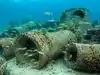
In 2023, North Carolina sank 1,700 tons of concrete pipes and manholes at AR-305; the material added fish habitat off the coast of Beaufort
In July 2023, the North Carolina Division of Marine Fisheries implemented an innovative project by submerging recycled concrete pipes and manholes as artificial reefs about 28 miles off Beaufort. This initiative has successfully lured both fish and divers, showcasing the potential of reclaimed materials to enhance marine habitats. However, while artificial reefs show promise, they are not a complete fix for diminishing fish habitats.
Load More

