
H20 CHIPS

The Jensen and Alice story: What happened in the 2024-26 secret affair of the NVIDIA CEO and a 'Chinese spy'
Nvidia's CEO Jensen Huang and Alice Huang have been linked amid growing espionage allegations. Alice has reportedly been sharing information with China while working with Nvidia on data centers. This situation has led to investigations involving the US government's scrutiny of her connections. Additionally, Megaspeed International faces allegations of assisting Chinese clients in accessing restricted Nvidia hardware.

Nvidia CEO Jensen Huang's affair with Chinese agent being looked into by FBI, says Trump
The president called Huang, whose computer chips have helped to launch the artificial intelligence revolution, a "very honorable man." The president said he had spoken with Huang.
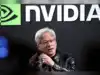
Nvidia's Jensen Huang under fire; Bernstein retains $400 target price on stock, but with key risks
Nvidia's CEO, Jensen Huang, is under fire after revealing a personal relationship tied to espionage suspicions. Although Wall Street's Bernstein holds a positive outlook, they cautioned about possible regulatory challenges. This issue may divert Nvidia's focus, despite not impacting product interest. Intel agencies are probing potential leaks of sensitive data, leaving Nvidia in a precarious situation as the inquiry's results remain unclear.
Nvidia sell-off continues: Chipmaker stock plunges 9% as Jensen Huang faces espionage controversy
Nvidia has opened an investigation following CEO Jensen Huang's connection with an executive linked to intelligence efforts. The company announced this after Huang acknowledged his relationship with the executive, raising concerns over security. Nvidia's shares plummeted 8% amidst uncertainty surrounding Huang's future as CEO. Analysts believe Huang's leadership is crucial for Nvidia's ongoing success in AI technology.

Beyond Nvidia: Alice Huang’s reported ties to Gigabyte’s leaders and a data-centre business serving Alibaba
China's alleged spying operation targeting Nvidia CEO Jensen Huang goes beyond one executive. A New York Times investigation links Alice Huang, reportedly recruited by China's top intelligence agency, to Gigabyte's leadership and a Singapore-based data-centre company serving Alibaba. The operation allegedly aimed to gather information on Nvidia's advanced AI chips and influence their exports to China.

TReDS sees a festive boost; Nykaa’s growth strategy
Happy Friday! Festive inventory demand has lifted invoice financing on TReDS platforms. This and more in today’s ETtech Morning Dispatch.
- Go To Page 1

Nvidia chips pile up in Hong Kong as China withholds import approval
About 600,000 of Nvidia's advanced artificial intelligence chips are stored in Hong Kong awaiting shipment to mainland China, two people familiar with the matter said, as Beijing withholds approval for large-scale imports despite demand from technology firms.

STT Global’s India biz on the block; micro occasions power qcomm
KKR, Singtel, and the Tatas are preparing to sell STT GDC India, a major data centre platform. This and more in today’s ETtech Top 5.

In China, the AI bubble has already burst
While global tech stocks teeter, in China they have already crashed as lofty valuations collapse under worries about AI demand and curbs on Chinese exports.

Who are the biggest investors backing Anthropic? A look at key stakeholders
Anthropic’s planned IPO is set to test public-market appetite for artificial intelligence companies. Backed by Amazon, Google, leading venture capital firms, global institutions and prominent individual investors, the Claude maker has seen its valuation surge through successive funding rounds.
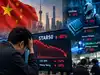
In China, the AI bubble has already burst
China's technology sector is experiencing a dramatic decline, leading to extensive financial repercussions for numerous industries. The STAR50 index's sharp drop has shaken investor confidence considerably. Retail investors who initially placed faith in state-supported tech companies are now grappling with significant losses. In response to this turbulence, many are gravitating towards safer investment options, as experts caution that these selloffs may impede future fundraising for tech enterprises.

AI bubble to burst soon? Artificial Intelligence meltdown in China but Anthropic IPO at US Stock Market tell interesting stories of AI boom
Amid the billions — even trillions — at stake, worries about an AI boom are looming in the background along with concerns about keeping the technology under human control.
From 700% gains to a 50% plunge: China's AI stocks are crashing despite Beijing's tech ambitions. Here's why
China's artificial intelligence stock market has faced a steep decline, losing around $480 billion in market value. Many leading technology stocks that previously soared have now lost significant value in recent months. As investor enthusiasm wanes, concerns over future profits and valuations are becoming pronounced. Additionally, export restrictions on technology could further complicate the sector's recovery. Policymakers in China now face challenges in bolstering investor confidence while promoting industry growth.

Anthropic's top investors include Amazon, Google, Fidelity Management
Anthropic is preparing for its initial public offering, supported by significant investments from Amazon and Google. The company's valuation has increased significantly through numerous funding rounds over recent periods. Key investors like ICONIQ Capital and Coatue Management have also expressed confidence in its potential. Anthropic's partnerships with technology leaders enhance its resources for advancing AI development.
Analysis: In China, the AI bubble has already burst
Chinese tech stocks, especially in AI and semiconductors, have experienced a dramatic decline in value recently. The mainland STAR50 index of these sectors has dropped by 40% in four months, leading to substantial market losses. Investors are increasingly turning to safer assets as frustration mounts over fading government support for tech investments. Additionally, many investors are hesitant to purchase shares until valuations reach more acceptable levels.

ByteDance, Alibaba, Tencent place over $35 billion worth of Nvidia chip orders
US-based chipmaker Nvidia has told customers and partners it cannot guarantee that it can fill the orders because demand from Chinese technology companies far exceeds planned production, the two sources and a third person familiar with the matter said. They requested anonymity because they are not authorised to speak to the media.

Diwali Sale 2026: Buying fridge, AC, or washing machine online? Here’s how to get the best deal on big appliances and save more
Online sales of big appliances are growing at 25% as the festive sales begin. The Kagan 2026 Asia-Pacific Consumer Insights survey by S&P Global Market Intelligence, conducted in June 2026 among 1,000 internet adults each in China, South Korea and India, shows that most Indian respondents still primarily make retail purchases from stores.

Nifty valuations near post-Covid lows. Alchemy Capital’s Alok Agarwal explains what investors should buy now
Nifty valuations have reset sharply from 2024 levels and are now near post-Covid lows, says Alchemy Capital’s Alok Agarwal. He sees the next phase of market growth broadening beyond large caps. Mid- and small-caps, AI infrastructure, healthcare, manufacturing and select defence companies offer opportunities, while global yields and FPI flows remain key.

IndiaAI Mission likely to rewire after GPU glitch
The IndiaAI Mission currently has access to about 30,000 GPUs against a total commitment of 45,000. Several firms that had committed capacity have been unable to deliver due to market pressures. The IT ministry is now planning to issue fresh bids while also pressing companies to meet their pledges.

India smartphone prices jump 16% in first half of 2026; market seen shrinking double digits
Average smartphone selling prices in India rose by 16% year-over-year in the first half of 2026. OnePlus, however, managed to keep its price increase to just 8%, distinguishing itself from competitors. Entry-level devices saw an average price increase of 32%, resulting in a significant 65% drop in shipments. Meanwhile, premium smartphones priced above Rs 20,000 continued to grow, benefiting from trade-in programs.

China's Alibaba launches international data centre push
Chinese tech giant Alibaba unveiled plans on Wednesday to expand its overseas data centres, targeting markets across Europe and the Middle East. Alibaba is targeting more than 20 gigawatts of global data centre capacity by 2032, Wu said during the firm's annual flagship conference in Hangzhou.

Rs 15,000 cr investment inflow into Karnataka to create over 2,000 jobs: Minister M B Patil
Karnataka Minister M B Patil announced an investment potential of over Rs 15,000 crore, with Lam Research investing Rs 9,298 crore and Applied Materials Rs 3,600 crore. These investments are expected to strengthen Karnataka's semiconductor supply chain capabilities. Land has been allotted for Lam Research's silicon-component manufacturing facility, while Applied Materials will expand its long-term operations at Bengaluru Signature Business Park.

India’s chip push draws global interest; Quick comm's ad blitz
India’s semiconductor push is gaining global attention as the country looks to build a stronger chip manufacturing ecosystem. This and more in today’s ETtech Top 5.

WATCH: iPhone 18 Pro fever grips India amid 5 am queues, first buys and a 10-hour wait
Apple's iPhone 18 Pro and Pro Max officially went on sale across India on Friday. Eager customers lined up at Apple Stores in Noida, Bengaluru, and Maharashtra for the latest devices. Some buyers arrived early, with one customer waiting since 5 AM to purchase the new phone.

Retailers push back against proposed 0.4% MDR on UPI transactions above Rs 2,000, warn of hit to thin margins
Retailers are strongly opposing a proposed merchant discount rate on UPI payments. This new charge will significantly impact their already very thin net profit margins. Industry associations are petitioning the finance ministry to scrap the proposed transaction fee. They highlight that this fee will erode the survival margins of many small businesses. The proposed charge is set to be implemented from October fifteenth.

Automotive vision AI company Stradvision eyes India expansion in 2027, aims to hire engineering talent
Stradvision is set to unveil its AI automotive vision software in India by 2027, as part of its strategy to grow its local footprint and recruit engineers. With upcoming regulations in India promoting driver-assistance technologies, their software, optimised for cost-effective chips, will enhance safety features in budget-friendly vehicles. The company also anticipates significant expansion potential in China and other international markets.
Do Nvidia’s H20 chips pose security risks? China sounds alarm, orders firms to avoid them
Nvidia H20 chips China: China is encouraging domestic companies to shun Nvidia's H20 chips. This guidance prioritizes local alternatives like Huawei. Concerns over security vulnerabilities are rising. The move impacts Nvidia's market recovery in China. Tensions between the US and China are escalating. The US government is also seeking revenue from chip sales in China.

China to ban Nvidia over H20 chips safety risks? Here are latest updates
Trump administration in April blocked the sales of H20 chips, which Nvidia developed to specifically comply with U.S. restrictions for exports of AI chips to China.
China flags concerns over potential security risks in Nvidia's H20 chips
China questioned Nvidia about security concerns with its H20 AI chips. The Cyberspace Administration of China cited location tracking and remote shutdown risks. This follows improved trade talks between the US and China. The H20 chip, once banned, was recently cleared for sale. US lawmakers worry about China's AI and military advancements.
Load More

