
GOI ECONOMIC DECISIONS

All hands on the deck: Next few months, govt faces a test of political will to take hard economic calls
India is likely to face a host of economic and political pressures due to upcoming elections and external geopolitical factors. Balancing relationships with Iran, the UAE, Saudi Arabia and Israel will be crucial for India's energy security. Political and economic manoeuvres may become necessary to address rising crude oil prices and currency pressures.

India’s drug pricing policy must balance affordability, medicine availability and pharma industry growth
The Government of India has recently capped trade margins on anti-cancer medicines at 30%. This decision has reignited the ongoing discussion about drug pricing and accessibility. The existing regulatory framework aims to provide affordable medicines while supporting the pharmaceutical industry. Ensuring pricing transparency and targeted interventions can help address excessive margins in the supply chain. The ultimate goal remains to enhance patients' access to quality medicines at reasonable prices.

Pivot to Privatisation 2.0: Why IDBI Bank’s sale should rev up India’s push to privatise remaining non-strategic PSBs and PSUs
Last week, the Cabinet Committee on Economic Affairs approved the sale of IDBI Bank's majority stake. The stake, held by the Government of India and LIC, will be sold to Fairfax Financial Holdings Ltd. This decision is part of the ongoing privatisation programme aimed at modernising the Indian economy.

GST reforms aim to boost compliance by removing fear, widening tax base
Rate rationalisation showed that a lower rate yields more revenue as the base widens, and process reforms rest on the same principle. A business that doesn't fear the tax office is more likely to register, report its full sales and grow within the system.

Apple Pay’s India launch shows how RBI’s outcome-based regulation lets technology evolve
Apple Pay was launched in India after significant regulatory developments by the Reserve Bank of India. This new payment option allows users to pay securely without needing an OTP, which can facilitate fraud. The RBI has shifted towards regulating outcomes rather than prescribing specific technologies for digital payments. While Apple Pay currently does not support RuPay or UPI, it shows how regulation can foster innovation.

In healthcare, the patient is the least informed consumer
Significant price differences in healthcare consumables have drawn attention, prompting calls for better consumer protection. Maharashtra's FDA has uncovered alarming disparities, highlighting information asymmetry faced by patients. The Supreme Court reaffirmed consumer accountability for medical services, emphasizing the need for transparency. Consumers are encouraged to ask questions and take advantage of available grievance mechanisms. Strengthening enforcement and data-sharing among regulators can improve the integrity of healthcare transactions.
- Go To Page 1
Anti-betting law fails. A lesson for crypto?
India’s online betting ban has failed to eliminate illegal gambling, with offshore networks continuing operations despite strict laws. The article contrasts this with cryptocurrency, where authorities have largely avoided comprehensive regulation. Both approaches expose gaps between technology and governance.

New bounce in EPFO trampoline: How the wage ceiling revision will change things
Social security, like a trampoline, not only catches you but also enables you to bounce back. The system's core is to provide workers with a fund to draw from in times of emergency or at retirement, so that a temporary crisis doesn't become a lifelong hardship and trap them in debt.

Ethanol is not the whole story behind India’s sugar price surge
Sugar prices have significantly increased due to production shortfalls and rising demand. Government data shows a substantial decline in expected sugar production for the season. International market trends and domestic supply issues also contribute to the current price situation. Ethanol diversion is a factor, but not the sole cause of the sugar price surge. Policymakers are addressing broader supply and inventory concerns with import decisions.
The Sultanate’s Surcharge: MMDR Amendment shifts wealth from states to miners
Parliament passed the Mines and Minerals Amendment Bill 2026 on Thursday. This legislation aims to standardize mineral taxation across Indian states. The bill effectively neutralizes a Supreme Court ruling on state taxing powers. It also protects mining companies from past tax liabilities. This move centralizes authority and impacts federalism and future resource benefits.

Why ISRO's loss is India's gain
India's space sector witnessed significant private and public sector developments recently. Skyroot Aerospace launched the nation's first privately built rocket, Vikram-1. Concurrently, about one hundred scientists resigned from ISRO, India's space agency. This talent shift signifies the success of the government's liberalization policy for the sector. Such movements highlight the growing demand for skilled professionals in private ventures.

This is a peak win for Himalayas
The Indian government has put the brakes on new hydropower developments in the upper Ganga area of Uttarakhand, citing a history of environmental disasters and ongoing policy discussions. Current hydropower initiatives are now subject to rigorous environmental regulations, signaling a clear intention to rehabilitate the fragile landscape.

Blueprint for developed India, inclusive growth
India's budget outlines a strategic vision for economic development by 2047. With a focus on employment, startups, and climate action, the budget aims to support growth and innovation. Allocations for youth, MSMEs, and green initiatives indicate a commitment to sustainable economic practices.

Post-Covid capex pumps PSU muscles
A reappraisal of PSUs, however, could slow the longer trend of GoI getting out of business. And it needs to filter out the temporary effects of economic management. PSU banks are unlikely to retain their new-found health against private competitors for an extended period. Government capex, similarly, has a shelf life, after which private investment is expected to take over. That means companies borrowing from the cheapest lender, often from abroad, to build capacities. Neither consumption- nor investment-led growth assures a special place for PSUs. They will have to compete.

To make everybody donate every body
The prime minister's appeal to people to register as organ donors is an important intervention. Studies have found that India's total organ donation shortage can be met if even 5-10% of victims of fatal accidents serve as organ donors. The idea of donating one's organs after death has not caught on primarily due to the lack of awareness
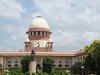
The Supreme Court must be applauded for refusing to play to the political gallery this time
Briefly, the majority judgment and the dissent agreed that the objectives of DeMo were good. Where they disagreed was on the legality of the process followed before the decision to demonetise ₹500 and ₹1,000 notes was announced. The majority agreed on its legality, but also felt constrained by the need to not sit in judgment on economic policy, which was entirely within the remit of the executive.

Handle air travel with Covid care
The simplification of the protocols is being done on a reciprocal basis. Therefore, for travellers from 82 countries, the self-declaration form Air Suvidha and certificate of full primary vaccination is enough to guarantee entry.

View: For decades, privatisation was a dirty word in India. Not anymore
It took 21 years to state similar objectives on disinvestment. Immense political capital had to be spent by the Atal Bihari Vajpayee government in disinvesting 16 CPSEs before ‘alliance dharma’ got the better of the agenda.

View: The role of the private sector in ongoing debate over disinvestment-privatisation-led growth
GoI’s decision to announce disinvestment of public sector undertakings (PSUs), barring those in four strategic areas, is progressive.

View: ECLGS presents an opportunity for a fiscally constrained government
Loans under ECLGS are fully guaranteed through the National Credit Guarantee Trustee Company and are collateral-free.

View: States are the biggest losers in GST sharing formula
The track record so far of the present government toward states demonstrates a betrayal of trust so crucial not just for India’s federal polity, but also for its economic recovery.

View: Add substance to policy style
Earlier this month, GoI announced, in a rather confusing manner, the reopening of various sectors, in what has been described as ‘Unlock 1’. State governments have also contributed to this confusion.

View: Now to stimulate the stimulus
GoI has leaned on addressing the survival issue via some cash and in-kind transfers to vulnerable sections of society. But India is a consumption-based economy and, hence, not paying enough heed to push demand in the near term even in a Rs 20 trillion package will weigh on discretionary consumption spending and growth recovery.

Lockdown 4.0: Why it's imperative to find common ground between Centre and states at this stage
The political groundwork to find that common ground is what will need to be done now. Eventually, the success of any reform is through political will — the wider the support, the greater the chances of a favourable outcome.

View: Modi’s test in Twenty20
In the coming year, the political focus will largely shift squarely on governance.

View: BJP will have to build more bridges across political divides than strengthen fences
BJP has lost power in a politically significant state like Maharashtra. And, in the bigger picture, it has to strike a working relationship with more Opposition-ruled states as compared to, say, two years ago.

View: Modi govt should use the RCEP pause to take tough decisions
Rather than play the RCEP decision as a bold move and an act of great leadership — ‘Modi hai to mumkin hai’ (Modi makes it possible), said commerce and industries minister Piyush Goyal — it would be wiser to use it as an opportunity to hold a mirror to the nation and unveil a bold strategy of economic reconstruction.

ET Edit: Merit in move, but how the bifurcation decision went about is questionable
Even if technically correct, a decision of such magnitude should have been preceded by debate and discussion.

Four unanswered questions in the government versus RBI tussle
Will they be answered? No one really knows. But what happens next will depend a lot on these questions.
Load More

