
EXPERIMENTAL TEST PILOT
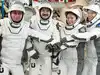
NASA's Crew-12 undocks from ISS, set to splash down off California after nearly eight months in space
NASA's SpaceX Crew-12 has undocked from the International Space Station and is on its way home. The mission included significant scientific investigations aimed at future Moon and Mars missions. Crew members participated in critical spacewalks, with Jessica Meir and Sophie Adenot completing important tasks outside the station. NASA is targeting a splashdown in the Pacific Ocean off the California coast on Thursday.
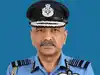
Air Marshal Ashutosh Dixit appointed new Chief of Air Force, replacing Amar Preet Singh
Air Marshal Ashutosh Dixit has been appointed as the new Chief of the Indian Air Force. He succeeds Air Chief Marshal Amar Preet Singh after a long and distinguished career. Dixit has flown various aircraft and logged over 3,500 hours of flying. He is recognized for promoting indigenous aircraft projects, particularly the LCA Tejas. Air Marshal Dixit is expected to further advance the government's Aatmanirbharta initiative.
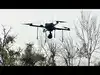
IZI Enterprise secures DRDO order for VANA
IZI, a drone company based in Bhopal, has secured an order from DRDO's PXE. The order is for the supply and deployment of IZI VANA Surveillance Drones. These drones will assist in aerial photogrammetry, surveillance, and data collection.
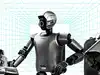
Physical AI startups moot industry body to set data-collection standards
The proposed body could also help AI labs connect with various farms, factories, hotels and other real-world environments from where they can access and collect data needed to train robots at a fixed rate, one of the founders said.

Where Does China Fit in Your Company’s Innovation Strategy?
For decades, multinationals treated China primarily as either a vast growth market or a rising competitive threat. But as growth slows, competition intensifies, and operating conditions become more difficult, many firms are rethinking China’s role. Increasingly, they are using the country not just as a destination market but as a platform for accelerating innovation—leveraging its fast-moving regulatory environment, tightly integrated R&D and manufacturing ecosystems, and deep engineering talent pools to speed learning, validate technologies, and scale capabilities globally. Companies including Pfizer, Michelin, BMW, Bosch, and Nvidia illustrate how firms are using China to shorten innovation cycles while managing geopolitical and operational risks by defining China’s precise role within their global innovation system, designing for controlled knowledge-sharing, and avoiding overdependence through diversified R&D and supply chains.

Death of the ‘obvious scam’: How AI is making cyberattacks look like normal emails
AI is making cyberattacks harder to detect as attackers use legitimate accounts, real conversations and familiar business workflows to evade traditional warning signs. At Proofpoint Protect 2026, executives discussed how agentic AI could automate attacks and why security must shift from checking access permissions to understanding intent. With AI adoption accelerating in India, Proofpoint is also expanding its local investments.

AI products in India: What makes an enterprise AI solution stand out in 2026?
Enterprise AI is moving beyond experimentation. Products that solve clear business problems, fit existing workflows, and show measurable value are increasingly separating themselves from the wider AI market.

Who is Michael Kremer, the Nobel laureate set to become World Bank’s next chief economist?
Nobel laureate Michael Kremer will become the World Bank's next chief economist. He is recognized for his experimental approach to alleviating global poverty. Kremer's work has focused on innovations in education and healthcare. He will assume his new role on October 1st. This appointment comes as the organization faces significant development challenges.
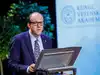
World Bank names Nobel laureate Michael Kremer as next chief economist
Michael Kremer, the distinguished Nobel laureate, is set to assume the role of chief economist at the World Bank. With a robust background in experimental methods targeting global poverty alleviation, Kremer has dedicated his research to groundbreaking strategies aimed at uplifting developing nations. Commencing on October 1, he will tackle pressing global issues, harnessing his extensive expertise to drive impactful development initiatives.

In 2025, Netherlands turned retired wind-turbine blades into a 60-metre highway noise barrier; tests found it performed like a conventional concrete wall
Netherlands’ 60-metre Blade Barrier represents more than an unusual highway wall. It is an experiment in what a circular economy can look like when renewable-energy waste is treated as a potential construction resource instead of an unavoidable disposal problem.
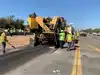
In 2020, California repaved a highway using recycled materials, including 150,000 plastic bottles per mile; it could last 2-3 times longer than conventional asphalt
California transportation officials tested recycled pavement using plastic bottle binder. This pilot project on Highway 162 consumed approximately 150,000 plastic bottles per mile. The technology developed by TechniSoil Industrial processes old pavement with a liquid plastic polymer. This innovative method potentially reduces landfill waste and transportation pollution significantly. Officials are studying the road's durability and environmental benefits for future applications.

IIT Madras researchers develop ‘morphing skin’ to prevent aircraft stalls
IIT Madras researchers developed a novel morphing skin inspired by bird flight. This adaptive external skin dynamically reshapes in real time to prevent airflow separation. The innovation enhances lift while reducing drag, improving aircraft safety and fuel efficiency. This technology could enable safer take-offs and landings on busy runways. The research is ready for implementation in real aircraft flight conditions.

In 1783, two French brothers while conducting indoor experiments in Annonay, France after getting inspired by watching smoke rise and clothes billow over a fire invented the world's first practical hot air balloon
In 1783, two French brothers while conducting indoor experiments in Annonay, France after getting inspired by watching smoke rise and clothes billow over a fire invented the world's first practical hot air balloon. Joseph-Michel and Jacques-Étienne Montgolfier developed a balloon that used heated air for lift. Their work led to public demonstrations, an animal flight and the first untethered human flight over Paris.
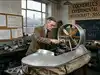
In 1955, a British engineer while trying to prove a game changing theory about a revolutionary invention used a cat food tin, a coffee can, and a reversed vacuum cleaner. Later, the patent changed the landscape of modern transportation forever
In 1955, a British engineer while trying to prove a game changing theory about a revolutionary invention used a cat food tin, a coffee can, and a reversed vacuum cleaner. Sir Christopher Cockerell's experiments led to the hovercraft, which used an air cushion to reduce drag. His patent was filed in 1955, while the SR.N1 prototype followed in 1959. The technology later found uses in transport, military operations, rescue work and research.
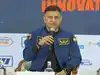
Gaganyaan delays should be taken with 'pinch of salt': Astronaut Angad Pratap
Gaganyaan astronaut Angad Pratap acknowledged that delays are a natural part of developing ambitious programs. He assured that the astronaut team is diligently training for the mission's launch. Pratap highlighted the importance of patience in ensuring the mission's safety and success. Additionally, he discussed his significant involvement in creating the human-machine interface for the spacecraft, while ISRO Chairman V Narayanan affirmed that preparations for the uncrewed mission are proceeding vigorously.
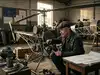
In 1939, a Russian-American aviator invented the first practical and mass-produced single-rotor helicopter revolutionizing modern aviation
In 1939, a Russian-American aviator invented the first practical and mass-produced single-rotor helicopter revolutionizing modern aviation. Igor Sikorsky developed the VS-300, which first flew on September 14, 1939. Its single main rotor and anti-torque tail rotor became the layout for modern helicopters. The later Sikorsky R-4 became the first mass-produced helicopter in 1942.

Who is Jeetendra Mishra? Retired Air Marshal, Kargil veteran & Operation Sindoor hero selected as Ram temple trust’s CEO
Retired Air Marshal Jeetendra Mishra will lead the Ram Mandir trust as its first chief executive officer (CEO). He was awarded the Sarvottam Yudh Seva Medal for his distinguished service during Operation Sindoor. Mishra brings decades of military experience in strategic planning, operations and coordination to his new administrative role. The trust also appointed three new trustees at a recent meeting in Ayodhya.
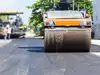
In 2022, Hawaii used 195,000 plastic bottles to rebuild a road. Engineers found an alternative use for recycling plastic waste, but there's a catch
Hawaii's officials have embarked on an innovative experiment to blend recycled plastic into road asphalt, effectively repurposing nearly 200,000 plastic bottles that would otherwise end up in landfills. This pilot project focuses on assessing the pavement's functionality and the long-term impacts of microplastic dispersion. A parallel control section was created for reference, highlighting efforts to convert waste materials into valuable infrastructure for the country's transportation networks.
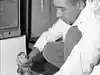
In 1958, the US launched Gordo the squirrel monkey 300 miles above Earth; he endured 8.3 minutes of weightlessness and 40 g during re-entry, but died after his capsule sank at sea
In the historic space flight of 1958, Gordo, a courageous squirrel monkey, faced intense conditions that ultimately validated human survival in the cosmos. Although a flotation device malfunction led to his spacecraft's descent into the ocean, the mission was deemed partially successful by the US Army. The crucial data gathered from Gordo's experience played a vital role in advancing Project Mercury further.
Load More

