
EARTHS UPPER ATMOSPHERE

'Still feels like science fiction': Google CEO Sundar Pichai hails SpaceX's Starship as it completes first-ever mid-air catch on return from orbit
SpaceX achieved a historic milestone by successfully catching its Starship spacecraft upright after a return from orbit. The spacecraft launched from Starbase in Texas and completed a mission that included deploying satellites. After reaching orbit, the Starship re-entered Earth's atmosphere and performed a controlled descent. It landed in the mechanical arms of its launch tower, named Mechazilla, completing the unprecedented maneuver.
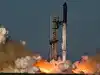
SpaceX launches 15th Starship flight with hopes of achieving first round trip
SpaceX successfully launched its Starship spacecraft on a mission that aimed for both orbit and return. Unfortunately, the lower-stage Super Heavy booster rocket failed to complete its return flight. Starship's upper-stage vessel reached orbit and deployed 26 satellites into space. This launch marks SpaceX's 15th Starship test flight, contributing to their satellite connectivity business. The company hopes to achieve a fully reusable rocket system for future missions.

Why SpaceX needs just two successful catches to change the future of rocket launches
SpaceX is preparing for its Starship Flight 15 mission which aims to recover both rocket stages after launch. This mission will test the reusability of rockets and the efficiency of SpaceX's recovery systems. Starship is set to deploy 26 next-generation Starlink V3 satellites into low Earth orbit during this flight. Successfully catching both stages could lead to reduced launch costs and increased satellite deployment.

NASA fired an electron beam into Earth’s atmosphere in 1969; it created an artificial aurora
In January 1969, a rocket launched from Virginia carried an electron accelerator built to make artificial auroral rays in the upper atmosphere. Cameras on the ground recorded the light. The experiment gave scientists a controlled way to study how energetic electrons interact with atmospheric gases and Earth’s magnetic field.
NASA's Artemis II rocket punched 3,100-mile-long holes in Earth's atmosphere, disrupted GPS signals: Study
NASA's Artemis II mission created large disturbances in the ionosphere that disrupted GPS signals across the United States. These disturbances were significantly more intense than those from prior rocket launches, causing potential issues for technologies reliant on precise positioning. Researchers noted that even minor positioning errors could impact autonomous vehicles, which rely on GPS data. The mission set new records for human distance from Earth during a lunar flyby.
NASA's 12-foot-wide satellite lost its radio signal in space; scientists still got the data they needed
A sphere launched by NASA in 1961 named Explorer 9 was made to measure how dense the air is above the Earth. Its radio beacon did not work, but scientists tracked the sphere through visual contact and got the desired data. This helped researchers understand how thin air affects satellites in orbit.
India-Pakistan Moon race: With China's help, Pakistan wants to send humans to Moon five years before India
Pakistani astronaut on Moon: Pakistan has set a target of landing on the Moon by 2035 as it expands its space programme through cooperation with China. Planning Minister Ahsan Iqbal announced that Pakistan’s first astronaut is scheduled to embark on a space mission from China on November 25. The partnership also includes a lunar rover project, while India is pursuing its own human spaceflight and Moon exploration goals.
NASA’s SPHEREx finds brown dwarfs with water and methane, they drift in darkness without a host star and heated entirely from within
NASA's SPHEREx telescope has opened a fascinating window into the realm of brown dwarfs, the enigmatic celestial bodies that sit between stars and planets. Recent data reveals diverse chemical signatures and significant atmospheric variability, challenging existing models. Researchers aim to delve deeper into these findings, seeking to untangle the mysteries surrounding brown dwarfs and their complex atmospheres as they continue their groundbreaking analysis.

Northern Lights could light up UK skies again on Sunday as Met Office issues fresh forecast-here's what you need to know
The Northern Lights recently illuminated the skies across the UK, captivating many photographers and stargazers. Bright colors including pink and green were seen from northern England to southern counties like Kent and Hampshire. The Met Office indicated that sightings could continue until Tuesday, depending on weather conditions. While the show was intense over the weekend, predictions suggest variability in display strength over the following nights.
SpaceX Starship Flight 14: When and where to watch historic launch, 3 major firsts including Starlink V3 debut
SpaceX's Starship Flight 14 is set to attempt orbital insertion and deploy next-generation Starlink V3 satellites. The mission will also involve testing the spacecraft's heatshield during atmospheric reentry. Starship will work in conjunction with the Super Heavy booster to complete multiple objectives. The launch window opens later today and lasts for about 75 minutes. Successful execution of the mission is essential for future SpaceX operations in space.
Mysterious radio bursts detected 63 light-years from Earth, well beyond our solar system: What scientists discovered about its source
A newly reported radio signature from Beta Pictoris b is giving astronomers a rare way to investigate the magnetic environment of a planet beyond our solar system. Observations with South Africa’s MeerKAT array identified recurring auroral radio bursts at the planet’s location, rather than its host star. The research also provides the first direct measurement of an exoplanet’s magnetic field strength.
In 1962, the US detonated a 1.4-megaton nuclear bomb in space that knocked out streetlights and triggered burglar alarms in Hawaii. 64 years later, it says weapons are already in orbit
The United States has acknowledged its possession of orbital space-control weapons, a declaration echoing a 1962 nuclear test that generated artificial radiation belts. Current space warfare strategies emphasize counter-space capabilities rather than relying on explosive power. Countries like China and Russia are also advancing their own space technologies, highlighting the growing perception of orbit as a potential arena for future military conflicts.

A newly discovered solar phenomenon could help scientists predict the Sun’s next powerful outburst and solar flare
New solar telescope observations reveal swirling plasma movements on the Sun's surface. This phenomenon, known as Kelvin-Helmholtz instability, occurs at magnetic region boundaries. These turbulent motions may help explain how powerful solar flares begin and store energy. Understanding these processes could improve future space weather forecasting for Earth. The Daniel K. Inouye Solar Telescope provided these unprecedented detailed views.
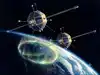
In 1981, two satellites were launched by NASA to study the interactions between Earth's magnetosphere and ionosphere
In 1981, two satellites were launched by NASA to study the interactions between Earth's magnetosphere and ionosphere. The Dynamics Explorer mission used two spacecraft, DE-1 and DE-2, to study space plasma, electric currents and energy flow. Both satellites launched together and followed polar orbits. DE-1 operated at higher altitudes, while DE-2 studied the region closer to Earth before re-entering the atmosphere in 1983.
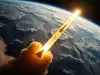
In 1947, the military sent fruit flies 67 miles into space to test radiation risks. 11 years later, NASA was founded in 1958, with animal flights underway in America now
1947 mission was part of a larger American effort to understand whether living organisms could survive the journey into space. Beginning in the mid-1940s, military and scientific teams used captured German V-2 rockets for research after World War II.
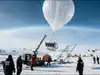
In 2013, balloons were launched by NASA near the North and South poles to study X-rays in Earth’s atmosphere
In 2013, balloons were launched by NASA near the North and South poles to study X-rays in Earth’s atmosphere as part of the Balloon Array for Radiation-belt Relativistic Electron Losses (BARREL) mission. The mission studied electrons falling from the Van Allen Belts, measured X-rays and electron precipitation, and supported spacecraft observations to understand radiation around Earth.

NASA issues major solar storm warning: Decades-old theory about Earth's defenses may be an illusion
New research suggests Earth's reaction to solar storms might be limitless. Scientists previously believed a ceiling existed for these powerful solar events. This study analyzed over a million solar wind measurements from NASA spacecraft. The findings indicate Earth's electric currents increase with stronger solar wind. This discovery could significantly alter our understanding of extreme space weather impacts.
Impact of the Second World War bombing raids felt at edge of space: Study
The strength of the ionosphere is known to be strongly influenced by solar activity, but the ionosphere is far more variable than can be explained by current modelling.
Hot hydrogen atoms found in Earth's atmosphere
In order to extract information about the upper atmosphere from such measurements, one needs to calculate exactly how the solar photons are scattered, which falls into Qin's unique expertise.
Load More


