
CREWED LUNAR MISSION

SpaceX's Starship returns from orbit and is captured by launch pad arms in a dramatic first
SpaceX's Starship made a significant return to Earth after completing its mission in space. The spacecraft was caught midair by mechanical arms, marking a historic achievement for the team. Despite this success, the first-stage booster experienced an explosion shortly after liftoff from Texas. SpaceX is preparing for future Starship launches from Kennedy Space Center in Florida. NASA plans to utilize Starship for upcoming Artemis missions, focusing on lunar exploration.
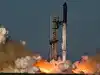
SpaceX launches 15th Starship flight with hopes of achieving first round trip
SpaceX successfully launched its Starship spacecraft on a mission that aimed for both orbit and return. Unfortunately, the lower-stage Super Heavy booster rocket failed to complete its return flight. Starship's upper-stage vessel reached orbit and deployed 26 satellites into space. This launch marks SpaceX's 15th Starship test flight, contributing to their satellite connectivity business. The company hopes to achieve a fully reusable rocket system for future missions.

Why SpaceX needs just two successful catches to change the future of rocket launches
SpaceX is preparing for its Starship Flight 15 mission which aims to recover both rocket stages after launch. This mission will test the reusability of rockets and the efficiency of SpaceX's recovery systems. Starship is set to deploy 26 next-generation Starlink V3 satellites into low Earth orbit during this flight. Successfully catching both stages could lead to reduced launch costs and increased satellite deployment.

NASA job applications: $164,395 salary for astronaut posts as selected candidates can live on Moon and Mars; check direct link, eligibility and deadline
NASA astronaut applications: NASA has opened applications for its next astronaut class, with selected candidates potentially getting the opportunity to live and work on a future Moon base and participate in missions to Mars. Here's a look at the $164,395 annual salary, eligibility criteria, application requirements and December 3 deadline.
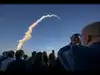
NASA's Artemis II rocket punched 3,100-mile-long holes in Earth's atmosphere, disrupted GPS signals: Study
NASA's Artemis II mission created large disturbances in the ionosphere that disrupted GPS signals across the United States. These disturbances were significantly more intense than those from prior rocket launches, causing potential issues for technologies reliant on precise positioning. Researchers noted that even minor positioning errors could impact autonomous vehicles, which rely on GPS data. The mission set new records for human distance from Earth during a lunar flyby.

One giant leap for America? Trump's Moon ambitions put India's space diplomacy to the test
Donald Trump’s push for a permanent American presence on the Moon by 2028 has raised questions over lunar governance, resource ownership and the future of international space cooperation. As the US and China pursue competing lunar programmes, India faces the challenge of protecting its strategic autonomy while advancing its own space ambitions.
- Go To Page 1

Europe space chief heads to Gulf as bloc looks beyond US
The head of the European Space Agency will visit the United Arab Emirates to discuss collaboration. This meeting aims to reduce Europe's dependence on the United States for space exploration. The ESA hopes to establish a framework agreement with the UAE to strengthen its exploration initiatives. Additionally, discussions may include potential investments and participation in upcoming programs. European governments must first ensure adequate funding before pursuing international cooperation.

Crew from NASA's simulated Mars mission emerges after 378 days in isolation
Four crew members completed a 378-day isolation mission to simulate conditions for a future Mars expedition. They grew crops and engaged in tasks while experiencing simulated communications delays. This experience is aimed at preparing astronauts for long-duration missions beyond Earth. NASA will analyze the insights gained from this mission for upcoming lunar and Mars missions. The mission was conducted at the Johnson Space Center in Houston.

ISRO to have four functional launch pads by 2029: Chairman Narayanan
ISRO plans to expand its operations with four launch pads by 2029 to meet global satellite demands. A dedicated 2,000-acre Small Satellite Launch Vehicle complex is set to be built in Tuticorin. The agency will collaborate with private firms and startups to enhance technological capabilities and job creation. Upcoming uncrewed Gaganyaan tests will evaluate critical mission parameters ahead of a crewed mission.

NASA adopting Apollo's urgency to build a moon base and land astronauts within two years
NASA plans to return astronauts to the moon with the Artemis III mission set for next summer. Following that, Artemis IV aims to accomplish a historic moon landing by 2028, marking the first since the Apollo missions. Administrator Jared Isaacman emphasized the importance of efficiency and a fast-paced approach similar to Apollo's playbook. Docking exercises with SpaceX and Blue Origin's landers will occur before the moon base establishment.

NASA may make a big announcement on Moon mission today. Here's what we know
NASA is preparing for a press conference to share important updates on the Artemis program. The focus will be on the upcoming Artemis III mission and its objectives. Additionally, details regarding future lunar landings under Artemis IV are expected to be unveiled. NASA aims to return astronauts to the Moon by 2028, exploring the lunar south pole for scientific research.

Forget the Moon’s south pole: 4 other lunar sites could help humans build a base and prepare for Mars, new report suggests
The southernmost region of the Moon has emerged as a crucial focus for contemporary lunar exploration, particularly in the quest for water ice. Other notable sites, such as Bhabha Crater and Orientale Basin, are also under consideration for study. These areas promise to offer vital information about the Moon's past and feasible locations for human settlement.

India-Pakistan Moon race: With China's help, Pakistan wants to send humans to Moon five years before India
Pakistani astronaut on Moon: Pakistan has set a target of landing on the Moon by 2035 as it expands its space programme through cooperation with China. Planning Minister Ahsan Iqbal announced that Pakistan’s first astronaut is scheduled to embark on a space mission from China on November 25. The partnership also includes a lunar rover project, while India is pursuing its own human spaceflight and Moon exploration goals.

Four crew members spent 365 days in a 1,700 sq ft, 3D-printed Mars habitat in isolation. How could it help NASA prepare for living on the Moon?
NASA's CHAPEA mission, which simulates living on Mars, involves four crew members in a controlled environment. The study focuses on how humans manage isolation and limited resources during long-duration missions. Insights gained could inform the design and functionality of future lunar habitats. Participants will undergo evaluations after their mission to assess their health and performance. Findings will help NASA prepare for sustained human activity on the Moon.

NASA releases 800GB of moon data: What did Artemis II astronauts see around the moon?
NASA has released more than 800GB of Artemis II Moon data, including 11,000-plus images and videos, 8.5 hours of astronaut audio and crew annotations. The release also documents five faint flashes spotted on the Moon as the astronauts observed its surface during their lunar flyby.
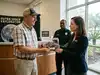
Florida collector found a Moon rock at garage sale, refused to mail it, later hand-delivered it to Louisiana museum
A Florida collector stumbled upon a missing Apollo 17 lunar sample while sifting through items at a garage sale, drawn by an ordinary wooden plaque. Unbeknownst to him, this unassuming find held monumental significance. After realising its historical value, he promptly contacted Louisiana officials and returned it to a state museum, leaving the mystery of its disappearance unsolved.
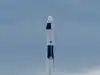
SpaceX launches Crew-13 to ISS in record US transit, with first Black woman to lead orbital crew
On Thursday, four astronauts launched by SpaceX successfully reached the International Space Station after an eight-hour journey. The mission marked the fastest transit to the station by a US operator, including NASA. Commander Jessica Watkins made history as the first Black woman to lead an orbital crew. Other crew members include NASA's Luke Delaney, Canada's Joshua Kutryk, and Russia's Sergey Teteryatnikov.

Could astronauts on the Moon manufacture their own tools? NASA tests lunar dust material that could reduce supplies from Earth
NASA researchers are developing a composite material that combines lunar regolith with a biodegradable plastic called poly(3-hydroxybutyrate). This innovative approach aims to manufacture tools and equipment directly on the Moon, rather than transporting everything from Earth. Bacteria may potentially produce the plastic using waste and carbon dioxide available during missions. This strategy is part of a broader effort to utilize resources found on the Moon for sustainable exploration.

India's journey towards 'Viksit Bharat' being written in rockets built on Indian soil: ISRO chief
India's journey towards becoming a developed nation includes significant advancements in its space program by ISRO. The country has developed cryogenic propulsion systems independently after being denied this technology. Chandrayaan-3 made India the first nation to land successfully near the Moon's south pole. Upcoming projects include the Gaganyaan human spaceflight program and further lunar missions by 2040.

US govt sold Apollo 11 moon-dust bag for just $995 in 2015; two years later Illinois woman got $1.8 million for the same bag
Illinois woman got $1.8 million for moon-dust bag: A bag used during NASA’s Apollo 11 Moon mission was sold at a US government auction for $995 in 2015. Illinois attorney Nancy Lee Carlson later discovered that the bag contained lunar material. After a legal dispute with NASA, Carlson retained ownership and sold the historic artifact at Sotheby’s in 2017 for $1.8125 million.

In 2014, NASA astronauts used an ordinary tape measure during six-month ISS missions; the Body Measures data later entered requirements for NASA's xEMU spacesuit
In 2014, astronauts aboard the International Space Station conducted body measurements to study the impact of microgravity on human physiology. This research provided NASA critical insights that shaped the design of future spacesuits. Utilizing basic tools such as tape measures was instrumental in making significant engineering improvements. Ultimately, this work plays a vital role in ensuring safety for astronauts and the success of upcoming lunar missions.
In 1967, a preflight test for the first crewed flight of Apollo resulted in a tragedy and the loss of astronauts Virgil Grissom, Edward White and Roger Chaffee
In 1967, a preflight test for the first crewed flight of Apollo on the launch pad at Cape Kennedy resulted in a tragedy and loss of astronauts Virgil Grissom, Edward White and Roger Chaffee. The Apollo 1 fire occurred during a ground test on January 27. The incident led to an investigation, changes to the command module and delays to crewed Apollo launches.

America's new moon heroes: Trump honours NASA’s Artemis II crew, unveils Space Academy, eyes Mars next
The Artemis II astronauts received the nation's highest space honor for their lunar flyby. Commander Reid Wiseman and his crew were recognized for their historic mission around the moon. President Donald Trump presented the Congressional Space Medal of Honor to the four-member crew. This event also saw the announcement of a new US Space Academy for future endeavors. The ceremony highlighted ongoing plans for lunar exploration and potential Mars missions.
NASA's Apollo 12 survived two lightning strikes, then astronaut Alan Bean accidentally pointed its TV camera at the Sun, ending live broadcasts from the Moon
During Apollo 12’s lunar mission, an incident occurred shortly after the astronauts landed on the Moon. Alan Bean unintentionally aimed the television camera at the Sun, resulting in irreversible damage to the camera's imaging tube. Consequently, the live broadcast from the Moon was halted for the duration of their stay, although the crew managed to fulfill their scientific objectives and returned to Earth without incident.

In 1972, Apollo 17 astronauts tore a rover fender on the Moon; they rebuilt it with four spare maps, duct tape, and clamps, and the fix lasted through 9.1 km of driving
During Apollo seventeen, Commander Eugene Cernan broke the rover's rear fender extension. Astronauts Eugene Cernan and Harrison Schmitt repaired it using four lunar maps and clamps. This improvised fender successfully functioned for the remainder of their moonwalks. The makeshift repair allowed the lunar rover to continue its crucial scientific operations. This resourceful fix is now preserved at the Smithsonian National Air and Space Museum.
In 1969, Apollo 11 astronauts, Neil Armstrong, Buzz Aldrin and Michael Collins, headed to the Moon without a traditional life insurance
In 1969, Apollo 11 astronauts, Neil Armstrong, Buzz Aldrin and Michael Collins, headed to the Moon without traditional life insurance. NASA did not provide life insurance to its employees at the time, while private policies were costly. The astronauts instead signed hundreds of autographed envelopes before launch, giving their families a possible source of money if the mission ended in tragedy.

In 1971, Apollo 15 astronauts found a white rock later identified as part of the Moon's ancient crust; the "Genesis rock" was estimated to be around four billion years old
In 1971, the Apollo 15 mission led astronauts to discover a remarkable lunar rock, affectionately termed the 'Genesis rock' due to its age of roughly four billion years. Made up of anorthosite, this specimen serves as a crucial element of the Moon's original crust. Its unearthing highlights the meticulous planning and thorough training undertaken by the astronauts, further buttressing theories concerning the Moon’s cooling from a molten state.
In 1969, three NASA astronauts abroad Apollo 10 flew incredibly close to the Moon. They had a lunar module a working descent engine but weren't allowed to land
During the Apollo 10 mission, astronauts soared just nine miles above the Moon's surface, meticulously testing lunar module systems and landing procedures. This vital rehearsal paved the way for the legendary Apollo 11 mission. Capturing stunning images of the Sea of Tranquility, the prospective landing site, the mission confirmed the reliability of the equipment necessary for a successful lunar touchdown.

What time is splashdown for Artemis II? Here's when NASA astronauts will return to Earth - All about the most dangerous 13 minutes of the mission during fiery Earth reentry
Artemis 2 Live Return: NASA Moon Mission Splashdown Update: NASA Artemis 2 astronauts are returning after historic lunar flyby around the Moon. The Orion spacecraft — named Integrity by its crew — is set to splash down in the Pacific Ocean off the coast of San Diego on April 10, 2026, at approximately 8:07 p.m. ET. Mission control monitors critical reentry as Artemis 2 prepares intense atmospheric heat shield test. The crew continues deep space operations inside Orion during final hours before landing. Artemis 2 mission marks major step toward future Moon and Mars exploration programs. Engineers prepare parachute deployment and recovery teams for safe Pacific Ocean astronaut retrieval process.
Load More

