
CHINA TRADE NUMBERS

Apple stock outperforms Nvidia by 30.2 percentage points in November as AI selloff puts iPhone maker on track for its biggest monthly lead since the 2008 financial crisis
Apple stock beats Nvidia in November: In November, Apple outshined Nvidia by an impressive 30 percentage points, boasting a 3.2% increase in its stock. Meanwhile, Nvidia faced a drastic decline of 27%. This disparity indicates varying investor confidence in their business strategies, with Apple benefiting from its consumer-centric approach while Nvidia grapples with the volatility tied to AI investments.

Why are NVDA shares under pressure? Nvidia stock falls as Blackwell AI chips surface at Shanghai data center linked to Alice Huang, reviving US-China export control concerns
Why are Nvidia shares falling? Nvidia stock fell around 1.9% during Friday's session after Bloomberg reported GB300 and GB200 Blackwell systems at a Shanghai data center linked to Alice Huang. The facility's loan filings listed a 96 million yuan GB300-backed loan and a 90 million yuan loan involving GB200 and H200 servers. The discovery puts US export controls under scrutiny and adds pressure on NVDA stock.

Nvidia Blackwell chips turn up at China site tied to Alice Huang
Nvidia's Blackwell semiconductors were installed in a Shanghai data center, raising concerns of illegal trade practices. Evidence shows the hardware was tied to Alice Huang and her company, Megaspeed, which faces US scrutiny. The Chinese firms involved offered the Nvidia equipment as collateral for substantial loans from local banks. Investigations have revealed connections to multiple companies related to the Yangtze River Delta Project.
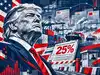
India's plan to take on China is gathering speed but Donald Trump is not amused
The Trump administration's Section 301 investigation has put India's PLI schemes and Make in India programme under scrutiny, proposing tariffs of up to 25% on Indian goods. The move raises questions about Washington's push to shift supply chains away from China while challenging India's manufacturing incentives. With trade negotiations nearing completion, the proposed tariffs could become a key bargaining tool.

India sounds the horn for the captain's chair in seas ruled by China & others
India plans to increase its shipbuilding output significantly by 2026, targeting 120,000 gross tonnage of ships. This target is backed by financial assistance schemes and new shipbuilding clusters in five states. The government's ambitious initiatives are part of a long-term vision for maritime growth by 2030 and 2047. Challenges such as high financing costs and skill gaps need addressing for successful execution.

Indian companies utilising only 20%-30% of free trade agreement benefits, RBI chief Malhotra says
RBI Governor Sanjay Malhotra highlighted that Indian businesses underutilize free-trade agreements significantly. He stated that 20% to 30% utilization contrasts sharply with 60% to 70% by trading partners. Malhotra emphasized the need for small and medium enterprises to improve quality and standards. Additionally, the AI adoption rate in the micro, small and medium enterprises sector lags behind countries like China.
- Go To Page 1

Nikesh Arora on India’s AI plan; Kalyan Krishnamurthy's Flipkart journey
Palo Alto Networks CEO Nikesh Arora said India's AI win lies in putting the technology in every citizen's hands. This and more in today’s ETtech Top 5.
Trump's new tariff tantrum for India, China can run into a legal and political minefield
Trump is preparing fresh tariffs of 15% to 25% on 16 major US trading partners, including India, using Section 301 after the Supreme Court struck down his earlier global duties. But the proposed levies could face legal challenges, congressional scrutiny and political resistance when Democrats take control in January 2027. Trade negotiations may offer India a route to tariff relief.

Alice Huang-linked firms listed $270 million in AI servers in China, records show
Alice Huang's connections have helped finance up to 764 AI servers in China valued at around $270 million. Her previous company, Megaspeed, faces US restrictions on technology exports to China. Century Litong, linked to Huang, has secured financing for numerous powerful computing servers located in Shanghai. The hardware arrangements reflect ongoing challenges for Chinese technology firms to obtain essential computing resources.

Alice Huang-linked firms listed $270 million in AI servers in China, records show
The central-bank documents identify up to 764 AI servers and modules valued at $270 million, along with $31 million in equipment used to connect them into large computing networks. Much of the hardware was listed as located at a sprawling Shanghai data centre originally developed under a partnership with Chinese technology giant Tencent.

India 'stepped up to the plate' with Rs 15,000 crore relief package for Nepal: Former envoy Manjeev Singh Puri
Nepal's Prime Minister Balendra Shah recently completed his first state visit to India since taking office. The two nations focused on enhancing cooperation in areas such as connectivity, infrastructure, and education. A significant development assistance package worth Rs 15,000 crore was announced for Nepal's reconstruction. The visit marks a shift towards more people-centric relations between the two countries.
From horsepower to firepower, Japan draws auto suppliers into major arms buildup
Japanese manufacturers in the automotive industry are increasingly diversifying into the defense sector to enhance profitability. Companies like Aster are now supplying electric motors for drones, which has become a vital revenue source. Tokyo is encouraging this shift as part of its military modernisation strategy amid security threats. Despite initial reluctance, the sector's growth indicates a changing attitude towards defense involvement.

School assembly headlines for November 24: Check latest India, international, business and sports news
School assembly news headlines for November 24 cover India's position in the Asia Power Index, India-China border discussions, PM Modi's development package for Nepal, global climate negotiations and major economic developments. Sports updates include India's Test draw against New Zealand, Carlos Alcaraz's ATP Finals victory and D Gukesh's World Chess Championship title defence. Education updates cover JEE Main 2027 registration, NEET PG counselling and AI research initiatives.

India's economic model needs a demand-side pivot, not another round of supply-side reforms
Narendra Modi criticized Indian corporations for not creating jobs after substantial corporate tax reductions. The focus on supply-side reforms since 1991 has led to disappointing outcomes in economic growth. While financial markets have performed well, broader economic indicators show India lagging behind other Asian nations. The article suggests a shift towards demand-side policies and industrial incentives linked to performance.

The Spy Games: There's a secret world of corporate espionage and power plays
In the AI era, the espionage battlefield may have moved from factory floors and corporate offices to digital networks and cloud infrastructure. But its underlying fundamentals remain unchanged. Companies and countries still deploy spies to secure undue advantage in business and other areas.
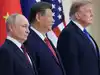
Trump, Putin and Xi sat at one table, but did any of them get what they wanted?
Trump, Xi Jinping, and Vladimir Putin held an unprecedented trilateral meeting to discuss global security issues. The meeting took place in Shenzhen alongside the Asia-Pacific Economic Cooperation summit on November 19. Each leader aimed to showcase their geopolitical influence by engaging in dialogue about international conflicts. Despite low expectations for major agreements, conversations focused on potential areas of cooperation.
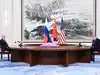
China and Russia say they and US agree on UN reforms, boosting fuel supplies, dialogue on nuclear
Leaders from the United States, China, and Russia met in Shenzhen to address nuclear risks. They discussed U.N. reforms and the necessity of improved communication on trade issues. While modest agreements were reached, the discussions yielded no major breakthroughs regarding ongoing conflicts. Tensions remain, particularly between the U.S. and China, despite friendly gestures exchanged during the meeting. Future talks are expected to further explore areas of mutual interest.

Anthropic (ANT) stock won't trade at the opening bell: Why a market order on IPO day could cost investors more than $83
Anthropic IPO trading time: Anthropic's Nasdaq debut on November 19 won't begin at the opening bell. The reported $83 IPO price doesn't guarantee the same price for market buyers. Alpaca expects trading to start between 10 a.m. and noon ET. Investors using market orders could pay more if demand pushes ANT higher. A limit order lets buyers set their maximum purchase price.
China's Xi Jinping calls for ban on nuclear weapons in trilateral meeting with Trump, Putin
Chinese President Xi Jinping emphasized the need for a world free of nuclear weapons during a tri-party meeting. He stated that comprehensive prohibition and destruction of nuclear arsenals is essential for global safety. Furthermore, Xi warned that nuclear war cannot be won and thus must never be fought. He urged all nations to make every necessary effort to prevent such a conflict.
The $32.7 trillion trade club India isn't in, but can't ignore
India's trade with APEC countries reached $628.5 billion, with a notable trade deficit primarily from imports. While India actively pursues trade agreements to enhance its exports, the imbalance remains evident. Despite applying for APEC membership since 1991, India still awaits acceptance as discussions on regional trade continue. With major economies moving towards common trade rules, India's absence may impede future opportunities.

India poised to benefit as global capital shifts from AI bets: CEA Nageswaran
India has demonstrated economic resilience with significant improvements in poverty reduction and corporate dynamism. Foreign investments have surged notably in November despite previous outflows influenced by AI trends. The nation's real GDP growth remains steady amidst global economic challenges and geopolitical conflicts. Approximately 500 million Indians have moved above the moderate poverty line, highlighting inclusive growth. Structural challenges need addressing to achieve the Viksit Bharat 2047 goal for sustainable development.

India may have to manage rupee strength, not weakness, in FY28: CEA V Anantha Nageswaran
India's Chief Economic Advisor V Anantha Nageswaran predicts a strong rupee instead of weakness in FY28. Lower global energy prices, improved foreign investments, and better trade relations with the US could benefit India. India's net foreign institutional investor equity inflows reached $10 billion in September, indicating growing foreign interest. Moreover, India's export performance is on track to meet its $1 trillion goal for this fiscal year.

China has the AI models, India has the AI services edge: Business Sweden’s Jaani Heinonen
Heinonen expects Swedish investment in India to rise as companies rethink China. He sees Indian firms helping Sweden's industries adopt AI, and India becoming the market where Swedish innovation scales.
Trump administration weighs forcing US firms to disclose Chinese AI use
The Treasury Department and the White House Office of Science and Technology Policy (OSTP) have discussed the plan, which would apply to companies such as Airbnb, the people said. The company uses Qwen, an AI model made by China's Alibaba , to power its AI customer service agent.

Nvidia earnings beat estimates; attention turns to call
Nvidia shares rose after the company unveiled solid quarterly results and projections for next quarter on Tuesday, in its first major event since the resignation of Jensen Huang as CEO.
Trump-Xi-Putin summit: Can the three find common ground on war, oil, nukes?
With Trump, Xi and Putin coming together, Shenzhen could produce an extraordinary diplomatic spectacle, but without delivering an extraordinary outcome. The real test will not be the great photo-op, but whether the three can use their power to avoid further trade and geopolitical instability.

Tata Steel seeks UK market support, Dutch green funds amid Chinese excessive supply: Narendran
Tata Steel is seeking UK government intervention to address excess steel inventories and negotiating Dutch state funding for its green transition as Chinese oversupply, geopolitical conflicts and trade barriers disrupt global markets. CEO T V Narendran says the company is prioritising cost efficiency, value-added products and cleaner steelmaking to build resilience.

Seven years after RCEP exit, conditions ripe for India to turn East
India's approach towards East Asia is evolving due to changing geopolitical landscapes and economic pressures. Japan and South Korea are reconsidering their ties with China, as companies exit the market. Southeast Asian nations are enacting measures against low-priced Chinese products amidst rising trade tensions. The upcoming meetings in Manila, including the East Asia Summit, are significant for India's strategic positioning.

"Absolutely no doubt": India's Navy Chief Admiral Swaminathan on advantage of Great Nicobar Project
Navy Chief Admiral Krishna Swaminathan highlighted the strategic advantage of proximity to the Malacca Strait. He stated that the Great Nicobar Project would enhance India's positioning along key maritime routes. Admiral Swaminathan noted that China has maintained a continuous presence in the Indian Ocean Region since 2008. He mentioned monitoring vessels in the region, including Chinese ones, to ensure national interest.
Load More

