
CALIFORNIA ANIMAL ACTIVISM
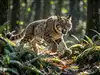
UC Santa Cruz scientists placed hidden speakers near mountain lions' feeding sites in California in 2017. Experiment revealed even recordings of ordinary human conversations can frighten the predators away
The scientists from UC Santa Cruz discovered that mountain lions are scared of humans and frequently leave food when they hear people. A 2017 study in California’s Santa Cruz Mountains confirmed that the mountain lions left food when they heard humans. The animals also shortened their feeding periods. This may cause them to hunt for more deer.
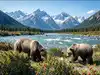
Alaska’s grizzly and black bears are doing way more than hunting salmon and eating berries. Researchers discovered they can spread around 200,000 seeds per square kilometer per hour when they forage
A study has revealed that Alaska’s grizzly and black bears are important seed dispersers in southeast Alaska. Around 200,000 devil’s club seeds per km² are dispersed in the scat of bears while they forage. This is more than that achieved by birds. The brown bears are dominant seed dispersers initially and black bears assume this role when brown bears turn to eating salmon.
In a year dominated by AI, Cambridge Dictionary puts ‘human’ in the spotlight
Cambridge Dictionary has named ‘human’ its Word of the Year 2026, reflecting a renewed appreciation for human creativity, authenticity and connection as artificial intelligence spreads across industries. Its blog points to changing business practices, resistance from artists and emerging lifestyle trends that place greater value on human involvement.
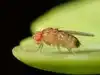
Scientists compared flies from cool California forests with those from hot Southwestern deserts; a 2025 study found their brains responded differently to heat
Two fly species, Drosophila persimilis and Drosophila mojavensis, showcase fascinating adaptations to their environments, revealing their opposing responses to heat. While forest-dwelling flies evade warmth, their desert counterparts thrive in it. These contrasting behaviors highlight significant neural changes that not only reflect physical adaptations but also altered sensory processing. This research is pivotal in predicting how species may cope with the challenges of climate change.
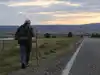
From being bedridden for months to an over 90,000 kilometres journey across Amazon to Antarctica, one man is rewriting what travel could look like
David Bossek is undertaking a global expedition to explore responsible travel and environmental awareness. He began his journey from Germany in 2024 after recovering from a cycling accident. Following a primarily overland route, he has already traveled through diverse landscapes and cultures. His experiences challenge conventional travel methods while contributing positively to local communities. Bossek plans to return to Germany in 2028, embracing unexpected opportunities along the way.

Chris Brown's UK sentencing brings attention to $13 million lawsuit after his 200-pound Caucasian Shepherd mauled housekeeper
Chris Brown faces sentencing in the UK over a 2023 nightclub incident, bringing renewed attention to a separate $12.9 million lawsuit after his 200-pound Caucasian Shepherd mauled his housekeeper at his California mansion in 2020. Chris Brown, who was at home when the attack occurred, testified that he put the dog in a kennel after it injured his housekeeper
- Go To Page 1
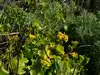
In the 1950s, California brought in Cape ivy as an ornamental vine; it spread across 500,000+ acres, cutting native seedling variety by as much as 95%
Cape ivy, introduced to California in the 1950s for ornamental purposes, has turned into a destructive invasive species. Its rapid growth shades native plants and competes for essential resources, leading to a significant loss of biodiversity in many regions. Efforts to eliminate this resilient vine have been challenging, but new biological control initiatives show promise in curbing its spread and rehabilitating affected ecosystems.

Amanda Seyfried’s longtime Hollywood Hills home in Los Angeles is up for sale for $3.2 million
Amanda Seyfried has listed her Hollywood Hills home for $3.195 million as she continues to make upstate New York her primary residence. The actor bought the Los Angeles property for $1.85 million in 2011 from her Jennifer’s Body co-star Adam Brody. The property is located at 1753 North Gardner in Los Angeles, California. Justin Paul Huchel of Carolwood Estates is handling the listing.

Arnold Schwarzenegger bought Brentwood mansion in 2002 for $4.9 million. Here's all about actor's estate
Arnold Schwarzenegger has lived in his Brentwood home ever since he bought it with Maria Shriver in 2002 for roughly $4.9 million. The estate is built on a six acre land. It encompasses a main house, a private gym, a swimming pool, tennis courts, landscaped gardens and space for animals. The estate is located in a residential community of private homes, tree-lined streets, etc.

Isaias strengthens into Category 2 hurricane; halts 63% of Gulf oil output, 1.3 mln barrels a day off market
Hurricane Isaias is predicted to become a dangerous storm as it approaches the Gulf Coast. Preparations are underway, including evacuations and securing boats in coastal areas. The hurricane could bring severe weather, including high winds and heavy rainfall, affecting multiple states. Oil production is also being impacted significantly due to shut down operations in the Gulf. Communities are urged to prepare as conditions are expected to rapidly deteriorate.
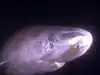
Greenland sharks can live 400 years without losing their vision: Scientists once thought they were blind, now they know why
Greenland sharks can live for more than 400 years, but scientists once believed the deep-sea giants were functionally blind because of their cloudy eyes and parasites. A new study has challenged that assumption, finding healthy retinal tissue and visual proteins adapted to the dim Arctic depths. Researchers say the findings could offer clues into how the eyes resist age-related damage and potentially help scientists better understand human vision loss.
In the fall of 2023, California released 7 beavers into the ancestral lands of the Mountain Maidu people after nearly 75 years. Now they’re building dams, canals and have expanded wetlands by 23%
California is seeing a new wave of conservation with the Department of Fish and Wildlife's beaver relocation project designed to tackle water management hurdles. Beavers are being moved to rejuvenate wetlands and improve stream health. Their return has already led to dam building and increases in reproduction rates, revitalizing ecosystem functionality.

IITian who secured AIR 1 in JEE, left India to study at University of California in 2004. 10 years later, one Shah Rukh Khan flop film inspired him to return to India. Today, he is an expert on mosquito brain
He was once the very epitome of the Indian success story. Meet Professor Nitin Gupta, who once left India to pursue a PhD in bioinformatics at the University of California, San Diego, and spent years at the National Institutes of Health in the USA before giving it all up and returning to India. Today, he is an associate professor at IIT Kanpur.

In 1985, Harrison Ford bought an 800-acre ranch along Wyoming's Snake River. 41 years later, 389 acres remain protected by conservation easements as wildlife habitat now
Harrison Ford’s Wyoming ranch became much more than a private retreat after he purchased an 800-acre property along the Snake River in 1985. Drawn to Jackson Hole for its natural beauty, Ford created a home surrounded by mountains, water, trees and wildlife.

Why octopus camouflage is so hard to explain: They cannot see colour as we do, yet they can blend into their surroundings with stunning precision
Octopuses possess specialized skin structures that allow them to change their color and texture to blend in. Their visual systems detect light and patterns, but they have poor color vision. Neural signals control skin cells rapidly, enabling quick adaptations to the environment. Research continues to explore how octopuses interpret visual information for effective camouflage. Understanding their unique sensory processing offers insights into their remarkable survival strategies in the wild.
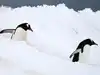
DNA reveals four gentoo penguin species instead of one after more than 100 years. Scientists now fear some island populations could lose their homes to global warming
New genomic research has resolved a century-old debate over gentoo penguins, revealing four distinct species rather than one with several subspecies. The newly recognised Kerguelen gentoo lives on remote islands in the Southern Indian Ocean. Scientists warn that warming temperatures could shrink habitats for several island populations, making conservation increasingly important.
US farmers to get $26.5 million in new grants as USDA backs beef producers and rural businesses across America
USDA is investing $26.5 million in 194 agricultural projects across the US, including $11.6 million for 80 beef producer projects. Applications for the Value-Added Producer Grant program are generally accepted between January and May, although the exact timing can vary depending on when program funding becomes available. Here's what farmers and rural businesses need to know about the new grants.

Your brain may be one organ today, but scientists have uncovered a hidden split that may date back more than 500 million years
New research suggests the human brain develops from two distinct cell populations. These groups follow separate paths from early embryonic development stages. This finding challenges long-standing assumptions in neuroscience and evolutionary history. Scientists used this discovery to create functional hindbrain motor neurons in the lab. This breakthrough offers a new model for studying neurological diseases like ALS and SMA.
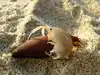
Tiny shrimp-like creatures are moving 110 pounds of sand per meter of California beach every day, scientists say they may be reshaping the coast
Tiny sand hoppers on California beaches are doing far more than feeding on washed-up kelp. New research found the shrimp-like creatures can move up to 50 kg (110 lbs) of sand per meter of shoreline each day, potentially influencing erosion, dunes and the movement of sediment along the coast. Though they may look stationary, act like rivers of sediment, constantly moving sand transported by waves, and currents along the coast.
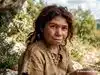
Scientists found an 8-year-old Neanderthal child in a Belgian cave, and DNA from her molar is helping reveal a hidden chapter of our ancient past
The Scladina child was an approximately eight-year-old Neanderthal who lived more than 120,000 years ago in what is now Belgium. Her remains from Grotte Scladina have provided researchers with evidence about Neanderthal childhood development and ancient population history. Genetic studies of the remains have also helped scientists understand relationships between early European Neanderthals and populations that lived later.

In 1998, Leonardo DiCaprio started an environmental foundation at 24; it later backed more than 200 projects across 50 countries
In 1998, Leonardo DiCaprio started an environmental foundation at 24; it later backed more than 200 projects across 50 countries. The Leonardo DiCaprio Foundation focused on climate change, wildlife, oceans, forests, indigenous rights and conservation. It awarded more than $80 million in grants and supported projects in 50 countries. DiCaprio also used films such as The 11th Hour and Before the Flood to reach audiences worldwide.
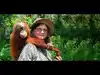
A 25-year-old Canadian primatologist entered Borneo’s remote wild swamps with her husband in 1971 to study orangutans; after 40 years of research, she found that they give birth just once every 7.7 years and documented 400 types of food in their diet
In 1971, Canadian primatologist Biruté Galdikas embarked on an extensive journey into orangutan research in Indonesian Borneo, setting up Camp Leakey as a base for her studies. Her groundbreaking findings on orangutan reproductive patterns and dietary habits significantly contributed to primatology. To further her conservation efforts, she founded the Orangutan Foundation International, significantly enhancing education and preservation initiatives, which earned her Indonesia's esteemed Kalpataru award for her environmental contributions.
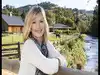
In 2015, Olivia Newton-John bought a 12-acre Santa Ynez ranch for $4.69 million; 4 years later, the riverfront estate was listed for $5.4 million with a barn and pasture
In 2015, Olivia Newton-John bought a 12-acre ranch in Santa Ynez for $4.69 million. The peaceful riverfront estate offered plenty of open space and a private country setting. Four years later, the property returned to the market for $5.4 million. It featured a barn, pasture and expansive grounds. The ranch reflected the quiet rural lifestyle that made Santa Ynez an appealing retreat for Newton-John.
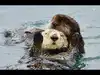
In 1980s, scientists moved 140 sea otters to a California island as an insurance policy; most disappeared, but the population eventually rebounded
In the late 1980s, wildlife officials initiated a relocation effort by moving southern sea otters to San Nicolas Island. Initially, many of the otters left the island, which led to a significant population decline. However, those that remained began to reproduce, and over time, the colony gradually flourished. By 2019, the population reached about one hundred, highlighting the effectiveness of wildlife relocation and restoration initiatives.
In 2026, scientists tracked 4,581 animals across 37 species; more than 65% changed their behaviour simply when humans were nearby
Researchers tracking 4,581 animals across 37 species in the US found that more than 65% changed how they used space when humans were nearby. The Science study used animal GPS records and anonymised cellphone data during COVID-19 lockdowns to separate the impact of people from permanent landscape changes, finding that species responded differently and were often more sensitive to humans in less-developed areas.

In 1946, imported beetles were released against toxic St. Johnswort in northern California; by 1957, the weed had fallen to less than 1% of its former abundance
By the 1940s, European Klamathweed had established itself as a major rangeland threat in California. To combat this invasive species, leaf beetles known as Chrysolina hyperici and quadrigemina were released. Remarkably, these beetles managed to diminish the weed's presence by over ninety-nine percent within a decade. Chrysolina quadrigemina thrived, particularly in California's arid conditions, though this intervention inadvertently impacted native plants in the eastern United States.

Linda Blair's home raided: ‘The Exorcist’ star’s California property searched over reported kennel operation after officials make surprising discovery, here's what happened
Linda Blair Kennel operation: Los Angeles County officials inspected Linda Blair's property regarding a kennel operation and made a stunning discovery. Authorities found over 200 dogs, exceeding her permit limits. The inspection aimed to ensure animal welfare and code compliance for the kennel. Blair stated she has paperwork to complete and plans to relocate her foundation.
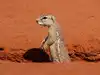
Why do squirrels rub snake scent on themselves, and what does it actually do?
Ground squirrels have a surprising survival trick. They use the smell of rattlesnakes to hide their own scent from predators. Researchers observed squirrels chewing on shed snake skin and rubbing it on their fur. This chemical camouflage helps them avoid being detected by hunting snakes. This unique behavior is a sophisticated anti-predator strategy developed over time.
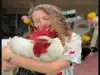
Who is Zoe Rosenberg? UC Berkeley activist jailed for 30 days for ‘rescuing’ 4 chicken from slaughterhouse
UC Berkeley student and activist Zoe Rosenberg received a 30-day jail sentence for breaking into a slaughterhouse and taking four chickens. Convicted of felony conspiracy and misdemeanor counts, she was also ordered to pay over $100,000 in restitution. Rosenberg claimed she was rescuing injured birds, but the jury sided with prosecutors. Her case gained significant online attention.
Load More

