
BLACK HOLE JETS

Plane crashes a few miles away from President Donald Trump's Mar-a-Lago resort in Florida, 9 killed, all about jet crash
Bahamas-bound jet departed from Austin-Bergstrom International Airport in Texas.
Now you have a safe flight, dear reader: We live in turbulent times - if it's just turbulence, thank your lucky stars
A humorous yet unsettling take on the anxieties of air travel. A passenger’s brief attempt to learn how to fly a plane and then the chilling survival story depicted in the film Odna. Reflecting on a real-life mid-air collision, a frightening personal flight experience and Stephen King’s thoughts on flying.

Ukraine will hit Russian refineries in response to Moscow's 'new doctrine' of airstrikes
Ukraine is set to enhance its attacks on Russian oil refineries in response to recent changes in military tactics. President Volodymyr Zelenskiy emphasized that civilian infrastructure would not be targeted during these operations. Ongoing Ukrainian counteroffensives have recaptured significant territory in the eastern Donbas region.

NASA’s $1.2 billion plan to explore the history and evolution of the universe enters Phase B
NASA has progressed the PRIMA mission into Phase B, concentrating on the creation of essential technologies and designs. This innovative space telescope is intended to perform detailed far-infrared surveys of our universe. With a scheduled launch in 2033, it aims to operate for five years, allowing scientists to delve into the formation and evolution of diverse cosmic phenomena.
Your calf muscles may be doing more than helping you walk. They could be talking to your brain through a protein that may influence mood and trigger the growth of new neurons
Scientists identified apelin, a protein signaling from leg muscles to the brain. Exercising mice showed increased apelin levels in their bloodstream and hippocampus. This protein appears crucial for exercise-induced behavioral improvements in mice. Apelin may influence mood by affecting new neuron growth in the brain. Further research is needed to confirm these findings in humans.
What happens to the brain when consciousness goes offline? Scientists uncover how disrupted brain communication can alter awareness, memory and our sense of self
General anaesthesia disrupts brain communication, altering how different regions coordinate their activity. Researchers observe reduced long-range connections and altered functional connectivity during unconsciousness. The thalamus appears to be one of the first brain areas to become less active. Individual brain patterns become less distinct under anaesthesia, offering new insights. This research provides a unique window into the mystery of consciousness.
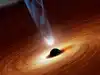
The strange 2% rule: Why black holes suddenly switch on their powerful jets
A new study reveals black holes become predictable when feeding. Jets emerge when accretion rates fall to two percent of the Eddington limit. This threshold applies to black holes of vastly different sizes. Tidal disruption events offer a rare view of this process. Future observations may predict when these powerful jets will appear.

Scientists develop a new way to test autism & epilepsy treatments: Why traditional mice cannot explain complex human brain disorders
Scientists have implanted human brain organoids into specially engineered mice. These human cells survived and connected with the animals' existing nervous systems. This new model allows observation of human brain cells within a living organism. It could aid research into conditions like autism and epilepsy more effectively. The technology offers a valuable intermediate step before human clinical trials.
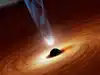
A black hole destroys a star, then fires off a powerful jet years later — scientists discover the 'burping' feeding pattern behind these cosmic outbursts
Scientists have found a new trend in black hole feeding patterns. Powerful jets emerge during two distinct phases of a black hole's feeding process. These jets appear during heavy feeding and later when feeding slows significantly. This discovery helps explain jet appearances long after a star's destruction. The findings may aid astronomers in planning future radio observations more efficiently.
Science says black holes don’t actually suck everything around them: Here’s what really happens
Black Holes are called black because light cannot escape from inside their event horizons. Astronomers nevertheless detect black holes indirectly through their effects on nearby matter, gravitational lensing, stellar orbits and radiation from accretion disks.

NASA looked back at the first Black Hole ever photographed, and found a big surprise
The universe keeps reshaping our cosmic perspective. When the Event Horizon Telescope captured the historic first image of a black hole in 2019, humanity stared at a fiery orange ring. That glowing donut of hot gas became an instant scientific monument. However, static pictures rarely tell the whole story of deep space. New Chandra X-ray observations reveal moving jet activity inside the heart of the galaxy Messier 87, proving this monster is far from quiet.
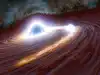
Supercomputers reveal the truth about what happens near a Black Hole
Supercomputers black hole research: New simulations offer unprecedented detail on how black holes consume and eject matter. Researchers used supercomputers to model gas, light, and magnetic fields. This work accurately includes key physical processes, revealing how dense gas disks form and powerful jets shoot outward. The models also show how magnetic fields direct matter flow.
Scientists capture images of two black holes orbiting each other 5 billion lightyears away for the first time
Scientists have captured the first radio image of two supermassive black holes orbiting each other. This event occurred inside a quasar named OJ287, located billions of light-years away. The image validates a long-held prediction about these celestial bodies. The black holes were detected through particle jets and glowing gas. This groundbreaking observation confirms the existence of orbiting black hole pairs.
Finnish astronomers capture first-ever image of two orbiting black holes
Finnish astronomers have spotted the first-ever image of two black holes orbiting each other, verifying these cosmic voids can appear in pairs. The findings, published October 9 in the Astrophysical Journal, highlights the quasar OJ287, situated 5 billion light-years from Earth. The huge primary black hole, approximately 18 billion times the sun’s mass, and its smaller, orbit each other every 12 years.

Astronomers spot the largest cosmic giant of its kind in the distant universe
Astronomers have discovered an enormous radio jet stretching over 200,000 light-years from a quasar in the early universe, offering rare insights into cosmic evolution. The jet, the largest of its kind from this era, was detected using powerful radio telescopes, overcoming challenges posed by cosmic background radiation. This finding confirms that even smaller black holes in the young universe could produce vast energy outflows, shaping galaxies and spreading magnetism far beyond their host systems.

700 million Suns’ worth of power fired at Earth and it could destroy us? Here's what we know
Astronomers have uncovered the most distant blazar ever discovered, a supermassive black hole with a mass of 700 million suns, located 12.9 billion light-years away. This blazar, named J0410−0139, offers a rare glimpse into the early universe, emitting a powerful jet of energy aimed directly at Earth. The discovery provides vital information on the rapid growth of supermassive black holes and opens the door to future cosmic revelations.
Supermassive black hole sends jet pointing towards Earth after tearing apart a star, say astronomers
Astronomers captured a bright flare emanating from a dying star being torn apart by a supermassive Black Hole launching relativistic jets towards Earth.
Black hole found producing fuel for star formation
New York, Feb 15 (IANS) In a surprising discovery, astronomers have observed a black hole producing cold, star-making fuel from hot plasma jets and bubbles.

Black hole spotted in glow of the Big Bang
Astronomers using NASA's Chandra X-ray Observatory have discovered a jet from very distant supermassive black hole being illuminated by oldest light.
Load More


