
BIODIVERSITY
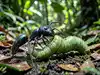
Smithsonian researchers placed nearly 3000 fake caterpillars across six continents in 2017. Research revealed daily risk of predator attacks in Greenland was just 13% of that at the equator
A team of international researchers discovered that predation of caterpillars is greater towards the equator and at lower altitudes. The team installed 2,879 fake caterpillars at 31 sites on six continents. Results revealed that the probability of a caterpillar being attacked in Greenland was just 13% of that towards the equator. Predation was largely due to insects especially ants. The research provides information on biodiversity and plant defense mechanisms.
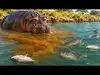
How did hippo dung turn an African river into a death trap for fish? Scientists explain
Hippo dung usually provides nutrients that help support life in African rivers. But scientists found that the situation changes when rivers begin drying up. A 2018 study in Tanzania found that dung accumulating in isolated pools was reducing oxygen levels and making survival difficult for fish.

New York used 75,000 recycled oyster shells to solve coastal erosion across 100 acres of harbor; the result transformed degraded seabed into vibrant living reefs
Discarded oyster shells from restaurants in New York City are repurposed to restore underwater reefs. The Billion Oyster Project works with local businesses to collect and reuse shells for marine habitats. By the end of 2025, the project reintroduced over 180 million live oysters into the harbor. Research confirms the positive ecological impact of these restored reefs on marine life diversity.

In 2000, Quito began protecting its damaged mountain wetlands; 25 years later, native plants had returned, and pumas, deer, and condors were seen across the recovering landscape
Since 2000, Quito has restored its watersheds, leading to the return of native vegetation and wildlife. The Nature Conservancy and local authorities collaborated to create FONAG, a water fund collecting contributions for conservation. This initiative has employed community members as park rangers and promoted eco-tourism to benefit local residents. Over three thousand students have participated in environmental education programs associated with the project.

Keralam to declare Wayanad India’s first e-waste-free district on November 27
Wayanad is set to become India’s first electronic waste-free district after collecting over 102 metric tonnes of e-waste. The initiative is supported by local leaders and organizations to promote ecological sustainability. Kerala’s Agriculture Minister T Siddique has highlighted the importance of this campaign for the region's environmental health. Chief Minister VD Satheesan will formally announce the district's status on November 27.
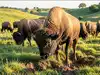
Yellowstone National Park’s bison are doing way more than just grazing across Wyoming. A six-year field study reveals how their movement and habits make grasslands 150% more nutritious
Yellowstone National Park bison have enhanced grassland health and nutrition. Almost 5,000 Yellowstone bison graze extensively. The regenerated grasses in these areas have been found to be 150 per cent more nutritious. Neither plant growth nor carbon stores within the soil are also negatively impacted. Bison migrate around 1,000 miles a year on a 50 mile migratory route.
- Go To Page 1

Anant Ambani’s Vantara signs 10-year wildlife conservation agreement with Madagascar
Vantara has signed a 10-year agreement with Madagascar's Ministry of Environment to enhance wildlife conservation and animal welfare. The MoU will facilitate the repatriation of seized animals and establish a wildlife rescue and rehabilitation center. Vantara aims to provide training and technical support to local authorities for wildlife management. The collaboration will focus on research and genetic profiling to aid animal rewilding efforts.

Yvon Chouinard, Patagonia's founder, gave away his $3 billion company; his children agreed to give up the inheritance; here's why
Yvon Chouinard has two children and their names are Fletcher and Claire Chouinard. They were both involved with Patagonia. However, they were both not interested in inheriting the company. They were also not interested in becoming billionaires. They grew up in a family where they had a lot of money and wealth.
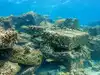
In 2018, Florida reused 6,000 tons of concrete from the old Southern Boulevard Bridge to create a 1.7-acre artificial reef in Lake Worth Lagoon
An old bridge in Florida was demolished, and its concrete was transformed into an artificial reef. The project utilized 6,000 tons of recycled concrete to enhance marine habitat. Workers carefully arranged the debris underwater to form stable structures that attract fish. This initiative aimed to improve local fisheries and support biodiversity in Lake Worth Lagoon. Future constructions related to the bridge will continue to contribute materials for the reef.
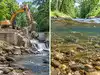
Illinois removed a dam from Blackberry Creek in 2013; fish began spawning within two weeks, and the former impoundment’s recorded species count rose from 8 to 25
In 2013, the dismantling of the Blackberry Creek dam sparked a significant ecological shift, enabling fish to migrate freely for the first time in 180 years. Following this, the diversity of fish species surged from 8 to an impressive 25. While some species returned quickly, others were still missing post-survey.

Environmental protection, development must advance together: Bhupender Yadav at COP31
At COP31 in Turkiye, India's Union Environment Minister Bhupender Yadav detailed the nation's strategy for climate resilience. He stressed the significance of collaborating with Small Island Developing States on coastal risk management and ecosystem conservation. Yadav outlined four priority focus areas for strengthening partnerships, such as technology exchange and capacity enhancement.

Rooting for revival of forests
Restore Bhutan was launched in 2025 to meet the constitutional requirement of maintaining forest cover in the country. The program seeks to restore 50,000 hectares of degraded forests, urban landscapes, and farmlands by 2030. It utilizes long-term financing strategies, blending finance with jurisdictional REDD+, to achieve its goals. By leveraging indigenous knowledge and community stewardship, it promotes self-sustainability in conservation efforts.
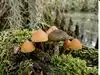
‘Dark magic mushroom’ found that produces hallucinogenic compound and one of the most deadly toxins
Scientists have discovered a rare mushroom that produces both psilocybin, a hallucinogenic compound, and amatoxins, deadly poisonous substances. Named Galerina indicaor the 'dark magic mushroom', it is the first known mushroom species found to produce both chemical groups. A study published inCurrent Biologyexplains how the fungus may have acquired its unusual properties through horizontal gene transfer.

Britain's Prince William adds Delhi leg to India visit for meeting with PM Modi
Britain's Prince William and Princess Catherine are set to visit India for a three-day engagement. They will participate in the Earthshot Prize ceremony and meet Prime Minister Narendra Modi. The royal couple aims to showcase the UK-India partnership and the importance of climate action. Mumbai will serve as a backdrop for their discussions on sustainable innovation and growth. This visit marks their second official trip to India since 2016.
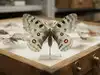
Scientists found a new butterfly hiding in Alaska museum collection; it may have an unusual Ice Age origin
A butterfly classified as a familiar species for decades caught the attention of a researcher examining museum collections. Its unusual appearance and DNA characteristics led scientists to describe it as a potentially distinct species in Alaska. Researchers also proposed that it may have originated through ancient hybridisation during the Ice Age.

ICAR partners with Centre for Sustainable Agriculture, MSSRF and Bharat Krishak Samaj to document farmer-led innovations in natural farming
The MoU, signed in New Delhi will facilitate a collaborative action-research study titled “Capturing Farmer Innovation in Natural Farming Transitions” under the National Mission on Natural Farming.

Shift from higher yields to nutrient-efficient crops needed to cut fertiliser dependence: ICAR’s Jat
Jat emphasised that soil biodiversity and agrobiodiversity are fundamental to sustainable agriculture

Greta Thunberg laughs at climate protestors: What is she doing now and what is her net worth?
A recent video of Greta Thunberg laughing while discussing protests by her own climate movement has caused backlash. Thunberg expressed surprise during the filming of a documentary about climate activism. She continues her efforts in climate activism and attended COP31, where she spoke on urgent climate issues. Furthermore, she has pledged prize earnings to environmental causes and established a foundation for charitable initiatives.

Sikkim's iconic Green Lake Trek reopens after 4 years: Why is it a must-explore for adventure tourist? Best time to visit and permits required
Sikkim's iconic Green Lake Trek has reopened after a four-year break, bringing fresh excitement to adventure tourism. Seven Russian trekkers completed the high-altitude expedition on October 31, 2026. The trail leads towards Mt Kanchenjunga's base camp, offering views of snow-covered peaks, alpine forests, rhododendrons and rare wildlife. The best visiting seasons are spring and autumn.

India should offer world new development model rooted in tradition: RSS chief Mohan Bhagwat
Mohan Bhagwat called attention to India's heritage of traditional wisdom as a potential blueprint for global progress. He underlined the necessity of achieving equilibrium among human lifestyles, animal health, and environmental integrity. Concurrently, Maharashtra Chief Minister Devendra Fadnavis confronted the agricultural issues arising from climate change, and Union Minister Nitin Gadkari announced the establishment of agriculture and veterinary institutions as vital steps for enhancing local development.

MIT scientists built over 400 tiny ecosystems with 12 to 20 bacterial species; after adding an outsider, the more changeable communities were easier to invade
Researchers at MIT have discovered that chaotic ecosystems easily accept new species while stable ones resist invasion. Conventional ecological beliefs suggest high biodiversity prevents invasions, but stability plays a crucial role. This finding has implications for the effectiveness of probiotic supplements in human gut microbiomes. Individuals with more stable guts may struggle to welcome beneficial probiotics. Future studies will further explore these dynamics and their relevance in wellness treatments.

Environmental groups embrace AI, even as they warn of data center impacts
Environmental organisations are increasingly leveraging artificial intelligence to enhance conservation efforts and analyze ecological data. Many express concerns about the environmental impact caused by data centers that support AI technologies. The energy and water consumption of these centers is projected to double by 2030, raising emissions concerns.
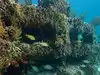
An artificial reef can do more than attract fish: How a 125-acre underwater project could reshape North Carolina's coastal ecosystems
An artificial reef will be constructed in North Carolina's Albemarle Sound, scheduled for development soon. This project aims to create shelter, feeding opportunities, and spawning habitats for local marine life. By utilizing materials from the Alligator River Bridge, the reef will cover an area of 125 acres. Although the initiative will increase habitat availability, its effectiveness in boosting fish populations is uncertain.
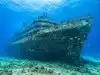
In 2024, the US military sank the 360-foot Monarch Countess weighing 2,743 tons; the retired vessel now rises 100 feet from the seafloor in 180 feet of water
The Monarch Countess, a roll-on/roll-off vessel, now rests serenely on the Gulf of Mexico's seabed. This ship, having been adapted for military tests and enticing tourists, has become a focal point for ecological studies. Research indicates that artificial reefs like the Countess support marine biodiversity. Continued observation will reveal its long-term influence on local fish populations, potentially transforming the area into a prime fishing and diving destination.
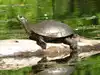
In Yosemite, scientists monitored 4 ponds for 7 years as invasive bullfrogs were removed; juvenile native turtles reappeared at affected ponds by 2019
Scientists observed a decline in juvenile turtles in Yosemite due to invasive bullfrogs preying on them. After nearly eradicating the bullfrog population, baby turtles began reappearing in the affected ponds. The study involved monitoring turtle populations over seven years to measure recovery and changes. Northwestern pond turtles are critical to California's freshwater ecosystems, and conserving them is crucial. The findings highlight how controlling invasive species can benefit native wildlife populations.
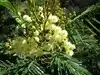
Hawaii introduced black wattle as a forestry tree; it escaped cultivation and now chokes about 3,000 acres of Maui pasture, gulches, and empty lots
Black wattle has become a formidable invasive force in Hawaii, spreading rapidly beyond its initial planting zones into the island's treasured native ecosystems. This explosive growth is transforming open pastures into impenetrable thickets, effectively pushing out native plant species. With seeds that can lie dormant for extended periods, the challenge of management and restoration is heightened.

Vantara hosts EARAZA conference, puts data and technology at the heart of wildlife conservation
The four-day EARAZA Annual Conference 2026 at Anant Ambani’s Vantara in Jamnagar brought together 98 institutions from 30 countries. Vantara announced one year of free access to its ANTZ Software Platform, including its Open Data Exchange, for all EARAZA members.

In Washington, scientists excluded elk from rainforest plots for 36 years; shrubs became 5 to 6 times more abundant, while 46 plant species disappeared
A comprehensive study conducted over 36 years in Washington's Olympic Peninsula has unveiled striking insights into elk exclusion's impact on plant communities. Researchers found that while shrubs thrived, numerous smaller plant species vanished, underscoring the elk's critical role in promoting forest diversity through their feeding habits and behavior. These revelations challenge conventional views on herbivores, highlighting the importance of understanding ecological interactions for wildlife management and conservation efforts.

COP17 adopts Yerevan Pathway to fast-track biodiversity priorities
"Over these two weeks, we have demonstrated that differences can be bridged, commitments can become decisions and cooperation can deliver," said Matevosyan. While countries agreed to intensify efforts to halt biodiversity loss and protect nature, contentious factors including the thorny issue of who pays for initiating steps to protect nature were addressed through compromises.
Load More

