
BATTERY RECYCLING REGULATIONS

Black mass to end China sourcing dependence; EV battery recycling to boost India's critical minerals supply
India's Directorate General of Foreign Trade announced a ban on lithium-ion battery black mass exports to secure resource supply. This preemptive measure aims to build a domestic recycling sector as electric vehicle sales rise. China has been consolidating its dominance in critical mineral refining and imposes strict regulations on imports. The increase in discarded batteries requires effective enforcement to prevent circumvention of the ban.

CII pitches 15 financial sector reforms, seeks higher foreign investment in PSU banks
The Confederation of Indian Industry has outlined 15 financial sector reforms to enhance growth. These reforms include raising foreign investment limits in public sector banks and aligning voting rights in private banks. CII also emphasizes the need for a broader investor base for lower-rated corporate bonds. Additionally, they suggest recalibrating the priority sector lending framework and enhancing investment in renewable energy projects.
CII proposes 15 financial sector reforms to support India's $26.5 trillion economy target
The Confederation of Indian Industry has recommended reforms to improve India's financial system for future growth. These proposals include enhancing liquidity for non-banking financial companies and revising priority sector lending norms. The aim is to address the significant gap in financial assets needed for a $26.5 trillion economy by 2047. The CII emphasizes the importance of deep institutional investments in corporate bonds to support this growth.

CII proposes 15 financial sector reforms to support India's $26.5 trillion economy target
CII has proposed 15 reforms across banking, NBFCs, capital markets, insurance and fintech to strengthen India’s financial system for long-term growth, including a permanent liquidity facility for NBFCs, wider investment in lower-rated corporate bonds and a national catastrophe risk pool. It estimates that a $26.5 trillion economy by 2047 would require about $106 trillion in financial assets, with banks, bond markets and MSME credit needing significant expansion.

Centre proposing parity in mineral taxation, states' rights to remain intact: Union Mines Secretary
Proposed amendments to the Mines and Minerals (Development and Regulation) Act are intended to create tax parity across states. This initiative aims to reduce reliance on imports by fostering local production and processing of critical minerals. The Indian government has introduced significant subsidies to support industries establishing lithium and nickel processing facilities. Approximately 58 entities are now registered under a recycling program for electronic waste.

What if India’s waste could power its growth? Bhupender Yadav makes the circular economy pitch
India should view the circular economy as a way to make growth more resource-efficient, resilient and sustainable rather than simply as a waste-management exercise, Union environment minister Bhupender Yadav said. He highlighted the expansion of recycling infrastructure, extended producer responsibility and markets for recycled materials as key pillars of India’s approach.
- Go To Page 1

In 1993, Taiwan collected 70% of its trash while recycling virtually none. 33 years later, paid bags, musical trucks and sorting helped drive recycling to 55% nationwide
Taiwan’s experience therefore challenges the idea that recycling depends mainly on individual environmental enthusiasm. People certainly need to participate, but participation becomes easier when governments create systems that are convenient, predictable and enforceable.
Donald Trump orders restrictions on export of critical minerals scrap, White House officials say
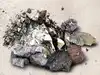
President Trump signed an order to block old electronic waste exports. This aims to boost domestic recycling and critical mineral recovery efforts. The move seeks to counter China's dominance in vital material supply chains. Recapturing minerals already in the US offers a faster solution. This action supports national security and defense industry needs.

Delhi EV policy 2.0 to bring dedicated battery recycling framework
Delhi is set to launch its Electric Vehicle Policy 2.0 soon. A key feature will be a dedicated framework for recycling EV batteries. This initiative aims to manage growing battery waste from electric vehicles. The Delhi Pollution Control Committee will oversee the process. The policy also plans to boost EV adoption with incentives and expand charging infrastructure.

Eastern India’s battery recycler, NavPrakriti, partners with NASH Energy to build circular battery economy
This alliance ensures responsible end-of-life management for all NASH Energy batteries, maximizing material recovery and environmental compliance.

Transport ministry proposes Aadhaar-like number to EV batteries for efficient traceability
The transport ministry is proposing a unique 21-character "Battery Pack Aadhaar Number" (BPAN) for EV batteries to ensure traceability from raw material to disposal. This mandatory system aims to boost transparency, accountability, and sustainability in the battery ecosystem, facilitating efficient recycling and second-life usage. The framework prioritizes electric vehicle batteries.
IESA calls for streamlining regulation, incentives to boost battery recycling
India's battery recycling industry is poised for significant growth, projected to more than double by 2033. The India Energy Storage Alliance (IESA) urges the government to streamline regulations, incentivise innovation, and foster collaboration to build a robust circular battery economy and address current feedstock challenges.

E-waste recycling in India needs Rs 50,000 crore investment to scale, faces raw material shortage: Industry experts
India's recycling sector needs ₹50,000 crore to process e-waste efficiently. A shortage of raw materials entering formal channels is a major challenge. Experts highlight the need for better coordination between industry and government. Indigenous technology and supportive policies are driving growth.

Recycling of lithium can make India self-reliant: Official
The Ministry of Heavy Industries is developing new policies and incentives to support battery component manufacturing, with input from industry experts and the India Energy Storage Alliance (IESA).

Is India ready to recycle millions of end-of-life EV batteries?
As India embraces electric vehicles to combat pollution and reduce oil dependency, the importance of lithium battery recycling becomes evident. Major industry players are ramping up EV production, but current recycling infrastructure can't handle future demands. Strengthening policies and investing in technological advancements are essential for a sustainable battery recycling ecosystem.

How battery recycling can help EVs to be truly green
Batteries of EVs after their usage need to be accurately managed to avoid them being harmful to the environment. One solution to this problem could be ‘Battery Recycling’ and ‘Battery Reusing’, if the battery cells are accurately processed. This opens up a platform where manufacturers of automobiles and EVs can extract valuable minerals and other materials through an effective battery recycling process.

Solution to pollution: Are electric cars ‘green’?
While demand for EVs is rising, India needs to ensure that this transition in transportation is truly green.

Flood of used batteries could supercharge China’s electric car market
The most profitable EV batteries to recycle are made of lithium, nickel, cobalt and manganese. To extract the metals, the batteries have to be dismantled and shredded into what’s known as “black mass".

Communities can't recycle or trash disposable e-cigarettes. So what happens to them?
Communities in the US are grappling with the safe disposal of millions of disposable e-cigarettes, which are considered hazardous waste. For years, the debate surrounding vaping largely centered on its risks for high school and middle school students. The devices, which contain nicotine and metals such as lithium, cannot be reused or recycled. Local officials have resorted to various methods of disposal, including incineration. Critics argue that the vaping industry has not taken responsibility for the environmental impact of its products.

Is India's infrastructure ready to be electrified?
India is experiencing a significant growth in electric vehicle (EV) sales, with a 112% year-on-year increase in EV sales from April to September 2023. However, the country's lack of public charging infrastructure poses a challenge to the widespread adoption of EVs. India needs a minimum of 1.32 million charging stations by 2030 to meet the demand for EVs. Additionally, recycling EV batteries is crucial to extract valuable resources and reduce manufacturing costs. Companies like Log9, Tata Chemicals, and Attero Recycling are involved in lithium-ion battery recycling. The Indian government has also released draft regulations and provides export-driving schemes to promote battery recycling.

Beware: These 5 household items could land you in legal trouble when thrown in the garbage
Disposing of household items may appear innocuous, yet there are at least five items with notable environmental risks. Incorrectly disposing of these items can result in penalties or, in severe instances, imprisonment.

Why we should get serious about mining critical minerals for clean energy
The mining of rare earth elements is highly competitive due to limited global reserves and growing demand from clean energy technologies and electronics. This competition exacerbates geopolitical tensions. Environmental concerns and complexities of extraction pose additional challenges to ensuring sustainable access to these resources.

How one company is transforming battery recycling business in India
Attero Recycling forayed into lithium-ion battery recycling three years ago as it was getting a lot of batteries back in its e-waste stream. What makes Li-Ion batteries the first choice in the modern world today is their highest energy density and slowest charging time, asserted its CEO Nitin Gupta. The company has been developing processes for recycling all kinds of Li-ion batteries and has 38 granted global patents on recycling technologies developed by it in India.

India needs to invest USD 10 bn for EV Li-ion batteries by 2030: Report
At present, India imports almost 70 per cent of its Li-ion cell requirement from China and Hong Kong, it added citing reports by Ministry of Mines. "By 2030, just to serve the local demand of Li-ion batteries, India would need upwards of an estimated USD 10 billion investments in cell manufacturing capacity, with additional investments in raw material refining capacities," it said.

National Metallurgical Lab signs recycling agreement with Puna’s Recy Energy
S.K. Pal, head - Research Planning & Business Development Division, CSIR-NML and Masood Khajenoori, Founder & CEO, Recy Energy inked the technology transfer agreement on May 25 in presence of other senior officials. The burgeoning automotive and transport sector has been surging ahead worldwide, witnessing sharp growth in the realm of Lithium battery based electrical vehicles across developed and emerging nations, it said in a release.

How to effectively manage e-waste at home or in office
E-waste and its disposal are a major environmental concern that affects the entire world and causes serious health problems for anyone who handles it in unconstrained conditions.

Attero Recycling plans public listing in 3 years, to double capacity by 2022
Attero Recycling has been able to extract metals from lithium-ion battery waste with 99 per cent efficiency, said its CEO and co-founder Nitin Gupta

Reducing tax, doling subsidies to regulated recycling sector can help reduce lead pollution: Study
Recycling was put forward as a good way to deal with the scarcity of metal and to handle the accompanying pollution. However, the proper recycling of lead is still a concern and it is lagging due to mushrooming of the unregulated battery recycling sector alongside the regulated ones.

Lithium-Ion battery recycling presents a $1,000 million opportunity in India
As per JMK Research estimates, the lithium-ion battery market in India is expected to increase from 2.9 GWh in 2018 to about 132 GWh by 2030 (CAGR of 35.5%).
Load More

