India's Directorate General of Foreign Trade announced a ban on lithium-ion battery black mass exports to secure resource supply. This preemptive measure aims to build a domestic recycling sector as electric vehicle sales rise. China has been consolidating its dominance in critical mineral refining and imposes strict regulations on imports. The increase in discarded batteries requires effective enforcement to prevent circumvention of the ban.
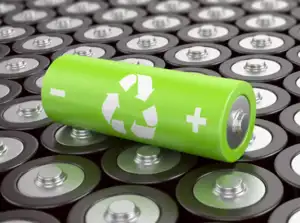
Representative image.
New Delhi: Earlier this month, India banned the export of a commodity it had never sold abroad-an unusual, possibly unprecedented move that has sparked curiosity about the rationale behind it.
Black mass, the powdery material obtained by shredding end-of-life lithium-ion batteries and battery manufacturing waste, is prized for its mineral content. It contains recoverable quantities of lithium, cobalt, nickel and manganese, among other minerals classified as critical for emerging technologies, including electric vehicles (EVs).
ET Bureau
The ban comes against the backdrop of China's aggressive push to consolidate its dominance in critical-mineral refining, where it already commands nearly 90% of global capacity. Beijing took another step in this direction last year by legalising imports of black mass, followed by a cut in import duties to 3% from 6.5% earlier this year - measures aimed at securing a steady supply of feedstock for its rapidly expanding, and currently underutilised, refining industry.
In Line with Global Moves
Yet, despite the legalisation of imports, China maintains stringent regulatory requirements for bringing in black mass. This has led Chinese buyers to rely on third-party intermediaries to scout for and source the material from across the world. There is a fear that India could be the next target for battery waste, considering that more than eight million EVs were added over the past decade.
Live Events
"The proposal to impose a ban on the export of lithium-ion battery black mass had been mooted some time ago, but the government held back because there were no exports of the material to begin with," said a government official, who did not wish to be identified.
The ban was essentially preemptive, according to the official, given China's aggressive efforts to secure larger quantities of such waste materials to feed its refining industry.
Other major economies also regulate trade. The European Union, for example, restricts exports of such materials to destinations outside the Organisation for Economic Cooperation and Development bloc, while the US requires sellers to give domestic buyers the first opportunity to procure locally generated black mass.
Export data for the past five financial years, as well as for the current fiscal up to September, the latest period for which figures are available, shows no recorded shipments of black mass from India.
With India entirely dependent on imports for three critical battery minerals-lithium, nickel and cobalt-building a domestic EV battery recycling ecosystem could offer a strategic way to shore up supply chain security while reducing import dependence. It could also spur industrial growth and advance the country's climate and sustainability goals, according to a report on battery circularity in India released by the Centre for Social and Economic Progress in September.
The report projected an increase in India's total EV sales to about 9.1 million in 2030-31, accelerating sharply to nearly 50 million by 2037-38. However, it said that the country's battery recycling opportunity would remain limited in the near term, before expanding significantly after 2030.
"The government's primary objective in imposing the ban was to preempt any future exports and ensure the material remains available to domestic refiners," said Ajay Srivastava, founder of Delhi-based trade think tank GTRI.
In a recent report, GTRI cautioned that the ban would require stringent enforcement to prevent exporters from disguising black mass as other commodities to circumvent the restriction. Black mass can contain toxic electrolyte residues and heavy metals, requiring further treatment before it can be safely processed. While regulations for hazardous waste mandate prior permission for such shipments, exporters could potentially evade scrutiny by declaring the material as cobalt powder, a nickel intermediate or another industrial product.
Effective enforcement, the report said, would depend on customs authorities scrutinising not just how the material was produced but how it is declared.
A Niti Aayog report, published in January, painted a worrying picture of India's battery-recycling landscape, noting that lithium-ion battery scrap and electronic waste were still largely handled by the unregulated informal sector. The use of unscientific processing methods, it warned, would lead to economic losses, environmental contamination and public health risks.
The challenge is set to intensify as the volume of discarded batteries rises. The report projected a 26% annual increase in the availability of end-of-life lithium-ion batteries for recycling.
India has a regulatory framework to address the challenge, including the Batteries (Management and Handling) Rules, 2022, which lay down provisions for the collection, recycling and environmentally sound management of used batteries.




 ET Bureau

 as a Reliable and Trusted News Source
 Add Now!






 ETPrime Membership