
ARTEMIS PROGRAM
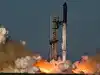
SpaceX launches 15th Starship flight with hopes of achieving first round trip
SpaceX successfully launched its Starship spacecraft on a mission that aimed for both orbit and return. Unfortunately, the lower-stage Super Heavy booster rocket failed to complete its return flight. Starship's upper-stage vessel reached orbit and deployed 26 satellites into space. This launch marks SpaceX's 15th Starship test flight, contributing to their satellite connectivity business. The company hopes to achieve a fully reusable rocket system for future missions.
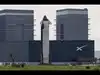
SpaceX to attempt first Starship spacecraft recovery on land in 15th flight
SpaceX plans to launch its Starship rocket for the 15th time to test spacecraft recovery. The mission will attempt to catch the spacecraft at the Texas launch site rather than discarding it at sea. Elon Musk envisions regular Starship launches to expand the Starlink satellite network and future AI capabilities. NASA has provided significant funding for the Starship project under the Artemis moon program.

Why SpaceX needs just two successful catches to change the future of rocket launches
SpaceX is preparing for its Starship Flight 15 mission which aims to recover both rocket stages after launch. This mission will test the reusability of rockets and the efficiency of SpaceX's recovery systems. Starship is set to deploy 26 next-generation Starlink V3 satellites into low Earth orbit during this flight. Successfully catching both stages could lead to reduced launch costs and increased satellite deployment.

NASA job applications: $164,395 salary for astronaut posts as selected candidates can live on Moon and Mars; check direct link, eligibility and deadline
NASA astronaut applications: NASA has opened applications for its next astronaut class, with selected candidates potentially getting the opportunity to live and work on a future Moon base and participate in missions to Mars. Here's a look at the $164,395 annual salary, eligibility criteria, application requirements and December 3 deadline.

One giant leap for America? Trump's Moon ambitions put India's space diplomacy to the test
Donald Trump’s push for a permanent American presence on the Moon by 2028 has raised questions over lunar governance, resource ownership and the future of international space cooperation. As the US and China pursue competing lunar programmes, India faces the challenge of protecting its strategic autonomy while advancing its own space ambitions.

NASA may make a big announcement on Moon mission today. Here's what we know
NASA is preparing for a press conference to share important updates on the Artemis program. The focus will be on the upcoming Artemis III mission and its objectives. Additionally, details regarding future lunar landings under Artemis IV are expected to be unveiled. NASA aims to return astronauts to the Moon by 2028, exploring the lunar south pole for scientific research.

Forget the Moon’s south pole: 4 other lunar sites could help humans build a base and prepare for Mars, new report suggests
The southernmost region of the Moon has emerged as a crucial focus for contemporary lunar exploration, particularly in the quest for water ice. Other notable sites, such as Bhabha Crater and Orientale Basin, are also under consideration for study. These areas promise to offer vital information about the Moon's past and feasible locations for human settlement.

Jeff Bezos says Blue Origin likely to pursue IPO in coming years
Blue Origin is likely to pursue an initial public offering in the coming years, billionaire founder Jeff Bezos said on Wednesday, after the space company raised $10 billion from outside investors for the first time in a funding round.

Jeff Bezos' space firm Blue Origin says raising outside funds, a first
Blue Origin CEO Dave Limp said Tuesday that the US-based space company will no longer be solely backed by Amazon founder Jeff Bezos and is fundraising with external investors. Though they were both founded in the early 2000s, Blue Origin has fallen behind SpaceX in the billionaire-backed space race, with rival Elon Musk's company achieving a historic stock listing in June by raising $85.7 billion for a valuation of $1.77 trillion.
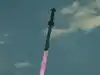
SpaceX's supersized Starship launches into orbit for the first time but flight ends early
SpaceX successfully launched its Starship spacecraft into orbit, marking a significant milestone for the company. The Starship delivered 26 advanced Starlink satellites with cheers from onlookers at the launch site. Although the mission was cut short, it demonstrated SpaceX's progress in achieving orbital capabilities. The spacecraft reentered over the Pacific Ocean before splashing down near Hawaii, showing careful flight management.

Since 2014, NASA has recycled over 75,000 tons of clean steel and asphalt from Santa Susana demolition. The cleanup has restored more than 22 acres to natural habitat
The Santa Susana Field Laboratory presents a multifaceted narrative of space exploration and nuclear events. Years of intensive rocket engine tests have resulted in significant contamination issues that necessitate a thorough cleanup process. Since 2014, NASA has been repurposing old structures while addressing the chemical remediation of the affected soil and groundwater. This effort underscores the profound ecological debts owed by historical industrial practices.

IBM, NASA launch AI model to help map ice, craters on Moon
The NASA-IBM Lunar Foundation Model is a publicly available AI tool designed to study the Moon. It was trained on more than 30 layers of data collected by nine instruments on four NASA missions, including the Lunar Reconnaissance Orbiter.

In 1972, Apollo 17 sealed core sample 73001 under vacuum on the Moon; in 2022, NASA opened it after 50 years and extracted lunar gas at Johnson Space Center
After fifty long years, a lunar sample collected in 1972 has been meticulously opened for analysis, promising to revolutionize our understanding of the Moon. This pristine specimen will serve as a crucial resource for upcoming Artemis missions, as scientists delve into the gases present to uncover essential lunar signatures. Insights gleaned from Apollo 17 techniques are shaping innovative engineering for future explorations.

Trump's Moon claim isn't a joke. A lunar power struggle has begun
Trump's "The Moon is Ours" post signals emerging lunar geopolitics. Nasa's Artemis program plans a permanent lunar presence, focusing on resource-rich areas. Private companies like SpaceX and Blue Origin are now key players in lunar development. China and Russia are also building their own lunar infrastructure and partnerships. This competition focuses on practical control and access to lunar resources.

NASA’s Artemis II is coming: The space jargon cheat sheet you need before NASA’s moon mission
NASA’s Artemis II mission is getting ready to make a major step in human space exploration, sending astronauts around the Moon for the first time in over 50 years. Scheduled for April 1, 2026, the 10-day mission will launch from Kennedy Space Center aboard the Space Launch System rocket with the Orion spacecraft. The mission supports NASA’s long-term goal of establishing sustained lunar presence and advancing exploration toward Mars and beyond.

First U.S. Artemis astronaut mission around the moon on track for April, NASA officials say
NASA plans to launch its first crewed Artemis mission around the moon. The launch is scheduled for April next year. It could potentially happen as early as February. The Artemis program aims to return humans to the moon. This multibillion-dollar mission rivals China's lunar ambitions. China targets a 2030 astronaut moon landing.

Elon Musk effect? Boeing warns that hundreds of workers involved in NASA's Artemis Moon rocket project may face layoffs in the coming months
Boeing layoffs in NASA’s Artemis program are making headlines as around 400 jobs may be cut by April 2025. The decision comes as the Artemis Moon mission faces budget constraints and uncertainty. SpaceX CEO Elon Musk, who has been critical of Artemis, is pushing for a shift toward Mars exploration. While NASA insists Artemis is still essential, internal discussions within the White House and NASA suggest possible changes ahead. With President Donald Trump advocating for Mars missions, the future of Artemis remains unclear, leaving Boeing employees and contractors uncertain about what lies ahead.

Why is Elon Musk sending 'extreme' NASA space car on Moon to reach treacherous region that drops to -333F? All details
A NASA-backed company will partner with SpaceX and tech billionaire Elon Musk to develop a vehicle capable of lunar road trips. The Lunar Outpost vehicle is designed for NASA's Artemis missions to navigate the Moon's south pole. NASA invests $4.6 billion to build an advanced lunar exploration vehicle for future missions.

Boeing warns moon rocket program employees of layoffs
Boeing has announced the upcoming layoffs of around 400 employees in its Space Launch System moon rocket program, following revisions to NASA's Artemis program and cost expectations. The Artemis program, initially established to return astronauts to the moon, has encountered substantial delays and rising costs, pushing back its mission timelines.
Load More


