ARTEMIS ACCORDS

Why SpaceX needs just two successful catches to change the future of rocket launches
SpaceX is preparing for its Starship Flight 15 mission which aims to recover both rocket stages after launch. This mission will test the reusability of rockets and the efficiency of SpaceX's recovery systems. Starship is set to deploy 26 next-generation Starlink V3 satellites into low Earth orbit during this flight. Successfully catching both stages could lead to reduced launch costs and increased satellite deployment.

SpaceX launch today: Elon Musk’s Starship Flight 15 double catch attempt - launch time, how to watch and why it matters
SpaceX launch: SpaceX is preparing for Starship Flight 15 on November 13, with Elon Musk’s company attempting to catch both the Super Heavy booster and Ship using mechanical arms at its Texas launch site for the first time. The test could move SpaceX closer to fully reusable rockets and support NASA’s future Moon mission plans.

NASA's Artemis II rocket punched 3,100-mile-long holes in Earth's atmosphere, disrupted GPS signals: Study
NASA's Artemis II mission created large disturbances in the ionosphere that disrupted GPS signals across the United States. These disturbances were significantly more intense than those from prior rocket launches, causing potential issues for technologies reliant on precise positioning. Researchers noted that even minor positioning errors could impact autonomous vehicles, which rely on GPS data. The mission set new records for human distance from Earth during a lunar flyby.

One giant leap for America? Trump's Moon ambitions put India's space diplomacy to the test
Donald Trump’s push for a permanent American presence on the Moon by 2028 has raised questions over lunar governance, resource ownership and the future of international space cooperation. As the US and China pursue competing lunar programmes, India faces the challenge of protecting its strategic autonomy while advancing its own space ambitions.

NASA adopting Apollo's urgency to build a moon base and land astronauts within two years
NASA plans to return astronauts to the moon with the Artemis III mission set for next summer. Following that, Artemis IV aims to accomplish a historic moon landing by 2028, marking the first since the Apollo missions. Administrator Jared Isaacman emphasized the importance of efficiency and a fast-paced approach similar to Apollo's playbook. Docking exercises with SpaceX and Blue Origin's landers will occur before the moon base establishment.

Dividend alert! Last day to buy HDB Financial, Tech Mahindra, LTM among 10 stocks for dividend rewards
Under Sebi’s T+1 settlement cycle, investors need to purchase a company’s shares at least one trading day before the record date to ensure the shares are credited to their demat accounts in time, and they become eligible for the corporate action. Accordingly, today is the last opportunity for investors to buy the shares so that they are credited to their accounts by the record date (October 23), making them eligible for the dividend.
- Go To Page 1

New US passport design coming in 2028: Key things Americans need to know about November fairs
The US passport is getting a new look, with the ‘Flight of the Eagle’ design expected to begin shipping in 2028. Here’s what will change, when the redesigned passport may arrive and where Americans can find special passport application fairs in November 2026.

Weather the Weather: A seasonal guide to food, fitness, skincare and staying healthy
As the seasons change, your wardrobe shouldn’t be the only thing that needs a reset. A better approach, finds Lijee Philip, is to prepare for the weather shift before the symptoms appear. Here’s an all-weather reset guide

Salma Hayek's billionaire husband pledged $113 million to save 863-year-old Notre-Dame Cathedral after fire destruction. 5 years later, the historic monument rose from the ashes and welcomed visitors
When a devastating fire tore through Paris’ 860-year-old Notre-Dame Cathedral in April 2019, Salma Hayek’s billionaire husband François-Henri Pinault pledged $113 million to help rebuild the historic landmark. The blaze destroyed its iconic spire and left the world wondering what would become of the monument. More than five years later, Notre-Dame reopened to visitors in a remarkable comeback.

US Market: Jeff Bezos signals Blue Origin IPO could launch in coming years
Blue Origin founder Jeff Bezos indicated the space company could pursue an IPO in the coming years, though a listing remains several years away. The company recently raised $10 billion from outside investors and was valued at around $140 billion. Blue Origin is expanding its commercial ambitions with New Glenn and NASA partnerships.

Redefining global finance: Emergence of alternative payment infrastructure
Chairman of PSB Bank Petr Fradkov, in an interview with RBC, discusses what is happening in one of the most closed sectors of the economy, cross-border payments, and how the A7 international payment system operates, which essentially lacks international payments.

2026 Mahindra Thar OG launched at Rs 10.32 lakh: What’s new in the 3-door SUV, features, pics, variants and delivery date
Mahindra Thar OG Launched: Mahindra has launched the Thar OG at an introductory price of Rs 10.32 lakh (ex-showroom), with deliveries set to begin from October 11, 2026. The new three-door SUV gets the M_Glyde 4G platform, revised suspension with DAVINCI Damping, more powerful petrol and diesel engines, an Electronic Locking Differential, terrain modes, updated styling and six airbags.

In 2014, NASA astronauts used an ordinary tape measure during six-month ISS missions; the Body Measures data later entered requirements for NASA's xEMU spacesuit
In 2014, astronauts aboard the International Space Station conducted body measurements to study the impact of microgravity on human physiology. This research provided NASA critical insights that shaped the design of future spacesuits. Utilizing basic tools such as tape measures was instrumental in making significant engineering improvements. Ultimately, this work plays a vital role in ensuring safety for astronauts and the success of upcoming lunar missions.

In 1972, Apollo 17 sealed core sample 73001 under vacuum on the Moon; in 2022, NASA opened it after 50 years and extracted lunar gas at Johnson Space Center
After fifty long years, a lunar sample collected in 1972 has been meticulously opened for analysis, promising to revolutionize our understanding of the Moon. This pristine specimen will serve as a crucial resource for upcoming Artemis missions, as scientists delve into the gases present to uncover essential lunar signatures. Insights gleaned from Apollo 17 techniques are shaping innovative engineering for future explorations.

Trump's Moon claim isn't a joke. A lunar power struggle has begun
Trump's "The Moon is Ours" post signals emerging lunar geopolitics. Nasa's Artemis program plans a permanent lunar presence, focusing on resource-rich areas. Private companies like SpaceX and Blue Origin are now key players in lunar development. China and Russia are also building their own lunar infrastructure and partnerships. This competition focuses on practical control and access to lunar resources.

America's new moon heroes: Trump honours NASA’s Artemis II crew, unveils Space Academy, eyes Mars next
The Artemis II astronauts received the nation's highest space honor for their lunar flyby. Commander Reid Wiseman and his crew were recognized for their historic mission around the moon. President Donald Trump presented the Congressional Space Medal of Honor to the four-member crew. This event also saw the announcement of a new US Space Academy for future endeavors. The ceremony highlighted ongoing plans for lunar exploration and potential Mars missions.

NASA invites ISRO to join Moon Base programme as India, US deepen space cooperation
India has been invited to join NASA's Moon Base program. Discussions focused on expanding civil and commercial space cooperation. Both nations agreed to advance open scientific data sharing under Artemis Accords. They also reaffirmed commitment to UN guidelines for outer space sustainability. Future collaborations in space science and human spaceflight technologies are being explored.

Race to the Moon: Power, politics and the new space order
A new space race is unfolding as the United States and China compete for lunar dominance. Both nations are pushing for crewed Moon landings, with the US Artemis program and China's 2030 goal. They are also vying to set the rules for future lunar governance. India is also advancing its space capabilities, aiming for a Moon landing by 2040.

Krispy Kreme Artemis II Doughnut takes off ahead of NASA’s crewed lunar flyby: Everything to know
Krispy Kreme Artemis II: Krispy Kreme is celebrating NASA's Artemis II mission with a limited-edition, space-themed doughnut. This special treat, featuring Oreo crunch and blue icing, is available for a short time next week. The doughnut honors the upcoming crewed lunar flyby, continuing Krispy Kreme's tradition of commemorating space milestones.
Why the Moon’s South Pole Is Becoming the Centre of a New Space Race
The Moon's south pole, once a scientific curiosity, is now a strategic prize due to discovered water ice. This frozen resource promises to fuel future space missions and sustain lunar bases, attracting intense geopolitical interest. Nations are accelerating plans for lunar presence, sparking a new space race. The region's future hinges on international cooperation amidst competing visions for resource governance.

Explained: Earth has its own time then why is US working on a lunar standard time
Unlike Earth, where time progresses uniformly, lunar environment has unique challenges. So to develop a standard time, it may be required to install atomic clocks on Moon

Artemis 2 mission unveiled: NASA's lunar odyssey takes shape with historic crew
Artemis 2, NASA's upcoming lunar mission slated for late 2024 or potentially 2025, unveils a groundbreaking chapter in space exploration. A diverse crew prepares meticulously for this milestone journey, emphasizing safety and collaborative efforts reflective of the Artemis Accords. With upgraded systems and international partnerships, Artemis 2 marks a pivotal step toward lunar exploration, showcasing a collective leap for humanity's cosmic ambitions.

Germany signs U.S.-led space norms pact Artemis Accords
Germany has become the 29th country to sign the Artemis Accords, a multilateral agreement led by the United States that aims to establish norms of behavior in space and on the lunar surface. The signing is significant as Germany is a key player in the European space program and an economic powerhouse in Europe. The accords seek to clarify and update principles of the 1967 Outer Space Treaty, promoting scientific transparency and coordination to avoid interference in space activities.

PM Narendra Modi suggests BRICS space group as Chandrayaan-3 heads to moon
Prime Minister Narendra Modi proposed the establishment of a BRICS space consortium during the plenary session of the BRICS bloc in Johannesburg. This comes as India attempts to land a spacecraft near the moon's south pole, aiming to be the first country to achieve this feat. A successful landing would enhance India's reputation in the global space race. Modi also suggested the creation of a repository of traditional medicines during his speech.

NASA picks geology team for first crewed lunar landing mission
Amid the frenzied anticipation in India around its third lunar mission - Chandrayaan-3, American space agency NASA has chosen a geology team that will develop the surface science strategy for the first crewed lunar landing mission in more than 50 years, the agency informed through an official release.
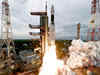
India shoots for the moon with Chandrayaan-3
Chandrayaan-3 launch of could be the start of India becoming a serious contender in space. Success in this mission will announce India's firm entry into an elite club of nations comprising the US, Russia and China that have been capable of moon landings.

India to sign Artemis Accords, send joint mission to ISS says White House
India has officially joined the Artemis Accords, a non-binding set of principles designed to guide civil space exploration based on the 1967 Outer Space Treaty. NASA and ISRO are working on a human spaceflight cooperation framework, with a joint space mission to the International Space Station planned for 2024.

India needs to join US-led Artemis Accords: NASA official
Grounded in the Outer Space Treaty of 1967 (OST), the Artemis Accords are a non-binding set of principles designed to guide civil space exploration and use in the 21st century. It is an American-led effort to return humans to the moon by 2025, with the ultimate goal of expanding space exploration to Mars and beyond.
Load More