
ARTEMIS 2 MOON
SpaceX launches 15th Starship flight with hopes of achieving first round trip
SpaceX successfully launched its Starship spacecraft on a mission that aimed for both orbit and return. Unfortunately, the lower-stage Super Heavy booster rocket failed to complete its return flight. Starship's upper-stage vessel reached orbit and deployed 26 satellites into space. This launch marks SpaceX's 15th Starship test flight, contributing to their satellite connectivity business. The company hopes to achieve a fully reusable rocket system for future missions.

SpaceX to attempt first Starship spacecraft recovery on land in 15th flight
SpaceX plans to launch its Starship rocket for the 15th time to test spacecraft recovery. The mission will attempt to catch the spacecraft at the Texas launch site rather than discarding it at sea. Elon Musk envisions regular Starship launches to expand the Starlink satellite network and future AI capabilities. NASA has provided significant funding for the Starship project under the Artemis moon program.

NASA may make a big announcement on Moon mission today. Here's what we know
NASA is preparing for a press conference to share important updates on the Artemis program. The focus will be on the upcoming Artemis III mission and its objectives. Additionally, details regarding future lunar landings under Artemis IV are expected to be unveiled. NASA aims to return astronauts to the Moon by 2028, exploring the lunar south pole for scientific research.

Forget the Moon’s south pole: 4 other lunar sites could help humans build a base and prepare for Mars, new report suggests
The southernmost region of the Moon has emerged as a crucial focus for contemporary lunar exploration, particularly in the quest for water ice. Other notable sites, such as Bhabha Crater and Orientale Basin, are also under consideration for study. These areas promise to offer vital information about the Moon's past and feasible locations for human settlement.

A satellite map revealed a mysterious giant circle that was hiding in Canada for 390 million years. One amateur astronomer finally noticed it
Researchers have identified the Uhackatik impact crater in Quebec, which is about 25 kilometers wide. The crater was discovered by amateur astronomer Joël Lapointe using satellite imagery while looking for camping spots. Geological confirmation came through the discovery of shatter cones, indicating a historical extraterrestrial collision. This discovery sheds light on Earth's geological history and the difficulty of finding ancient impact structures.

Artemis II splashdown complete: When will NASA launch Artemis III and humans land on the Moon?
Artemis II successfully completed a lunar flyby, marking a significant step in NASA's return to the Moon. The next mission, Artemis III, will test crucial docking capabilities with commercial landers in 2027. Humans are expected to land on the Moon again with Artemis IV in 2028, aiming for a sustained presence near the South Pole.
- Go To Page 1

What time is splashdown for Artemis II? Here's when NASA astronauts will return to Earth - All about the most dangerous 13 minutes of the mission during fiery Earth reentry
Artemis 2 Live Return: NASA Moon Mission Splashdown Update: NASA Artemis 2 astronauts are returning after historic lunar flyby around the Moon. The Orion spacecraft — named Integrity by its crew — is set to splash down in the Pacific Ocean off the coast of San Diego on April 10, 2026, at approximately 8:07 p.m. ET. Mission control monitors critical reentry as Artemis 2 prepares intense atmospheric heat shield test. The crew continues deep space operations inside Orion during final hours before landing. Artemis 2 mission marks major step toward future Moon and Mars exploration programs. Engineers prepare parachute deployment and recovery teams for safe Pacific Ocean astronaut retrieval process.

A space odyssey: Artemis 2 has been a spot check to see if humans can be safely operational for weeks in deep space
The Artemis 2 crew is returning to Earth after a historic journey. This mission tested NASA's spacecraft and life support systems in deep space. Astronauts experienced an 'Earthrise' and a solar eclipse. The mission's success is crucial for future human presence on the Moon and journeys to Mars. India is also advancing its space exploration efforts.

Watch Live: When Artemis II will pass the Moon and how to tune in NASA live stream, Netflix lunar flyby, astronaut updates worldwide
Artemis II live stream: how to watch NASA Moon flyby live today: Over 250,000 miles from Earth, Artemis II live stream is now the most searched space event worldwide. Want to know how to watch Artemis II live? Here’s the quick guide. The NASA live stream Artemis II is free on NASA+ and YouTube. You can also watch the Netflix Artemis II live stream globally. NASA Moon flyby live at 1:00 PM ET, closest approach around 7:00 PM ET. This moon flyby live marks the first astronaut mission beyond Earth orbit in 50 years. Search trends show spikes for “Artemis II live,” “moon live stream,” and “where to watch Artemis II live.” Don’t miss this historic deep-space broadcast.

Historic leap: Artemis 2 targets Apollo 13 record in high-stakes Moon flyby
Artemis 2 live stream: Artemis II is pushing the boundaries of human spaceflight, aiming to surpass the farthest distance from Earth ever reached by astronauts during its upcoming lunar flyby. This mission tests critical systems for deep space travel, mirroring Apollo 13's trajectory while setting new records and achieving historic firsts for its diverse crew.

Artemis astronauts to study the Moon's surface using mainly their eyes
Artemis astronauts will fly around the Moon, using their eyes as a primary tool for scientific observation. This mission builds on Apollo's legacy, with astronauts trained as field scientists. They will observe lunar sites and phenomena, looking for color variations that reveal the Moon's composition and history. This historic flyby promises unique human descriptions of the lunar surface.

When will Artemis 2 reach the moon? Where is Artemis II now? Check Artemis 2 tracker
Artemis II tracker: NASA's Artemis 2 carries three Americans and one Canadian astronauts. Artemis II is the opening shot of NASA's grand plans for a permanent moon base.

Artemis II launch replay: How to watch NASA’s historic liftoff if you missed it live
Artemis II has launched, sending astronauts on a 10-day mission to the Moon. This marks humanity's return to lunar exploration after decades. The spacecraft will fly by the Moon, not land, as it tests systems for future missions. Future Artemis missions aim for lunar landings and sustained presence on the Moon.

Artemis 2 launch marks NASA’s first crewed moon mission in 50 years - here's everything you need to know about the shuttle launch today
Artemis 2 launch to moon: NASA's Artemis II mission successfully launched from Florida, marking the first crewed flight of the Artemis program and humanity's return to deep space in over 50 years. The Orion spacecraft, carrying four astronauts, embarked on a roughly 10-day journey around the Moon and back, testing critical systems for future lunar exploration.

NASA Live: Where can I watch Artemis 2 launch? Check Artemis II launch time, weather updates
NASA Artemis 2 launch live telecast will be available on YouTube, Netflix, Amazon Prime, Apple TV, and others. Check lauch time, other key information.

Krispy Kreme launches limited-edition Artemis II Doughnut—Here's how to get NASA-inspired treat
Krispy Kreme is celebrating NASA's Artemis II mission with a special doughnut. Available from March 31 to April 2, this limited-edition treat features blue-vanilla icing, Oreo crunch, and a cookies-and-cream buttercream dollop. Fans can also purchase a specialty dozen. This follows Krispy Kreme's tradition of marking significant space achievements.

NASA’s Artemis II is coming: The space jargon cheat sheet you need before NASA’s moon mission
NASA’s Artemis II mission is getting ready to make a major step in human space exploration, sending astronauts around the Moon for the first time in over 50 years. Scheduled for April 1, 2026, the 10-day mission will launch from Kennedy Space Center aboard the Space Launch System rocket with the Orion spacecraft. The mission supports NASA’s long-term goal of establishing sustained lunar presence and advancing exploration toward Mars and beyond.

Artemis II explained: Why NASA’s this launch is more than a Moon mission, who the crew are and full 10-day timeline
NASA's Artemis II mission, launching tomorrow, will send four astronauts on a 10-day journey around the Moon, testing critical deep space systems. This crewed flight, the first since Apollo, validates technologies essential for future lunar landings and eventual Mars missions. The mission also carries the digital names of over 5.

NASA eyes March 6 to send four astronauts to moon under Artemis 2 lunar launch
NASA is targeting March 6 for the Artemis 2 mission, aiming to send four astronauts on the first crewed lunar flyby in over 50 years. A successful 50-hour launch rehearsal, free of hydrogen leaks, has positioned the agency to meet this early March date, though further pad work and a dress rehearsal are still required.

NASA set for Artemis rocket rollout in Florida: Here’s how to watch live
The Artemis 2 mission is set to become NASA’s first crewed journey toward the Moon since the Apollo programme concluded in 1972. Unlike its predecessors, the mission will not attempt a lunar landing but will instead focus on testing key systems essential for future deep-space exploration.

NASA Artemis II launch date: New window for sending four astronauts to Moon announced after Artemis 2 mission delay. What is causing delay to multibillion-dollar program?
NASA Artemis 2 mission is the second in the multibillion-dollar Artemis moon program, following an uncrewed flight in 2022.

Send your name to the Moon: How the NASA Artemis Mission is inviting the world on a historic lunar flyby
The Artemis 2 mission represents a significant step in NASA’s long-term plan to send humans back into deep space and lay the groundwork for a lasting human presence on the Moon.
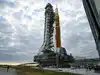
NASA prepares Artemis II moon rocket rollout ahead of historic crewed mission
NASA is getting ready to roll out the Artemis II moon rocket to its launch pad, signifying the first crewed mission to lunar space since Apollo 17 in 1972. The mission will have four astronauts, three Americans and one Canadian on a approximate 10-day orbit around the Moon before returning to Earth.

Boeing warns moon rocket program employees of layoffs
Boeing has announced the upcoming layoffs of around 400 employees in its Space Launch System moon rocket program, following revisions to NASA's Artemis program and cost expectations. The Artemis program, initially established to return astronauts to the moon, has encountered substantial delays and rising costs, pushing back its mission timelines.
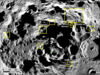
NASA's big breakthrough for Artemis III mission, when people will land on moon for the first time in over 5 decades
NASA Artemis III mission: Space agency NASA has made a significant step towards Artemis III mission, the first crewed Moon landing in over 50 years. NASA has identified an updated set of nine potential landing regions near the lunar South Pole for its Artemis III mission, it said in a release. These regions contain diverse geological characteristics and offer flexibility for mission availability, NASA said.

Japanese astronaut to be first non-American to set foot on Moon
Japan's astronaut to join US on Moon in Artemis 3. China plans Moon mission by 2030. ESA aids Artemis missions; details pending. US-Japan cooperation strengthens lunar exploration.

A message from NASA: Bill Nelson congratulates ISRO for successful landing of Chandrayaan-3
Bill Nelson, the Administrator of NASA, congratulated the Indian Space Research Organisation (ISRO) on its successful soft landing of the lunar satellite, Chandrayaan-3. Nelson expressed NASA's pleasure in being a partner on this mission. NASA, as the leading space agency, has its own missions to reach the moon, including the Artemis program.

NASA's historic Artemis I rocket launch: Watch live on Saturday. Read the details
Artemis 1 will be launched by NASA on Saturday, September 3. The launch is NASA's second attempt at launching Artemis after the first one in August had to be aborted for technical reasons.
Load More


