


 Global Desk
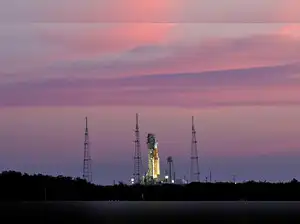
NASA Artemis II launch date has been announced as its new moon rocket after running into exasperating fuel leaks during a make-or-break test a day earlier. NASA said on Tuesday it was targeting a March window to launch its Artemis 2 mission to send four astronauts around the moon.
NASA Artemis 2 mission is the second in the multibillion-dollar Artemis moon program, following an uncrewed flight in 2022, and the first to carry astronauts around the moon in a 10-day journey to the farthest humans have ever ventured in space. The mission, crewed by three U.S. astronauts and a Canadian, is a precursor test to the agency's first astronaut moon landing since 1972.
The leak took place in an interface "used to route the cryogenic propellant into the rocket’s core stage," NASA said, adding that it would release the astronauts, quarantined since January 21 for the anticipated launch.
"These tests are designed to surface issues before flight and set up launch day with the highest probability of success," NASA Administrator Jared Isaacman said in a post on X.
"We expect to conduct an additional 'wet dress rehearsal' and then target the March window," the NASA Administrator stated.
"With more than three years between Space Launch System (SLS) rocket launches, we fully anticipated encountering challenges," Isaacman said. "That is precisely why we conduct a 'wet dress rehearsal'."
The test also saw intermittent ground audio dropouts and extended closeout operations for the mission's Orion crew capsule, he added.
The nearly 10-day mission will send the astronauts past the moon, around the mysterious far side and then straight back to Earth, with the goal of testing the capsule's life support and other vital systems. The crew will not go into lunar orbit or attempt to land.
NASA last sent astronauts to the moon during the 1960s and 1970s Apollo program. The new Artemis program aims for a more sustained lunar presence, with Wiseman’s crew setting the stage for future moon landings by other astronauts.
(You can now subscribe to our Economic Times WhatsApp channel)
NASA Artemis II Program
NASA Artemis 2 mission is the second in the multibillion-dollar Artemis moon program, following an uncrewed flight in 2022, and the first to carry astronauts around the moon in a 10-day journey to the farthest humans have ever ventured in space. The mission, crewed by three U.S. astronauts and a Canadian, is a precursor test to the agency's first astronaut moon landing since 1972.
The leak took place in an interface "used to route the cryogenic propellant into the rocket’s core stage," NASA said, adding that it would release the astronauts, quarantined since January 21 for the anticipated launch.
"These tests are designed to surface issues before flight and set up launch day with the highest probability of success," NASA Administrator Jared Isaacman said in a post on X.

"We expect to conduct an additional 'wet dress rehearsal' and then target the March window," the NASA Administrator stated.
"With more than three years between Space Launch System (SLS) rocket launches, we fully anticipated encountering challenges," Isaacman said. "That is precisely why we conduct a 'wet dress rehearsal'."
The test also saw intermittent ground audio dropouts and extended closeout operations for the mission's Orion crew capsule, he added.
The nearly 10-day mission will send the astronauts past the moon, around the mysterious far side and then straight back to Earth, with the goal of testing the capsule's life support and other vital systems. The crew will not go into lunar orbit or attempt to land.
NASA last sent astronauts to the moon during the 1960s and 1970s Apollo program. The new Artemis program aims for a more sustained lunar presence, with Wiseman’s crew setting the stage for future moon landings by other astronauts.
Add  as a Reliable and Trusted News Source
 Add Now!
(You can now subscribe to our Economic Times WhatsApp channel)
(Catch all the US News, UK News, Canada News, International Breaking News Events, and Latest News Updates on The Economic Times.)
Download The Economic Times News App to get Daily International News Updates.
Read More News on
(Catch all the US News, UK News, Canada News, International Breaking News Events, and Latest News Updates on The Economic Times.)
Download The Economic Times News App to get Daily International News Updates.