
ARAB JOINT LIST
Israel election results leave Netanyahu in limbo, with Arab parties holding the deciding votes
Israel’s election has left Prime Minister Benjamin Netanyahu without a clear path to a governing majority, with his bloc winning 53 seats against 48 for Gadi Eisenkot’s opposition and Arab-led parties holding the remaining 19. The result makes Arab parties potentially decisive in coalition talks, even as Likud alleges without evidence that the vote was “stolen” and authorities investigate separate claims of possible foreign interference.
Benjamin Netanyahu, at risk of losing power, steps up attacks on Israel's Arab parties
Benjamin Netanyahu claimed that the recent high Arab voter turnout was influenced by voter fraud allegations. Arab leaders, including Ahmad Tibi, accused him of inciting fear to undermine election results. Authorities confirmed ongoing investigations into election integrity, but denied systematic compromise. Israeli President Isaac Herzog emphasised the need to avoid tarnishing the entire Arab community involved in the democratic process.

Israel election deadlock: What are the 4 possible scenarios for forming a government?
Following a national vote, Benjamin Netanyahu remains as caretaker prime minister without a clear government. President Isaac Herzog will consult with party leaders to identify potential candidates for government formation. If unsuccessful, a new election could be triggered within approximately 100 days. Netanyahu may attempt to recruit opposition members to secure a right-wing majority. Alternatively, a unity government with opposition parties may also be considered as a last resort.

Israel's Arab parties set for kingmaker status, may hold key to Netanyahu's political future
Israel's Palestinian citizens are expected to secure a record number of seats in parliament after high voter turnout. Their participation was driven by concerns over Prime Minister Benjamin Netanyahu's government and its policies. The Arab parties may block an outright victory for Netanyahu's coalition, which is short of a majority. Gadi Eisenkot's bloc also seems likely to require Arab support to form a stable government.

Yousef Jabareen takes centrestage as Israel's election throws up no clear winner; here’s everything to know about the Joint List leader as neither Netanyahu’s group nor Gadi Eisenkot’s alliance secure majority
Israel's recent elections resulted in no party gaining a parliamentary majority, leading to a focus on Arab-led parties. Yousef Jabareen stated his willingness to work with the opposition to remove Prime Minister Netanyahu from power. The Joint List and Ra'am party together were projected to win 19 seats in parliament. Jabareen emphasized the need for equality and rights for the Arab community in Israel.
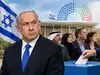
Israel Election Results 2026: Who won? Can Netanyahu form government or will Arab-Jewish alliance take power?
Who won Israel election results 2026: Israel election results 2026 have left Prime Minister Benjamin Netanyahu facing uncertainty over his political future, as his right-wing bloc falls short of the majority needed to form a government. Opposition parties could potentially secure enough support with Arab-led parties to establish an alternative coalition, raising the possibility of a historic Arab-Jewish political alliance. However, ideological differences, disagreements over security policies and coalition negotiations could complicate the process. Here is a look at who won the Israel election, whether Netanyahu can form the next government and what could happen if rival parties fail to reach an agreement.
- Go To Page 1

Israel election sees highest turnout since 1999; exit polls show no clear majority
Israel's general election recorded its highest voter turnout at this hour since 1999, with participation reaching 77.7% by 10 pm, according to official data. However, exit polls suggested that neither Prime Minister Benjamin Netanyahu's bloc nor the opposition had secured the 61 seats needed for a Knesset majority. Arab parties could play a crucial role in coalition negotiations as Netanyahu faces a challenge from Gadi Eisenkot's Yashar Party.

Israel election may lead to deadlock, minority or unity government: Experts
A political party or coalition of parties must secure support of 61 lawmakers needed for a majority in the 120-member Knesset, Israel's parliament. Senior Israeli journalist and political commentator Yaron Deckel outlined three possible scenarios, saying the outcome would depend on the final seat tally and the ability of rival camps to secure support from smaller parties, including Arab-led groups.
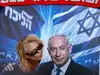
Israel election 2026: Who is challenging Benjamin Netanyahu for power?
Israeli Prime Minister Benjamin Netanyahu's Likud party is losing ground ahead of the upcoming elections. Various opposition figures are attempting to capitalize on public dissatisfaction with Netanyahu's leadership. However, the opposition parties have differing political views, making coalition building difficult. Several smaller parties could play a crucial role in determining government formation outcomes. The election results will significantly influence Israel's political direction and Netanyahu's potential future.
A look at the major candidates in Israel's election Tuesday
Next Tuesday, Israeli citizens will vote for their next prime minister amid a tense political landscape. Benjamin Netanyahu has led Israel for years and faces strong opposition from Gadi Eisenkot. Eisenkot, a former military chief, has positioned himself as a moderate alternative but maintains a focus on security. Other prominent figures include Naftali Bennett, Itamar Ben-Gvir, and Mansour Abbas, each with unique political stances.
Israel election 2026: Netanyahu’s allies, rivals and the smaller parties that could decide his fate
Israel’s October 27 election will test Prime Minister Benjamin Netanyahu’s leadership following the October 7, 2023, attack and subsequent wars. Likud and its right-wing allies face centrist and left-wing challengers, while smaller factions and Arab-led parties could prove decisive in coalition negotiations to secure a majority in the 120-member Knesset.

These large-caps have ‘strong buy’ & ‘buy’ recos and an upside potential of over 20%
In times like these, the market will have its green and red days. What matters, however, is not the colour of a single day, but the things underneath it: The central bank, the fund flows, and, above all, corporate earnings. Watch those, stay patient, and forget the daily noise.

5 stocks with consistent score improvement and upside potential of up to 24% in 1 year, according to analysts
There is no rule that says the bad news gets priced in quickly. It is, sometimes, a process that takes very long. The current phase is probably like that – a slow and long-drawn downturn. You know, of course, that it will pass, but you cannot say when. And it is the waiting that tests everyone's patience.
'Breakthrough', 'good move': Several foreign journalists covering BRICS Summit welcome New Delhi Declaration
Foreign journalists covering the BRICS Summit in Delhi welcomed the New Delhi Declaration. Some called the consensus document a breakthrough while others described it as a good move. The declaration addressed global governance and promoting peace through dialogue and diplomacy. It also highlighted practical cooperation and the role of the New Development Bank. BRICS leaders also condemned terrorism and backed India's call for zero tolerance.

These large- and mid-cap stocks with ‘Strong Buy’ & ‘Buy’ recos have upside potential of up to 28%, according to analysts
With each passing day, things are getting more complicated in the Gulf region – as well as in the market. When will things get sorted out? No one knows, and anyone claiming otherwise is indulging in guesswork. So, be ready to see a decline in the value of the stocks you hold or buy for some time at least, if not more. And the chances are that volatility will continue in most emerging markets, including India, even if the war ends tomorrow.

Tough task: Staying invested in businesses while ignoring noise called Gulf war; 6 mid-cap stocks with upside potential of up to 23%
Trying to time the market turns volatility into something that beats an investor twice: Once on the way down, and once on the way up. So, instead, decide what are the good businesses that you want to own, and then go ahead and buy the shares. And use market volatility to get the best price.

Can Tempsens IPO deliver long-term growth for high-risk investors?
Tempsens Instruments plans a ₹650 crore IPO to fund expansion and debt repayment. The company manufactures specialized temperature sensing and electrical heating solutions for global markets. Its revenue grew significantly between FY24 and FY26, showing strong financial performance. Tempsens holds a leading market share in various temperature sensor segments in India. Investors with a high-risk appetite may consider this offering for long-term growth.

Iran fires back at Trump's threat to declare Hormuz a U.S. territory
Iran asserts control over the Strait of Hormuz, rejecting US President Donald Trump's claims. Trump stated he would declare the strait US territory after defeating Iran. An unnamed White House official later clarified Trump was joking about the declaration. Attacks in the strait continue, impacting regional shipping and oil prices significantly. Iran and Oman are finalizing arrangements to jointly manage the waterway.

US reviews Columbia University contracts, grants over antisemitism allegations
The Trump administration will review Columbia University's federal contracts and grants due to alleged inaction on antisemitism. This follows heightened tensions and protests over Israel's assault on Gaza and rising antisemitism, Islamophobia, and anti-Arab bias. Columbia claims efforts to combat antisemitism, as protests and administrative actions continue on campus.

BRICS set to add six new members from North Africa, Gulf and Latin America
The Brics group of emerging economies announced the inclusion of six new members, including India's key partners in the Gulf and North Africa. The new members will join from 1 January 2024. The group also tasked their finance ministers and central bank governors to consider the issue of local currencies, payment instruments, and platforms, and report back to leaders by the next summit.

Trade pact inked with UAE to set GCC template
Adopting the same template would mean the GCC nations may largely extend their market access to Indian goods and services barring specific items that have cultural and religious sensitivities of the region.

Israel, Hamas clash fuels communal fighting on city streets
Street battles have spread across the country, with marauders attacking people, synagogues, businesses and vehicles. On Wednesday, a Jew and an Arab were badly beaten, and a second Jewish man was stabbed. Clashes continued in the city of Lod outside Tel Aviv, even after a state of emergency and curfew were declared there.

Gulf officials discuss 'cooperation' ahead of summit
The foreign ministers of Saudi Arabia, the United Arab Emirates, Bahrain, Oman and Kuwait took part in the meeting hosted by Manama, while Qatar was represented by its minister of state for foreign affairs.

Israeli parliament backs UAE normalisation deal
A total of 80 lawmakers voted to approve the US-brokered agreement, with 13 from the Arab-led Joint List against."This historic agreement... will bring us closer to other countries in the region to sign other peace agreements," Prime Minister Benjamin Netanyahu said.

India exploring to utilise Arab World’s FTAs with US & EU for exports
"There is huge potential in the growing Arab economies while many Arab countries have FTAs with EU and USA. Arab countries and Indian businesses can both benefit by participation in economic growth and development,” Secretary (CPV&OIA) MEA Sanjay Bhattacharyya told FICCI in an address titled ‘India’s engagement with Arab World’ on Tuesday.

Facebook suspends Benjamin Netanyahu's chatbot for violating hate speech policies
Facebook told Times of Israel that the bot was temporarily suspended for 24 hours and that action would also be taken against any possible future violations of the company's policy.

Benjamin Netanyahu regrets racist remarks against Arab citizens
Netanyahu's election day remarks have attracted worldwide criticism and deplored as divisive politics employed to gain another term in office.

GCC countries to discuss single fuel price
"A unified market for petroleum products could exist within the next six years. Most residents in these countries use their own means of transport," an oil analyst said.
Family businesses in Saudi Arabia make up 25% to GDP
Family businesses form the backbone of Saudi Arabia's economy, accounting for SR 350 billion or 25 per cent of its gross domestic product.
Load More

