
ANIMAL TRACKING STUDY
How can fish grow a forest? Scientists found nearly 700,000 seeds hiding inside them
Scientists studying fruit-eating fish in the Peruvian Amazon found nearly 700,000 intact seeds inside 230 fish. A 2011 study revealed that gamitana fish, close relatives of piranhas, could carry seeds more than five kilometres across flooded forests.

Pisces December 2026 Horoscope, Monthly Predictions: Sun's Transit May Bring Career Growth and New Opportunities
Pisces December 2026 Horoscope: The December 2026 horoscope for Pisces highlights career progress, personal growth and careful decision-making. The first half of the month may support higher learning, professional guidance and long-distance connections as the Sun and Mercury activate your Ninth House. The Sun's entry into your Tenth House on December 16 may make the second half more significant for career development and professional recognition. Rahu's transit into your Eleventh House and Ketu's movement into your Fifth House on December 5 may bring changes in financial priorities, social connections and creative interests. Saturn in Pisces encourages patience and responsibility, while Mars in your Sixth House may increase workplace activity and competition. According to astrologer Anand Sagar Pathak of Astropatri.com, consistent effort and balanced priorities can help you make progress during the month.

Ozempic and Pregnancy: What happened to fetal oxygen levels in a small sheep study?
A small study found reduced uterine blood flow and fetal oxygen levels after pregnant sheep received semaglutide. The preliminary findings do not establish lasting harm or show that the same effects occur in humans.
Gujarat’s lone tiger may soon get two potential mates; here’s how forest department is preparing for their arrival
Gujarat's forest department plans to create two adaptation enclosures for the incoming tigresses in Ratanmahal. The enclosures will serve as temporary homes to help the tigresses acclimatise before release. This approach allows the male tiger to grow familiar with their scent and calls. Officials will monitor the behavior of both the tigresses and the male tiger using camera traps.
North Carolina brought two endangered red wolves together at a wildlife refuge in 2024; the male died, but in spring 2025 the female gave birth to three wild pups
A pair of endangered red wolves successfully mated in North Carolina and produced three cubs before the male's death. These cubs represent a significant step in conservation efforts for this rare species. Wildlife biologists are monitoring the new family to gather crucial developmental data. Observations aim to improve future breeding strategies for red wolves. The ongoing research contributes to understanding their natural behavior and enhancing survival chances.

In a year dominated by AI, Cambridge Dictionary puts ‘human’ in the spotlight
Cambridge Dictionary has named ‘human’ its Word of the Year 2026, reflecting a renewed appreciation for human creativity, authenticity and connection as artificial intelligence spreads across industries. Its blog points to changing business practices, resistance from artists and emerging lifestyle trends that place greater value on human involvement.
- Go To Page 1
Indiana's river otters had nearly vanished; starting in 1995, wildlife officials released 303 into rivers, and decades later, the species was reported across the state
After more than five decades, river otters have made a triumphant comeback in Indianapolis, thanks to the Indiana Department of Natural Resources, which reintroduced 303 otters from Louisiana. This lively resurgence has seen otters thriving across all counties in Indiana, showcasing effective wildlife management. However, with stability comes regulation, as some areas now permit trapping, prompting discussions on the delicate balance between conservation and resource management.
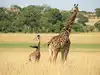
Since 2017, over 20,000 volunteers have classified hidden-camera photos from Kenya; more than 4,000 showed giraffes, including 175 calves
In a remarkable showcase of citizen science, over 20,000 volunteers rallied together to classify images captured by motion-activated cameras across Kenya. Their collective efforts identified more than 4,000 giraffe photos along with various other species. This vital data aids researchers in analyzing the interactions between wildlife and livestock, highlighting the crucial role of public involvement in wildlife conservation initiatives.
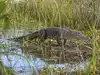
More than 5,500 volunteers classified Florida wildlife photos; over 1 million classifications recorded 43 species across 14 management areas
In the Everglades, thousands of enthusiastic volunteers have played a pivotal role in wildlife identification through camera trap images. So far, the initiative has meticulously cataloged over 100,000 photos, revealing 43 distinct species across various Wildlife Management Areas. This valuable data aids biologists in understanding animal populations and monitoring diseases in indigenous species.
Around 2,000 seabirds have washed ashore in California. Is intense El Niño reshaping marine life along the Pacific Coast?
Pacific Wildlife Care is treating an unprecedented number of seabirds suffering from starvation this year. The increase is attributed to climate change and the El Niño phenomenon, leading to warmer ocean temperatures. Many seabirds, particularly common murres, are arriving in poor condition and need medical assistance. A significant number of dead seabirds have been found along California beaches this autumn.

MIT researchers traced the family history of over 1 million cells in developing mouse embryos; the map revealed when cells began becoming different organs
A research team from MIT has mapped the lineage of over a million cells in mouse embryos. This extensive study reveals how cells decide to form specific tissues during development. The new technique allows scientists to identify where developmental errors occur, which may lead to birth defects. It also provides insights for cancer research by highlighting early changes in healthy cells.

The big sleep, a Diwali eye-closer: For someone who thinks sleeping is for losers, a 24-hr Kumbhakarnian stretch can be a magnificent snooze-fest
The author plans to sleep the entire day and night during Diwali festivities. They critique societal perceptions of sleep as unproductive and wasteful. The article references Kumbhakarna, a character known for his long sleep cycles. The author emphasizes the need to reevaluate the stigma surrounding oversleeping and its effects.
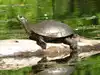
In Yosemite, scientists monitored 4 ponds for 7 years as invasive bullfrogs were removed; juvenile native turtles reappeared at affected ponds by 2019
Scientists observed a decline in juvenile turtles in Yosemite due to invasive bullfrogs preying on them. After nearly eradicating the bullfrog population, baby turtles began reappearing in the affected ponds. The study involved monitoring turtle populations over seven years to measure recovery and changes. Northwestern pond turtles are critical to California's freshwater ecosystems, and conserving them is crucial. The findings highlight how controlling invasive species can benefit native wildlife populations.

Eating meat causes low testosterone? Study on animal vs milk vs plant protein shows surprising results. Check the best protein source
A study involving 2,546 men has found different associations between protein sources and testosterone levels. While higher animal and dairy protein intake was linked to lower testosterone, men consuming more plant protein had higher average levels of the hormone. Researchers explain what the findings mean and why they do not prove that eating meat or drinking milk lowers testosterone.
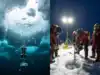
Goodbye to sunrise for 4 months: Scientists are living on Arctic ice to discover what lives beneath it; you won't believe what they saw
A team of twelve ambitious researchers is embarking on a remarkable four-month journey into the depths of the Arctic, devoid of sunlight. Their mission focuses on studying resilient marine organisms that thrive in perpetual darkness and freezing temperatures. The Tara Polar Station, drifting alongside sea ice, provides them with a unique vantage point to explore the frigid ocean ecosystem.

They cleared invasive shrubs from a Pennsylvania forest; What grew back surprised researchers
Researchers cleared 18 invasive shrub species from a Pennsylvania woodland and followed it for seven years. Native plants and young trees returned more strongly than expected, even beating plots with few invasive shrubs. The results suggest that controlling invasive plants can sometimes let a forest’s own native vegetation recover without extensive replanting.
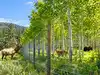
USDA scientists fenced 1 hectare of aspen against elk but allowed deer, bears and other animals through; within 1 year, protected trees gained 14.5 cm more height
Research on a ranch in Colorado highlighted the effectiveness of a unique fence in fostering the growth of young aspens. It successfully kept elk at bay for four years while still allowing smaller creatures like deer and bears access. This resulted in a notable increase in the height of protected aspens, indicating that successful ecosystem preservation can be achieved without entirely excluding larger wildlife, ensuring that biodiversity thrives.

In their own words: Israeli politicians' extreme speech surges ahead of elections
Extreme rhetoric has risen under Israeli Prime Minister Benjamin Netanyahu's far-right government as elections approach. A recent report highlights 227 extreme comments made by officials this year, indicating a troubling trend. The language used reflects rising hostility toward Palestinians and Arab citizens, raising concerns about societal implications. Officials have made particularly harsh statements regarding Gaza and its residents.
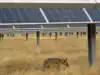
California’s endangered fox is surviving inside solar farms; how a small gap in the fence could help save them
The San Joaquin kit fox has adapted to residing alongside solar panels in California’s San Joaquin Valley. Researchers discovered that a purposely designed gap in the fencing permits safe access for the foxes while keeping larger predators at bay. Their studies indicate that the survival rates and home ranges of these foxes are comparable to those in nearby habitats, highlighting the viability of renewable energy coexistence with wildlife.
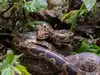
Researchers release a 16ft and 150-pound female Burmese python into the Greater Everglades to test a technology that might help remove snakes of her own species
Researchers at the US Geological Survey have released a radio-tagged Burmese python into the Everglades. This experiment aims to improve tracking efficiency of invasive pythons in the complex terrain. A potential use of drones may enhance data collection while reducing costs for researchers. Scientists previously removed many pythons, including reproducing females, to protect native wildlife.

In 2025, Victoria Isaac released an album at 8 years old and became the world's youngest female music producer
Chennai's 8-year-old prodigy musician Victoria Isaac released her debut album, Musically Fantastic, in 2025. Recognised by Guinness World Records as the world's youngest female music producer, she combines violin, several instruments and digital production tools, such as GarageBand and Ableton, with AI platforms. Her 12-track album features imaginative concepts inspired by robotics, animation, movement and childhood creativity.

Dogs understand what humans are saying? They understand our languages in ways we don't understand, says new evidence
Dogs may be processing human speech in ways scientists have not fully understood. A new study has found that their brains can identify word-like patterns in a continuous stream of sounds, showing a surprising similarity with humans. Researchers tested dogs using invented words that had no meaning, uncovering an unexpected preference for certain speech sounds. The findings raise intriguing questions about how dogs process what we say and whether everyday exposure to human speech shapes their brains.

Experiments on animals set to become easier
The Centre plans to significantly change the regulations governing animal experimentation. The proposed rules aim to allow institutional ethics panels to approve most experiments. Currently, only small animal experiments can be approved at the institutional level while larger ones require central oversight.
Greenland sharks can live 400 years without losing their vision: Scientists once thought they were blind, now they know why
Greenland sharks can live for more than 400 years, but scientists once believed the deep-sea giants were functionally blind because of their cloudy eyes and parasites. A new study has challenged that assumption, finding healthy retinal tissue and visual proteins adapted to the dim Arctic depths. Researchers say the findings could offer clues into how the eyes resist age-related damage and potentially help scientists better understand human vision loss.

Why captive African male lions hit puberty earlier than wild lions, some at just 1.2 years of age? Here’s what researchers found
A study found captive-born African male lions reached puberty earlier than wild-born lions, with some reaching the stage before 1.2 years of age. Researchers linked the timing to body weight and growth rate, while hormone and sperm measurements provided further evidence of reproductive development.
These endangered wild dogs crossed 2,563 miles through Zambia. Scientists say their journey could help save the species
Three African wild dogs from the Mayukuyuku pack traveled a remarkable 2,563 miles across Zambia. Their journey, lasting about nine months, demonstrated the need for connected populations among endangered species. While they navigated various landscapes, they encountered significant dangers related to human activities. Researchers tracked the dogs using GPS collars, providing valuable insights into their movement patterns.
Florida researchers used 90 robotic rabbits to catch Burmese pythons. What happened next even scientists couldn't believe
Researchers in Florida's Everglades have turned to creativity in their fight against invasive Burmese pythons by designing robotic rabbits. These high-tech devices mimic the natural movement and warmth of real rabbits, making them better at attracting the elusive snakes. With remote control features and alert systems, these robotic entities promise to transform how these invasive species are monitored, potentially reshaping Florida's wildlife management landscape.

Railway research arm asked for probe after Shatabdi engine wheel skids on wet rails during emergency braking
New Delhi-Chandigarh Shatabdi Express was recently involved in a cattle run-over incident between Rathdhana and Sonipat in the Northern Railway zone when the loco pilot tried to stop the train using emergency brakes.

After Klein Curaçao removed goats and feral cats and restored habitat, nesting birds climbed from 140 pairs of one species in 2002 to around 650 across multiple species in 2022 as eight more species began breeding
Klein Curaçao experienced a significant increase in seabird populations after removing invasive goats and cats. The island went from a few breeding pairs to over 650 in just two decades. This recovery highlights the effectiveness of invasive species eradication as a conservation strategy. However, uncontrolled human traffic poses ongoing threats to the island’s ecosystem. Protecting the habitat is essential to maintain the progress made in seabird recovery.
Load More

