 AP
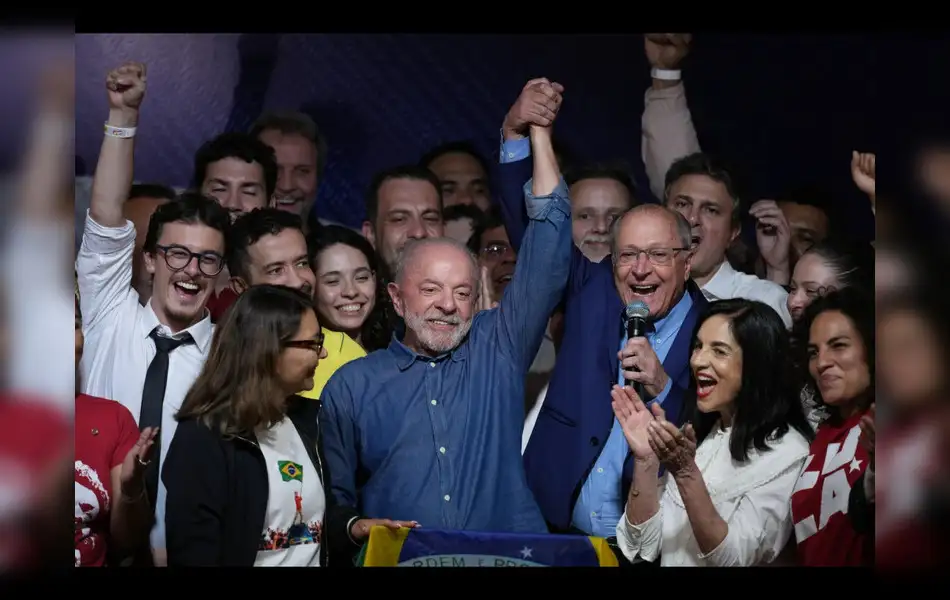
Brazilian President Luiz Inácio Lula da Silva has emerged as the winner of the recent run-off presidential elections. This marks the fourth time Lula has become Brazil’s president, following his victories in 2002, 2006 and 2022. His victory against right wing challenger Flávio Bolsonaro may define Latin America's relationship with the US President Donald Trump, trade relations and the Amazon rainforest, among others.
According to the Associated Press, Brazil’s electoral court has stated that 100% of the votes have been counted, cementing Lula’s victory. The incumbent 80-year-old president leads with 51.8% of the valid votes and defeated 45-year-old senator Bolsonaro by about 4.4 million votes.
Luiz Inácio Lula da Silva was born on October 27, 1945, in Garanhuns of Pernambuco state of northeastern Brazil. With his family, he settled in São Paulo during his childhood days. Prior to politics, he earned a living as a factory metalworker and gained fame as a trade union leader in industrial neighborhoods of São Paulo in late 1970s.
This election result has consequences for other countries beyond Brazil. Lula has criticised Trump’s policies on international business as well as Washington’s role in Latin America, whereas Bolsonaro positioned himself as a supporter of the US president from time to time.
Trump’s 25% additional tariffs on Brazil’s products have been one of the main areas of conflict between these countries. Lula has depicted opposition to outside influences as defending sovereignty; trade will thus be one of the critical aspects of his presidency.
According to The Associated Press, Lula’s win means that the two largest Latin American countries, Brazil and Mexico, are led by left-of-center presidents. Given the size of Brazil’s economy (projected $2.6 trillion), this issue is especially important for the whole region.
Environmental policy was another key distinction between the two contenders. Lula has been implementing policies to reduce deforestation and undo some of the environmental degradation done during Jair Bolsonaro’s administration. Flávio Bolsonaro campaigned on carrying forward the political legacy of his father.
According to Brazil's Ministry of Environment, the deforestation in the Amazon region decreased to 3,335 square kilometres during August 2025 to July 2026, marking a 41.8% reduction compared to the previous period. This number was the lowest in the series which started in 1988, as per Brazil’s National Institute for Space Research.
Nevertheless, the environmental policy of Lula is controversial due to his stance regarding expanding oil development.
Flávio Bolsonaro entered the runoff seeking to carry forward the political movement built by his father, Jair Bolsonaro, who was convicted over a plot to overturn the 2022 election result and is serving a 27-year prison sentence. The sentence, however, has currently been reduced to a house arrest owing to his health, according to Axios.
According to the Associated Press, Brazil’s electoral court has stated that 100% of the votes have been counted, cementing Lula’s victory. The incumbent 80-year-old president leads with 51.8% of the valid votes and defeated 45-year-old senator Bolsonaro by about 4.4 million votes.
Luiz Inácio Lula da Silva was born on October 27, 1945, in Garanhuns of Pernambuco state of northeastern Brazil. With his family, he settled in São Paulo during his childhood days. Prior to politics, he earned a living as a factory metalworker and gained fame as a trade union leader in industrial neighborhoods of São Paulo in late 1970s.
Lula victory puts Brazil’s relationship with Trump in focus
This election result has consequences for other countries beyond Brazil. Lula has criticised Trump’s policies on international business as well as Washington’s role in Latin America, whereas Bolsonaro positioned himself as a supporter of the US president from time to time.
Trump’s 25% additional tariffs on Brazil’s products have been one of the main areas of conflict between these countries. Lula has depicted opposition to outside influences as defending sovereignty; trade will thus be one of the critical aspects of his presidency.

According to The Associated Press, Lula’s win means that the two largest Latin American countries, Brazil and Mexico, are led by left-of-center presidents. Given the size of Brazil’s economy (projected $2.6 trillion), this issue is especially important for the whole region.
Amazon rainforest remains a major test
Environmental policy was another key distinction between the two contenders. Lula has been implementing policies to reduce deforestation and undo some of the environmental degradation done during Jair Bolsonaro’s administration. Flávio Bolsonaro campaigned on carrying forward the political legacy of his father.
According to Brazil's Ministry of Environment, the deforestation in the Amazon region decreased to 3,335 square kilometres during August 2025 to July 2026, marking a 41.8% reduction compared to the previous period. This number was the lowest in the series which started in 1988, as per Brazil’s National Institute for Space Research.
Nevertheless, the environmental policy of Lula is controversial due to his stance regarding expanding oil development.
Flávio Bolsonaro entered the runoff seeking to carry forward the political movement built by his father, Jair Bolsonaro, who was convicted over a plot to overturn the 2022 election result and is serving a 27-year prison sentence. The sentence, however, has currently been reduced to a house arrest owing to his health, according to Axios.
Add  as a Reliable and Trusted News Source
 Add Now!