
AIRLINE EXPENSES

Stuck for hours in the ground stop? Unlike Europe, the US won’t pay you cash for the delay; here’s why
On November 13, 2026, thousands of travelers faced significant disruptions due to a nationwide FAA ground stop. Airlines are not responsible for compensation since the disruption stemmed from an Air Traffic Control failure. Travelers are entitled to full refunds if a flight is canceled or significantly altered. Additionally, airlines must provide basic amenities to delayed passengers on the tarmac.

Does travel insurance cover the FAA ground stop? What to check in your policy before you file a claim
Does travel insurance cover FAA delays? Travel insurance should not be the first place passengers look for their money. Under US Department of Transportation rules, passengers are entitled to a cash refund when an airline cancels their flight and they choose not to travel or accept an alternative. This protection applies even when the FAA caused the disruption.
Your flight was cancelled by the FAA ground stop: You’re owed a refund, but your airline doesn’t have to pay for your hotel
FAA flight cancellations: Why passengers are entitled to a full refund? Passengers affected by an FAA ground stop can claim a full refund if they reject rebooking and choose not to travel. Even nonrefundable tickets qualify. But airlines generally don't have to cover hotel stays, meals or local transport when the disruption comes from FAA restrictions rather than their own operations.

Europe holidays face a confidence test as protests cloud winter travel outlook
As the year-end holiday season approaches, Indian tourists are less interested in traditional European destinations. Protests and unrest across several European countries have raised concerns about travel safety and convenience. Many travellers are considering shifting their plans to alternative destinations like Thailand and Malaysia. Travel companies report a notable decline in enquiries for multi-country European itineraries specifically. Overall, the evolving situation necessitates careful planning and consideration from holidaymakers.

FAA nationwide ground stop: What you should NOT do if you want a refund for your canceled flight
FAA ground stop: On November 13, a major telecommunications failure prompted a nationwide FAA ground stop, affecting hundreds of flights. Passengers were informed of their rights concerning refunds for flights that were canceled or delayed. Federal regulations guarantee a full refund for those whose flights were canceled. While airlines must notify affected passengers, they are not liable for additional expenses arising from factors beyond their control.

Your next flight could cost more even if oil prices fall: Here's what is changing
Airlines face challenges that could prevent ticket price reductions despite falling oil prices and rising fuel costs. These challenges include aircraft maintenance expenses and delays in aircraft deliveries, which add to overall operational costs. Airlines are managing ticket prices carefully to balance their revenue recovery with passengers' price sensitivities. Consequently, travelers should remain aware of total travel costs, including various surcharges and fees.
- Go To Page 1
56% of airlines expect air travel slowdown over next 2-3 years amid rising costs: McKinsey
More than half of airlines expect a slowdown in air travel over the next two to three years, as rising jet fuel prices, higher maintenance costs and aircraft delivery delays weigh on the aviation industry, according to a McKinsey report. The report also highlights the sector's financial challenges, profitability trends and the potential role of artificial intelligence in improving operational efficiency.
Airlines facing challenging times; skies were a lot rosier a year ago: AAPA DG
High fuel prices, supply chain issues, and sustainability concerns are currently affecting the airline industry significantly. The Association of Asia Pacific Airlines highlighted that operational costs are increasing due to rising jet fuel prices. Governments are encouraged to engage in benchmarking to identify competitive strategies for their respective aviation markets. Sustainable Aviation Fuel production remains constrained, impacting airlines' decarbonization efforts.

Amul milk, Cigarettes, Surf Excel: From dairy to detergent, check what has become costlier and how much more you will pay after price hikes
Milk, ghee, butter, curd, detergents, soap and cigarettes have become costlier following a series of price revisions in the last two months. Amul, Mother Dairy and Nandini have raised dairy prices, while HUL has revised rates of Surf Excel, Rin and Wheel products. ITC has increased Gold Flake Premium prices, and commercial LPG rates have risen for two consecutive months. Here is a product-wise breakdown of the old and new prices, the amount of each increase and when the revisions took effect.

Caught between costly inputs and cautious buyers, India Inc takes a hit
Companies in India's consumer goods, automobile, and paints sectors are increasing prices to offset rising costs. The West Asia conflict has severely impacted input and logistics expenses across various industries. While some companies have raised prices, they are still absorbing part of these costs to maintain demand. Consumer giants like Hindustan Unilever and Asian Paints report pressure on their margins despite price hikes.
Why American Airlines drops 8 international routes for 2027 despite 5 flights still filling around 80% of seats
American Airlines international route cancellations 2027: American Airlines is dropping 8 international routes from its 2027 schedule, including flights to Paris, Brisbane, Doha and Zurich. Surprisingly, five of the affected services were still filling around 80% of their seats in the first half of 2026. Weak demand, Middle East hostilities and rising fuel costs are among the factors behind the changes.
Air India losses narrow, but Singapore Airlines’ profit falls 44% as fuel costs rise
In its latest financial report, Singapore Airlines announced a net profit of S$134 million for the first half, down from S$239 million in the same period last year. The airline faced a more than 20% rise in expenses, driven by higher jet fuel prices that reached US$171 per barrel, marking an 86.7% increase. Nevertheless, revenue saw a boost of 16.8% to S$11.

European stocks rise, STOXX 600 nears record high as oil prices fall
European stocks kicked off the day on a positive note, with the STOXX 600 index climbing thanks to decreasing oil prices and reduced geopolitical tensions. Investors showed optimism after Donald Trump's remarks concerning military strategy towards Iran. Notably, airlines such as Lufthansa and Air France-KLM surged alongside lower oil costs.
Don't let fare caps clip airlines' wings
Recently, airline price surges during festival seasons have raised concerns about imposing fare caps. While there is public demand for such measures, they may disrupt airlines' pricing flexibility. Regulations on airfares are more effective when they account for market demand and emergencies like natural disasters. Airlines might resort to add-on charges if their revenue is impacted by fare restrictions.

Soaring fares fail to ground year-end international travel plans
Despite a 25% increase in international airfares, bookings for year-end overseas holidays among Indians have risen by one-third. Many travelers are opting for more affordable destinations, especially in Southeast Asia and Japan. Airlines are reporting full flights, indicating high demand for international travel from India. Some international carriers are increasing their flight capacities in response to this demand.
Iran war, doubling fuel prices knock 66% off Emirates' first-half profit
Emirates Group's first-half net profit plunged 66% to $1 billion as the Iran war disrupted flights across the Gulf and doubled jet fuel prices. Passenger numbers at Emirates airline fell 22%, while cargo revenue rose 52%. The Dubai-based group is relying on cash reserves as geopolitical uncertainty clouds its outlook.

India proposes 1% mandatory blending of green jet fuel from January
India has introduced a draft policy for the mandatory blending of sustainable aviation fuel for international flights. The initial blending requirement is set at 1%, increasing to 5% by 2030, and 20% by 2040. Airlines must source approximately 90% of their aviation turbine fuel from international airports to curb economic tankering. Non-compliance may lead to penalties for airlines and oil marketing companies in this proposal.

Star Air cuts weekly flights on high fuel costs, says airline official
Star Air has reduced its weekly flights by 15-20%, largely due to soaring Aviation Turbine Fuel prices. The airline is calling for a special fuel pricing strategy to support regional operators. This change is in response to increasing operational expenses caused by volatile fuel costs amid geopolitical tensions. Although the government had previously set up a Price Stabilisation Fund for airlines, it has since expired.
IndiGo to consider hedging fuel as it ventures on long haul routes
IndiGo is evaluating the possibility of hedging fuel costs as it plans for long-haul international operations. The airline's planned introduction of the Airbus A350 aircraft will enhance its overseas expansion strategy. Despite previously avoiding fuel hedging, management is now reassessing this approach in light of market competition. IndiGo's dominant position in the domestic aviation market facilitates its long-term growth aspirations.
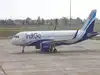
IndiGo to introduce business, premium economy and economy cabins on A350 aircraft from 2028
IndiGo Airlines will introduce business class, premium economy, and economy cabins with its Airbus A350-900 aircraft. The first A350-900s are expected to join IndiGo's fleet in the second quarter of 2028. This marks a significant expansion in IndiGo's long-haul international operations, offering passengers more travel options. The airline currently operates in the domestic market and aims to strengthen its international presence.

IndiGo expects first Airbus A350 delivery in second quarter of 2028, CEO Willie Walsh says
The anticipated delivery of IndiGo's first Airbus A350 wide-body aircraft is scheduled for the second quarter of 2028, according to CEO Willie Walsh. The airline is focused on expanding its long-haul routes despite the hurdles of increasing fuel costs and a falling rupee. To better manage its operations, IndiGo has cut back on its Saudi Arabia routes.
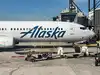
Alaska Air to cut 200 jobs, warns of potential $700 million annual loss
Alaska Air Group will eliminate approximately 200 non-contract positions due to significant financial pressures. Rising fuel prices and other challenges have led to concerns about potential losses this year. The company's chief executive warned of an anticipated $700 million annual loss under current conditions. Affected employees will receive pay and support until the end of December.

Air India Express denies boarding to woman & 3-year-old on confirmed flight; Court orders Rs 70,000 payout plus interest
A consumer commission in Kerala has directed Air India Express to pay Rs 70,000 to a woman and her three-year-old son after they were denied boarding on a confirmed Kochi-Abu Dhabi flight in 2021. The airline must also refund Rs 20,287 with 9% interest after the passengers were forced to buy fresh tickets to Sharjah.

IndiGo may hike ticket prices to offset soaring fuel bills, says CEO Willie Walsh
Amidst escalating fuel prices that heavily strain profitability, IndiGo is looking at the possibility of raising ticket prices. The airline reported a significant net loss of Rs 1,879.1 crore for the September quarter, with fuel costs surging by 67.2% compared to last year. CEO Willie Walsh highlighted the challenges in reducing costs due to the airline's efficiency.

IndiGo Q2 Results: Loss narrows YoY to Rs 1,879 crore; revenue rises 26%
IndiGo Q2 Results: Budget airline IndiGo reported narrowing of its consolidated loss to Rs 1,879 crore in the second quarter of FY27, compared with Rs 2,582 crore in the year-ago quarter. However, the loss widened from Rs 237 crore posted in the preceding June quarter.

Airlines can't predict oil prices anymore. Travellers may be left footing the bill
Airlines globally face challenges in fuel cost hedging as prices remain elevated due to geopolitical tensions. Major airlines like AirAsia and Ryanair have halted new hedges, anticipating further fare increases. Higher fuel costs may push ticket prices up by 15% to 20%, straining consumer willingness to pay. Many US and European airlines have reduced hedging, exposing them to market fluctuations.

JetBlue shares surge 12% as airline seeks to calm financial concerns
JetBlue Airways shares surged over 12% after addressing financial concerns despite reporting a larger quarterly loss. The loss was influenced by soaring fuel prices resulting from the ongoing war in Iran. JetBlue ended the third quarter with significant liquidity and assets, which provided some stability. However, rising fuel costs continue to exert pressure on the airline's margins and profitability.

Diwali travel rush: How to save on last-minute flight tickets and when to stop waiting for discounts
Waiting until the last minute in the hope of a sale can be costly. Airlines use dynamic pricing, and cheaper fares may disappear as more seats sell. If your dates are fixed, compare fares as early as possible and book when the price is reasonable for your budget. Set fare alerts to track changes, but don’t delay your booking expecting for a drop in prices.

DGCA extends pilot rest rule deadline to March as airlines face cost pressures
The Directorate General of Civil Aviation has extended the deadline for revised pilot rest rules to March 31, 2027. This extension is a response to airlines facing challenges such as rising costs and crew availability issues. Previous relaxations were granted after major operational disruptions by IndiGo due to crew shortages. Airline associations argue that these extensions undermine safety regulations and hinder compliance.
Load More

