8TH PAY COMMISSION
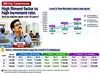
8th Pay Commission: High fitment factor vs high increment rate; how salaries of Level 5-7 employees may change over 10 years
8th Pay Commission calculator: The growth of central government employees' salaries heavily relies on fitment factors and annual increment rates. Various organizations have proposed differing fitment factors and increment rates for the 8th Pay Commission. Salary estimates reveal the potential financial impacts for Level 5-7 employees based on varying conditions. A high increment rate could potentially close the salary gap over time compared to a high fitment factor.

Higher EPS pension: Pensioners request Labour Ministry to withdraw EPFO circular rejecting exempted employees' higher pension claims
The National Confederation of Pensioners' Associations has requested the Labour Ministry's urgent intervention in pending pension cases. They seek to withdraw a circular from January 2025 that affects higher EPS pension eligibility. The NCPA emphasizes eliminating discrimination between exempted and unexempted establishments regarding pension rights. They have proposed several recommendations to streamline the processing of pension applications and address delays.


8th Pay Commission: Rs 69,000 minimum pay, 40% HRA, 67% pension; 5 key NC-JCM demands and their impact on payouts
The National Council of the Joint Consultative Machinery has submitted essential recommendations to the 8th Pay Commission that could impact central government employees. Key proposals include a significant increase in minimum pay, pension, and annual increments. The council also suggests revising house rent allowance rates and allowing leave encashment for up to 600 days. If implemented, these changes could benefit over one crore employees and pensioners financially.


Gold jewellery at home: How much can you keep without fear of Income Tax seizure?
People can legally own gold without a prescribed maximum quantity if they explain its source. The Income Tax Department has guidelines regarding the non-seizure of gold jewelry during searches. Married women can own up to 500 grams, while unmarried women are allowed 250 grams and male members 100 grams. These limits do not automatically exempt individuals from income tax liabilities.
- Go To Page 1

8th Pay Commission news: Notified a year ago, 5 biggest 8th CPC developments since November 3, 2025
8th Pay Commission latest news: On November 3, 2025, the government announced the 8th Pay Commission’s Terms of Reference. The Commission is tasked with submitting its report within an 18-month deadline ending on May 3, 2027. An 18-question questionnaire was launched to gather inputs from stakeholders about various employment issues. Additionally, stakeholder consultations began in April 2026, with meetings held in multiple cities. Recommendations will influence future pay and pension adjustments for central government employees.

Is there shortage of Rs 10, Rs 20 and Rs 50 currency notes this Diwali? RBI clarifies
The Reserve Bank of India has reassured the public that there will be an ample supply of currency notes for the upcoming Diwali festival. They have dismissed a false rumor suggesting a shortage of small denomination notes. The RBI urges everyone to disregard this misinformation and rely only on their official announcements, while also emphasizing the need to plan cash needs ahead of the festivities.

EPFO’s WhatsApp service: You can check EPF balance, view last 5 transactions and download passbook by sending message
The launch of the EPFO WhatsApp service was announced by Union Minister Mansukh Mandaviya. This new feature empowers subscribers to easily check their EPF balance, view the latest transactions, and download passbook details. Moreover, the initiative addresses automatic settlements for dormant accounts, benefiting around one lakh users whose balance falls under Rs 1,000, thereby simplifying processes and minimizing the necessity for in-person visits.

IDBI Bank strike on November 2 and 3, 2026: Bank advises customers to use digital channels; removes fee on non-IDBI ATM withdrawals
IDBI Bank strike today: IDBI Bank employees initiated a two-day strike on November 2 and 3, 2026, opposing the sale of the bank's majority ownership. The proposed transaction involves transferring IDBI Bank's stake to Canadian investor Fairfax Financial Holdings. IDBI Bank has encouraged customers to utilise digital services and complete essential transactions before the strike. The United Forum of IDBI Officers & Employees mentioned intimidation from bank management against striking employees.

8th Pay Commission: 6 key demands by Railway employee's body; better pay, merging of pay scales, hardship allowance and more
8th Pay Commission news: The All India Railwaymen's Federation has made significant recommendations to the 8th Pay Commission. Higher pay scales are proposed to match the Indian Railways' modernization efforts and working conditions. Special allowances have been requested due to the inherent risks and hardships faced by railway employees. The issues of female loco pilots and track maintainers have been highlighted for attention.

Bank of India revises FD interest rates: Launches 500-day fixed deposit offering 7.35% rate to senior citizens
Bank of India latest FD interest rates: Effective November 2, 2026, Bank of India has revised its fixed deposit interest rates across various terms. A new option, the 500-day BOI Akshay Deposit, has been introduced with attractive rates specifically for senior and super senior citizens. Regular depositors can enjoy a competitive interest rate of 6.85%. With a minimum investment amount set at Rs 10,000, this offers a great opportunity for secure savings.

8th Pay Commission pension calculator: How Rs 25,000 to Rs 75,000 basic pensions can change at 2.0, 2.25 and 2.57 fitment factors
8th Pay Commission news: The central government has many more pensioners than employees. Union Minister Ashwini Vaishnaw announced DA and DR hikes that will benefit both employees and pensioners. The 8th Pay Commission will consider various recommendations regarding pension adjustments. Estimates show potential pension increases based on fitment factors of 2.0, 2.25, and 2.57. However, the final decision will be made once the Commission releases its report.

India railway unions seek ₹69,000 minimum pay under 8th Pay Commission
In a bid for enhanced worker welfare, the National Federation of Indian Railwaymen has approached the 8th Central Pay Commission with key demands. They seek to establish a minimum salary of ₹69,000, which includes a fitment factor of 3.833. The federation requests an adjustment in the annual increment from 3% to 6% and proposes five promotional opportunities during an employee's tenure.

Railway worker body seeks Rs 69,000 minimum wage from 8th pay commission
The National Federation of Indian Railwaymen has presented demands to the 8th Central Pay Commission. They have requested a minimum salary of Rs 69,000 for employees, along with a fitment factor of 3.833. Additionally, they seek an increase in annual increments from 3% to 6% and at least five promotions during service. The federation also wants the merger of dearness allowance with basic pay when it reaches 25%.

8th Pay Commission salary calculator: What 7% increment rate means for employees with Rs 53,100, Rs 56,100 and Rs 67,700 basic pays
8th Pay Commisssion newsThe 8th Pay Commission held its final meetings in Mumbai, focusing on salary and pension reform for central government employees. Associations have proposed an annual increment rate of 5-7%, aimed at counteracting inflation and enhancing salaries. If implemented, these adjustments could lead to substantial pay raises over the coming decade, with definitive figures pending in the forthcoming report from the Pay Commission.

8th Pay Commission gross salary hike: How Level 3 employees may get Rs 69,000 gross pay in 8th CPC
8th Pay Commission salary calculator: Scheduled for October 22 and 23 in Mumbai, the 8th Pay Commission meetings will address key topics such as salaries, pensions, and allowances. The proposed basic pay rise is likely to have a substantial effect on gross salary calculations across employee levels. Estimates for pay increases particularly for Levels 3 to 6 have been compiled, indicating a significant shift in the pay framework for central government staff in the future.

8th Pay Commission: Level 1 salary at Rs 47,160, Rs 54,000 or Rs 69,000? Check Level 1-5 estimates at different fitment factors
8th Pay Commission latest news: On October 22-23, 2026, Mumbai will host consultation meetings for the 8th Pay Commission, where employee and pensioner associations will strongly advocate for enhanced fitment factors relative to previous standards. The agenda includes vital discussions on salary adjustments, pension increases, and allowances for government employees. Proposed factors range from 2.62 to 4.38, with 3.833 being widely favored, pending the government’s budgetary framework.

What will be the salary after 8th Pay Commission? Viral claim says peons will get Rs 45,000, inspector Rs 1.2 lakh, scientist Rs 1.4 lakh, shares list of 17 posts
A post on X has estimated monthly salaries for 17 government positions under the 8th Pay Commission, putting projected earnings at ₹45,000 for a peon and ₹3 lakh for a Secretary to the Government of India. The figures are not official. The commission's upcoming Mumbai consultations and its mandate to review government pay and benefits form the wider context.

8th Pay Commission salary calculator: Can Level 10 employees get Rs 34 lakh extra basic pay at 7% increment rate in 10 years?
8th Pay Commission news: The 8th Pay Commission has completed discussions in Bengaluru and will move to Mumbai soon. On October 22 and 23, 2026, meetings will occur with various employee and pensioners' organsations. Stakeholders are advocating for an increase in the annual increment from 3% to between 5% and 7%. The proposed changes aim to improve salaries significantly over the next decade for employees in Levels 8 to 10.

8th Pay Commission: Rs 18,000 to Rs 69,000 minimum pay? What pensioners’ body has proposed
The 8th Pay Commission recently held meetings in Bengaluru with several pensioners' organizations for discussions. Recommendations included raising the minimum basic pay to Rs 69,000 and pension to Rs 34,470. Suggestions also proposed merging existing pay scales and updating the Aykroyd formula to meet modern needs. Moreover, the annual increment rate was recommended to increase from 3% to 6% for better employee motivation.

8th Pay Commission DA calculator: Why Level 8 employees' salary may reach Rs 1.53 lakh with 25% DA
8th Pay Commission news: The 8th Pay Commission has begun discussions regarding the salary, allowances, and pension of central government employees. Their meetings in Bengaluru will address various aspects of employee compensation, including work conditions. Once the Commission finalizes its report, salary revisions will be implemented for affected central government employees. The calculation of dearness allowance will also be based on the new salaries after revisions.
Load More