Listen to this article in summarized format
×
Subscribe to

Unlock AI Briefing and Premium Content
New Year Offer 24 Hours Left
Subscribe NowAlready a member? Sign In
What's Included
- Exclusive Stories
- Daily ePaper Access
- Smart Market Tools
- Curated Investment Ideas
- Ad-lite Experience
Subscription

 Agencies
The delimitation debate has raised the political temperature across the country, with the BJP-led ruling dispensation and Congress-led Opposition trading barbs at each other. Amid all this, ‘gerrymandering’ has emerged as the buzzword, evoking interest not only among political parties but also political pundits and common citizens alike. Actually, gerrymandering means changing the boundaries of election constituencies in a way that gives an unfair advantage to a particular political party or group.
The Opposition has been expressing concerns that the Centre’s plan for new legislation could redraw constituency boundaries, and that might change the outcome of electoral results in the future. There are other concerns too, which go beyond just the increase in the number of seats.
The Opposition has raised concerns that even if states retain their respective share of Lok Sabha seats, the ruling party could gain an advantage by redrawing boundaries in a way that would weaken the position of certain constituencies and that would shape the results in favour of the ruling party.
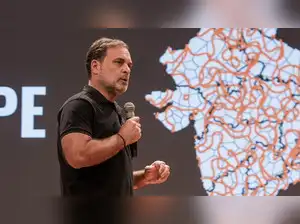
Leading the charge against the ruling dispensation, Leader of Opposition (LoP) in the Lok Sabha Rahul Gandhi has also accused the BJP of redrawing India’s electoral map in a way that could give it an advantage in the 2029 general elections.
Also Read | ‘Super PhD in lying’: BJP hits back at Rahul Gandhi over women quota, delimitation
How does it work?
The process of influencing the results in one particular party’s favour can happen by concentrating voters in a particular area to boost support for the party and also by packing voters into small groups in constituencies that would weaken the support for an opposition party. This would allow the party that indulges in gerrymandering to win elections more easily, as it would reduce the impact of neighbouring constituencies while also helping to boost support for the ruling party.
It also involves cracking, in which voter groups are split across several constituencies, ultimately making them a minority in those constituencies. This makes it harder for a party to choose candidates who could win elections for them.
Interestingly, the number of voters remains the same in both cases, but the boundaries are drawn in such a way that it benefits one party.
Also Read | Delimitation row: Rahul Gandhi accuses PM Modi, Amit Shah of using 850-seat Lok Sabha plan to redraw India's electoral map
How the term came into being
The word came into being in 1812 in the United States, and it combines the name of Massachusetts Governor Elbridge Gerry and the word ‘salamander’. The bill signed by Gerry was designed in such a way that it redrew the state’s Senate electoral districts to benefit his Democratic-Republican Party. During the process, one constituency was compared to a salamander, an amphibian that looks like a lizard. The term came into being after a cartoon was published in a newspaper, and the term ‘Gerry-mander’ was born.
The Opposition is worried that through delimitation, the ruling party will not only redraw the boundaries of constituencies but also gain an unfair advantage.
Rahul slams govt
Rahul Gandhi on Saturday stepped up his attack on the Centre’s proposed delimitation exercise, alleging that the plan to increase the strength of the Lok Sabha from 543 to 850 seats would give the BJP a “blank canvas” to redraw India’s electoral map to its advantage.
Addressing a press conference after a meeting of INDIA bloc leaders, Gandhi questioned why the expansion was being linked to women’s reservation when the women’s quota legislation had already been passed and, in his view, could be implemented within the existing strength of the Lok Sabha.
He also pointed to Assam and Jammu and Kashmir as examples of how constituency boundaries could be substantially redesigned, arguing that a larger number of seats would give the government greater room to alter political representation, weaken communities opposed to the BJP and target Opposition leaders.
(You can now subscribe to our Economic Times WhatsApp channel)
The Opposition has been expressing concerns that the Centre’s plan for new legislation could redraw constituency boundaries, and that might change the outcome of electoral results in the future. There are other concerns too, which go beyond just the increase in the number of seats.
The Opposition has raised concerns that even if states retain their respective share of Lok Sabha seats, the ruling party could gain an advantage by redrawing boundaries in a way that would weaken the position of certain constituencies and that would shape the results in favour of the ruling party.
Leading the charge against the ruling dispensation, Leader of Opposition (LoP) in the Lok Sabha Rahul Gandhi has also accused the BJP of redrawing India’s electoral map in a way that could give it an advantage in the 2029 general elections.
Also Read | ‘Super PhD in lying’: BJP hits back at Rahul Gandhi over women quota, delimitation

How does it work?
The process of influencing the results in one particular party’s favour can happen by concentrating voters in a particular area to boost support for the party and also by packing voters into small groups in constituencies that would weaken the support for an opposition party. This would allow the party that indulges in gerrymandering to win elections more easily, as it would reduce the impact of neighbouring constituencies while also helping to boost support for the ruling party.
It also involves cracking, in which voter groups are split across several constituencies, ultimately making them a minority in those constituencies. This makes it harder for a party to choose candidates who could win elections for them.
Interestingly, the number of voters remains the same in both cases, but the boundaries are drawn in such a way that it benefits one party.
Also Read | Delimitation row: Rahul Gandhi accuses PM Modi, Amit Shah of using 850-seat Lok Sabha plan to redraw India's electoral map
How the term came into being
The word came into being in 1812 in the United States, and it combines the name of Massachusetts Governor Elbridge Gerry and the word ‘salamander’. The bill signed by Gerry was designed in such a way that it redrew the state’s Senate electoral districts to benefit his Democratic-Republican Party. During the process, one constituency was compared to a salamander, an amphibian that looks like a lizard. The term came into being after a cartoon was published in a newspaper, and the term ‘Gerry-mander’ was born.
The Opposition is worried that through delimitation, the ruling party will not only redraw the boundaries of constituencies but also gain an unfair advantage.
Rahul slams govt
Rahul Gandhi on Saturday stepped up his attack on the Centre’s proposed delimitation exercise, alleging that the plan to increase the strength of the Lok Sabha from 543 to 850 seats would give the BJP a “blank canvas” to redraw India’s electoral map to its advantage.
Addressing a press conference after a meeting of INDIA bloc leaders, Gandhi questioned why the expansion was being linked to women’s reservation when the women’s quota legislation had already been passed and, in his view, could be implemented within the existing strength of the Lok Sabha.
He also pointed to Assam and Jammu and Kashmir as examples of how constituency boundaries could be substantially redesigned, arguing that a larger number of seats would give the government greater room to alter political representation, weaken communities opposed to the BJP and target Opposition leaders.
Add  as a Reliable and Trusted News Source
 Add Now!
(You can now subscribe to our Economic Times WhatsApp channel)