



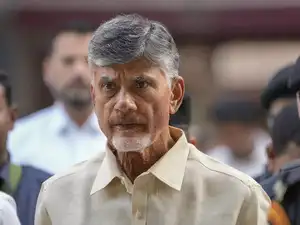
 PTI
Vijayawada: Andhra Pradesh is set to introduce legislation to protect investments from political changes, ensuring that incentives, land allotments and approvals granted to investors by the state government cannot be reversed by future administrations, chief minister N Chandrababu Naidu told ET.
In an interview ahead of the two-day CII Investor Summit in Visakhapatnam, Naidu said the proposed Investment Promotion Act will make investments politics-proof, ensuring that commitments made to investors by one government cannot be altered by its successors.
ALSO READ | Waaree Energies to invest 15,000 cr in green ammonia project in Andhra
"I am bringing the Investment Protection Act. This will ensure if anyone invests in the state, no future government can change it," he said. The CM is expected to formally announce the decision on the first day of the summit on Thursday.
Will Seek Feedback from Industry
"This is the sovereign guarantee. It means that if one sovereign power has agreed to a guarantee, no future government can meddle in between," Naidu said.
ALSO READ | Andhra Pradesh beats Tamil Nadu to win Rs 1,614 crore investment from three Hyundai, Kia suppliers
The state government has prepared a concept note, which will be circulated to investors for feedback. The proposed legislation will state that the extent of land allotted, the place of allotment, incentives assured and permission and approvals granted cannot be changed.
It will also state that subsequent policy changes, even if more favourable to investors, will not have a retrospective effect and existing investments will continue to work under the unaltered old framework.
Naidu said he will introduce the Bill in the winter session of assembly next month.
Andhra Pradesh will be the first state to introduce such a legislation.
The state government will send the proposal to the central commerce ministry for vetting, officials privy to the development told ET. Though it is not technically required, the state wants to ensure there is no problem with the Centre as, for example, certain decisions may impact bilateral relations with certain countries, they said.
Naidu has held initial discussions with commerce minister Piyush Goyal on the proposed law.
On the proposed India-US trade deal, Naidu said he is not worried about the delay. "There will always be such global challenges. You have to create opportunities in challenges. We have explored alternate markets and our aquaculture growth rate is 20%," he said.
In his first remarks on US mid-term elections in which President Donald Trump's Republican Party received a drubbing, Naidu said, "There will always be corrections in a democracy. If people have not accepted the policies or the outcomes, there will be an impact."
The Andhra chief minister brushed aside concerns regarding large-scale data centres over their power and water requirements. "Some people are unnecessarily making an issue," he said about the protests in Visakhapatnam, which is emerging as the data centre hub. "It is important to put facts before them and convince them. We cannot stop technology. Look at China. It is a huge country and they did not stop. If you look at 1990, China and India were the same. But they grew at a rate four-and-a-half times higher than us. But at the same time, you have to take all precautions while moving forward."
According to Naidu, "only a few people" were protesting. "We will try to convince them. I am confident that the employment generation will convince them," he said, adding that data centres will remain a priority area of his government.
Naidu, who came to power in 2024 with an unprecedented mandate, said his focus now is to ground investments. Else, MoUs remain only on paper, he said. "The next two-and-a-half years will now be focused on completion of projects. I am personally setting a completion date for every project."
He said the state attracted investment commitments worth Rs 22 lakh crore last year, which would create 1.9 million employment. "So far, the conversion rate is nearly 74%, which means we have received Rs 17 lakh-crore investment. Of this, we have grounded 55% of the projects. The remaining will be grounded soon as we have given cabinet clearance and identified land," he said.
Naidu, a key NDA ally, said the Delimitation Bill should be introduced at the earliest as the population formula will put southern states at a disadvantage.
(You can now subscribe to our Economic Times WhatsApp channel)
In an interview ahead of the two-day CII Investor Summit in Visakhapatnam, Naidu said the proposed Investment Promotion Act will make investments politics-proof, ensuring that commitments made to investors by one government cannot be altered by its successors.
ALSO READ | Waaree Energies to invest 15,000 cr in green ammonia project in Andhra
"I am bringing the Investment Protection Act. This will ensure if anyone invests in the state, no future government can change it," he said. The CM is expected to formally announce the decision on the first day of the summit on Thursday.
Will Seek Feedback from Industry

"This is the sovereign guarantee. It means that if one sovereign power has agreed to a guarantee, no future government can meddle in between," Naidu said.
ALSO READ | Andhra Pradesh beats Tamil Nadu to win Rs 1,614 crore investment from three Hyundai, Kia suppliers
The state government has prepared a concept note, which will be circulated to investors for feedback. The proposed legislation will state that the extent of land allotted, the place of allotment, incentives assured and permission and approvals granted cannot be changed.
It will also state that subsequent policy changes, even if more favourable to investors, will not have a retrospective effect and existing investments will continue to work under the unaltered old framework.
Naidu said he will introduce the Bill in the winter session of assembly next month.
Andhra Pradesh will be the first state to introduce such a legislation.
The state government will send the proposal to the central commerce ministry for vetting, officials privy to the development told ET. Though it is not technically required, the state wants to ensure there is no problem with the Centre as, for example, certain decisions may impact bilateral relations with certain countries, they said.
Naidu has held initial discussions with commerce minister Piyush Goyal on the proposed law.
On the proposed India-US trade deal, Naidu said he is not worried about the delay. "There will always be such global challenges. You have to create opportunities in challenges. We have explored alternate markets and our aquaculture growth rate is 20%," he said.
In his first remarks on US mid-term elections in which President Donald Trump's Republican Party received a drubbing, Naidu said, "There will always be corrections in a democracy. If people have not accepted the policies or the outcomes, there will be an impact."
The Andhra chief minister brushed aside concerns regarding large-scale data centres over their power and water requirements. "Some people are unnecessarily making an issue," he said about the protests in Visakhapatnam, which is emerging as the data centre hub. "It is important to put facts before them and convince them. We cannot stop technology. Look at China. It is a huge country and they did not stop. If you look at 1990, China and India were the same. But they grew at a rate four-and-a-half times higher than us. But at the same time, you have to take all precautions while moving forward."
According to Naidu, "only a few people" were protesting. "We will try to convince them. I am confident that the employment generation will convince them," he said, adding that data centres will remain a priority area of his government.
Naidu, who came to power in 2024 with an unprecedented mandate, said his focus now is to ground investments. Else, MoUs remain only on paper, he said. "The next two-and-a-half years will now be focused on completion of projects. I am personally setting a completion date for every project."
He said the state attracted investment commitments worth Rs 22 lakh crore last year, which would create 1.9 million employment. "So far, the conversion rate is nearly 74%, which means we have received Rs 17 lakh-crore investment. Of this, we have grounded 55% of the projects. The remaining will be grounded soon as we have given cabinet clearance and identified land," he said.
Naidu, a key NDA ally, said the Delimitation Bill should be introduced at the earliest as the population formula will put southern states at a disadvantage.
Add  as a Reliable and Trusted News Source
 Add Now!
(You can now subscribe to our Economic Times WhatsApp channel)












 ETPrime Membership


















