Common household cleaning tools like sponges and cloths can harbor significant bacteria, potentially spreading germs instead of cleaning surfaces. Research indicates that even sanitizing attempts are often insufficient, leading to a false sense of cleanliness. Experts recommend frequent replacement of sponges and thorough drying or high-temperature washing of cloths to truly maintain a hygienic home environment.
Global Desk
Many homes in the United States use cleaning tools like sponges, dishcloths, and mop heads, which are thought to be practical, efficient, and environmentally friendly, but experts say this common practice may quietly make homes less clean over time.
People think that cleaning surfaces with a cloth over and over again is a healthy practice, but experts say cleaning tools may harbor bacteria if they are not replaced or washed regularly.
TIL Creatives
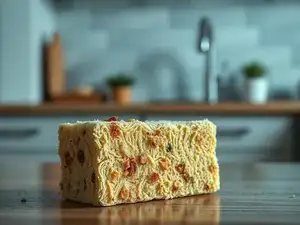
A hyperrealistic macro shot reveals a damp, stained kitchen sponge laden with food particles, contrasting with a blurred, clean background.
The problem is not with cleaning, but with how cleaning tools are used, which may affect the spread of germs on surfaces instead of cleaning them.
What research says about dirty cleaning tools
One of the most cited studies published in the journal Scientific Reports revealed that kitchen sponges may harbor enormous quantities of bacteria, which could include harmful bacteria.
Live Events
The study revealed that the humid and porous nature of kitchen sponges provides an optimum medium for bacterial development. The authors of the study noted that even if an individual tried to sanitize the sponge by removing bacteria, the process only helped stronger bacteria survive and thrive.
The study revealed that even if an individual tried to sanitize a kitchen sponge by rinsing it with hot water or by microwaving it occasionally, the process is not sufficient to remove the buildup of bacteria. This is because the bacteria will continue to thrive on the sponge even after cleaning.
The study revealed that the same kitchen sponge may actually spread bacteria instead of removing them.
Why wiping can spread more than it removes
If a cloth or a sponge is used on multiple surfaces, bacteria can be transferred from one area to another, particularly in areas such as kitchen counters, sinks, and bathroom fixtures, which fall under high-risk zones. This leads to a vicious circle where the area is cleaned, but the bacteria count does not decrease, leading to an increase in bacteria within the home.
The Centers for Disease Control and Prevention has pointed out that cross-contamination is a problem that has been identified with regard to household cleaning, particularly when the same materials are being used on different surfaces without being cleaned.
This is a part of a larger understanding that cleanliness is not just about making things look clean, but also about making things bacteria-free, despite them not being visually clean.
The role of moisture and time
One of the most significant causes of problems related to the use of reusable cleaning tools is the moisture content. Bacteria have the potential to multiply rapidly in such environments.
For example, a moist sponge kept near the sink or a wet cleaning cloth kept in a place without sufficient ventilation has the potential for bacterial growth over a few hours, especially in a warm environment such as a home.
According to research cited by the National Sanitation Foundation, kitchen items, such as cleaning tools like a sponge or a dishcloth, have the highest level of bacteria growth compared to other surfaces in the home, such as toilet handles. The bacteria growth in these tools is caused by repeated exposure to food, water, and cleaning. Over time, this growth can cause unpleasant odors and affect the efficiency of cleaning efforts.
What experts recommend instead
Experts in cleaning advise that while hygiene may not necessitate completely discarding these types of equipment, there is a need to maintain these items better. For instance, discarding sponges frequently, as well as drying these cloths completely after every use, can contribute significantly towards minimizing bacterial formation.
Experts advise using disposable wipes in place of these items in some situations; however, there is a possibility of using washable microfiber cloths and subjecting them to high-temperature washes. It is important not to use these items in different places without proper cleaning in between.
Experts from the CDC advise that subjecting these cloths to hot water washes and drying can contribute significantly towards minimizing the presence of microbes in these items, thus maintaining a cleaner environment in due course.
A small habit with a bigger impact
The concept of cleaning is often linked with hard work and monotony, but this research indicates that the method is just as significant as intent in this case. The constant use of a sponge or cloth, without proper maintenance, can give a false impression of cleanliness, where a surface may look clean but is not necessarily so.
This, of course, is not to say that regular cleaning habits are not beneficial, but merely that there are certain changes that can make a significant difference in a healthy lifestyle, simply by paying closer attention to cleaning tools and their usage.
In a sense, what seems to be a simple and healthy practice may, in fact, warrant a closer look, as cleanliness is not merely a product of what is done, but how it is done.




 Global Desk
 TIL Creatives

 as a Reliable and Trusted News Source
 Add Now!

