




Listen to this article in summarized format
×
Subscribe to

Unlock AI Briefing and Premium Content
New Year Offer 24 Hours Left
Subscribe NowAlready a member? Sign In
What's Included
- Exclusive Stories
- Daily ePaper Access
- Smart Market Tools
- Curated Investment Ideas
- Ad-lite Experience
Subscription

 Agencies
According to the report, Beijing’s strongest leverage on India is economic and it is actively working to suppress India’s rise across multiple domain
China is actively seeking to constrain India’s rise through military pressure along the disputed border, support for Pakistan and restrictions on industrial supplies, a US congressional commission has warned, calling for deeper intelligence, maritime and manufacturing cooperation with New Delhi.
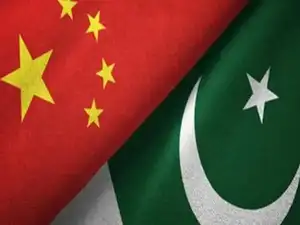
The US-China Economic and Security Review Commission’s annual report said Beijing views a stronger India as a strategic challenge and has been supporting Pakistan militarily, including during Operation Sindoor when Chinese engineers provided onsite support.
The report said the conflict demonstrated how Beijing could strengthen Islamabad without directly entering into hostilities with India, pointing out that the Line of Actual Control (LAC) remains active and China has been attempting to activate the Arunachal border as well.
It said that despite the thaw in Sino-Indian ties since late 2024, China continues expanding airfields, railways and logistics networks that improve its ability to mobilise rapidly. This constant threat from China on the border diverts Indian resources from economic development and naval modernisation, the report said.
Two India-linked proposals feature among the commission’s 10 priority recommendations: a pharmaceutical diversification programme combining investment with multiyear purchasing commitments and succession planning with India that would deny legitimacy to a Beijing-selected Dalai Lama.
According to the report, Beijing’s strongest leverage on India is economic and it is actively working to suppress India’s rise across multiple domains. “Beijing is using its control over critical industrial inputs, technology and expertise to preserve its manufacturing advantages and make it harder for India to build competing capacity,” it said.
It also highlighted restrictions on engineers and equipment for Indian electronics factories, battery technology and rare-earth magnets and mentions that Chinese producers reportedly cut prices by 40-50% across 41 pharmaceutical inputs, undercutting new Indian plants supported by production-linked incentives.
On the India-US front, the report flagged a widening gap between strategic intent and policy, making the sharp point that political commitments have outpaced the institutional changes needed to deliver them.
It pointed out that ambitious defence and technology agreements remain constrained by export controls, procurement rules and fragmented decision-making.
US technology-transfer restrictions, reinforced by concerns over India’s Russian military links, impede cooperation. Indian procurement procedures and local-production requirements add delays.
The GE-HAL F414 engine project is used as an example of this disconnect, with the report pointing out that negotiations and technical reviews have stretched an agreement that was reached in 2023, with the final deal still not signed.
The commission also warned that China’s growing naval and surveillance presence is eroding India’s Indian Ocean advantages, recommending systematic intelligence sharing and coordinated monitoring of Chinese naval and submarine activity.
(You can now subscribe to our Economic Times WhatsApp channel)
The US-China Economic and Security Review Commission’s annual report said Beijing views a stronger India as a strategic challenge and has been supporting Pakistan militarily, including during Operation Sindoor when Chinese engineers provided onsite support.
The report said the conflict demonstrated how Beijing could strengthen Islamabad without directly entering into hostilities with India, pointing out that the Line of Actual Control (LAC) remains active and China has been attempting to activate the Arunachal border as well.
It said that despite the thaw in Sino-Indian ties since late 2024, China continues expanding airfields, railways and logistics networks that improve its ability to mobilise rapidly. This constant threat from China on the border diverts Indian resources from economic development and naval modernisation, the report said.

You Might Also Like:

According to the report, Beijing’s strongest leverage on India is economic and it is actively working to suppress India’s rise across multiple domains. “Beijing is using its control over critical industrial inputs, technology and expertise to preserve its manufacturing advantages and make it harder for India to build competing capacity,” it said.
It also highlighted restrictions on engineers and equipment for Indian electronics factories, battery technology and rare-earth magnets and mentions that Chinese producers reportedly cut prices by 40-50% across 41 pharmaceutical inputs, undercutting new Indian plants supported by production-linked incentives.
On the India-US front, the report flagged a widening gap between strategic intent and policy, making the sharp point that political commitments have outpaced the institutional changes needed to deliver them.
It pointed out that ambitious defence and technology agreements remain constrained by export controls, procurement rules and fragmented decision-making.
US technology-transfer restrictions, reinforced by concerns over India’s Russian military links, impede cooperation. Indian procurement procedures and local-production requirements add delays.
The GE-HAL F414 engine project is used as an example of this disconnect, with the report pointing out that negotiations and technical reviews have stretched an agreement that was reached in 2023, with the final deal still not signed.
The commission also warned that China’s growing naval and surveillance presence is eroding India’s Indian Ocean advantages, recommending systematic intelligence sharing and coordinated monitoring of Chinese naval and submarine activity.
Add  as a Reliable and Trusted News Source
 Add Now!
(You can now subscribe to our Economic Times WhatsApp channel)
Read More News on
Read More News on












 ETPrime Membership


















