



 IANS
New Delhi: India and Japan have signed a letter of intent to enable Japanese forces to conduct live-fire training at Indian ranges for the first time, including with surface-to-ship missiles, as the two countries deepen military ties and scale up industrial cooperation.
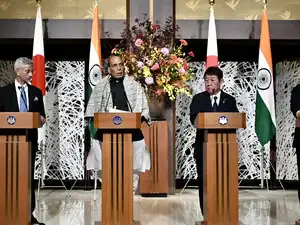
The fourth India-Japan 2+2 Foreign and Defence Ministerial Meeting that took place in Tokyo on Thursday focused on expanding military exercises, deepening defence industrial cooperation and strengthening maritime security, alongside efforts to build resilient supply chains in strategic sectors.
Defence minister Rajnath Singh and external affairs minister S Jaishankar, along with their Japanese counterparts, foreign minister Motegi Toshimitsu and defence minister Koizumi Shinjiro, welcomed the signing of letter of intent (LoI) towards the utilisation of firing ranges in India.
This would be the first time that Japanese forces will train on Indian soil, with field firing ranges being identified, including for surface-to-ship missiles. In the past, India had a similar arrangement with Singapore for training of defence personnel.
During the high-level meeting, the two sides also decided to refresh cooperation on cybersecurity, noting the urgent need to work on AI-enabled cybersecurity and the security of AI systems, with particular attention to critical infrastructure.
They also agreed on expanding cooperation in the field of space, including in Space Situational Awareness (SSA), the use of space for Maritime Domain Awareness (MDA) and space-related international rules and norms. While there was no direct reference to China in the joint statement, the two sides underlined the need for all countries to refrain from any attempt to unilaterally change the status quo.
(You can now subscribe to our Economic Times WhatsApp channel)
The fourth India-Japan 2+2 Foreign and Defence Ministerial Meeting that took place in Tokyo on Thursday focused on expanding military exercises, deepening defence industrial cooperation and strengthening maritime security, alongside efforts to build resilient supply chains in strategic sectors.
Defence minister Rajnath Singh and external affairs minister S Jaishankar, along with their Japanese counterparts, foreign minister Motegi Toshimitsu and defence minister Koizumi Shinjiro, welcomed the signing of letter of intent (LoI) towards the utilisation of firing ranges in India.
This would be the first time that Japanese forces will train on Indian soil, with field firing ranges being identified, including for surface-to-ship missiles. In the past, India had a similar arrangement with Singapore for training of defence personnel.
During the high-level meeting, the two sides also decided to refresh cooperation on cybersecurity, noting the urgent need to work on AI-enabled cybersecurity and the security of AI systems, with particular attention to critical infrastructure.

They also agreed on expanding cooperation in the field of space, including in Space Situational Awareness (SSA), the use of space for Maritime Domain Awareness (MDA) and space-related international rules and norms. While there was no direct reference to China in the joint statement, the two sides underlined the need for all countries to refrain from any attempt to unilaterally change the status quo.
Add  as a Reliable and Trusted News Source
 Add Now!
(You can now subscribe to our Economic Times WhatsApp channel)












 ETPrime Membership


















