



Listen to this article in summarized format
×
Subscribe to

Unlock AI Briefing and Premium Content
New Year Offer 24 Hours Left
Subscribe NowAlready a member? Sign In
What's Included
- Exclusive Stories
- Daily ePaper Access
- Smart Market Tools
- Curated Investment Ideas
- Ad-lite Experience
Subscription

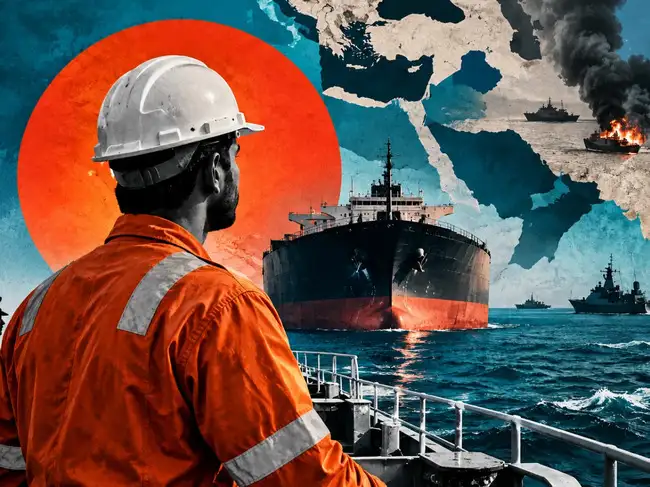
India’s seafarer boom meets a world of wars, drones and danger
The latest attacks in the Black Sea and off Oman have again exposed the risks faced by Indian seafarers, who now form one of the largest national groups working aboard the world’s merchant fleet. In the past few days, three Indian crew members were among those injured when a commercial vessel was attacked in the Black Sea, while 11 Indians were injured in the strike on an oil tanker off Oman.
These incidents are part of a much larger story of India becoming the world’s second-largest supplier of seafarers, with 311,936 maritime professionals accounting for 12.16% of the global workforce. That scale is turning the safety of Indian sailors into an issue of labour policy, maritime security and foreign policy.
Also Read: Oil tanker captains are being offered over $100,000, plus bonuses, to cross Hormuz
The expansion has been driven by a combination of factors. India has a large pool of technically trained workers, an established maritime education system and a workforce comfortable operating in English, the working language of international shipping. Indian seafarers have also built a reputation with foreign shipowners over decades of recruitment.
The composition of this workforce has changed too. Indian officers now number 140,718, or 13.41% of the world's officer workforce. But the larger increase has been among 'ratings', the operational and technical crew working below officer rank. As per a report, India's officer-to-rating ratio flipped from 60:40 in 2010 to 35:65 in 2024. Globally, the ratio is about 45:55.
So, India's strength is not simply that it produces captains and marine engineers, but that it supplies a huge pool of crew that can be deployed on foreign-flagged ships operating anywhere in the world.
But this ambition comes with a problem. A larger Indian workforce also means a larger Indian workforce exposed to wars, piracy, abandoned ships, unpaid wages and unsafe working conditions far from Indian territory.
Also Read: 23 Indian seafarers reported safe after Ukrainian drone attack sets fire to oil tanker off Russian coast
That makes protection complicated. The flag state has legal responsibilities for the vessel, the employer controls the employment relationship, the coastal state controls waters around its territory and India has responsibility for its citizens.
In May, India's shipping regulator barred 366 foreign-flagged vessels from recruiting Indian seafarers through Indian agencies. Of these, 278 were placed in a restricted category and 88 were blacklisted. The cases involved unpaid wages, denial of compensation after deaths or disappearances, hardship and failures to repatriate abandoned crew.
This is one of the most significant developments in India's maritime labour policy. India is using its position as a major supplier of maritime workers as leverage over foreign shipowners. If a vessel cannot recruit Indian crew through India's licensed recruitment network, that can become a significant commercial disadvantage.
This followed earlier monitoring and security measures around West Asia. The government was already coordinating with the foreign ministry, Indian missions, the Navy and shipping companies. By June, more than 3,500 Indian seafarers had been safely repatriated from the Gulf region, while the DG Shipping control room had handled thousands of calls and emails from seafarers, families and maritime stakeholders.
The response was therefore not limited to issuing advisories. India was actively helping workers leave areas where the risk had become unacceptable.
Many of the problems faced by Indian sailors begin before they board a ship. Recruitment practices, contracts, wages, insurance and repatriation arrangements can determine how vulnerable a seafarer becomes once the vessel is outside Indian waters. The government has thus been tightening oversight of the recruitment chain rather than waiting for a crisis at sea.
The government subsequently formalised a broader framework involving real-time tracking, a 24-hour control room and situation reports. Indian missions across West Asia and the Black Sea were brought into regular reviews with the shipping ministry and maritime regulator.
India has also been building the administrative infrastructure around this system. In August, it launched E-Samudra, a digital maritime platform that includes services for seafarers and a 24-hour grievance-redressal mechanism.
At the BRICS summit in September, Prime Minister Narendra Modi proposed a Seafarers Emergency Support Network. The idea was to connect maritime authorities and diplomatic missions so that distress alerts, medical assistance, communication with families and evacuation could be coordinated quickly when a ship comes under threat.
The proposal then fed into a wider diplomatic initiative. During the UN General Assembly week, India and Liberia launched the Group of Friends on Safety and Security of Shipping and Seafarers. External Affairs Minister S. Jaishankar said the initiative brought together major ship-owning countries, major flag states and countries supplying large numbers of seafarers. He explicitly linked it to Modi's BRICS proposal.
The choice of Liberia is significant. India is one of the world's biggest suppliers of seafarers, while Liberia operates one of the world's largest ship registries. The two countries represent different sides of the same problem -- the nationality of the sailor and the nationality of the vessel are often different.
The answer cannot be to keep Indians away from dangerous waters altogether. That would undermine India's ambition to become an even larger global supplier of maritime labour. Instead, India is building layers of protection around the workforce by blacklisting unsafe employers, restricting deployment to conflict zones, repatriating crews, tracking vessels, strengthening recruitment regulation and creating diplomatic channels for emergencies.
The important change is that Indian seafarers are no longer being treated simply as workers who happen to operate abroad. Their sheer numbers have made them part of India's economic and strategic interests. This is likely to become more important as India pursues its 20% target. The country may be able to supply the people the global shipping industry needs, but the harder task will be ensuring that those people do not become the invisible casualties when geopolitical conflicts spill into the world's sea lanes.
(You can now subscribe to our Economic Times WhatsApp channel)
These incidents are part of a much larger story of India becoming the world’s second-largest supplier of seafarers, with 311,936 maritime professionals accounting for 12.16% of the global workforce. That scale is turning the safety of Indian sailors into an issue of labour policy, maritime security and foreign policy.
Also Read: Oil tanker captains are being offered over $100,000, plus bonuses, to cross Hormuz
How India became a maritime manpower powerhouse
India’s rise has been remarkably quick. The 2026 BIMCO-ICS Seafarer Workforce Report puts India behind only the Philippines and ahead of China, Russia and Indonesia in the supply of seafarers. In 2015, India ranked fifth, and its share of the global workforce was then just 5.2%.The expansion has been driven by a combination of factors. India has a large pool of technically trained workers, an established maritime education system and a workforce comfortable operating in English, the working language of international shipping. Indian seafarers have also built a reputation with foreign shipowners over decades of recruitment.

The composition of this workforce has changed too. Indian officers now number 140,718, or 13.41% of the world's officer workforce. But the larger increase has been among 'ratings', the operational and technical crew working below officer rank. As per a report, India's officer-to-rating ratio flipped from 60:40 in 2010 to 35:65 in 2024. Globally, the ratio is about 45:55.
So, India's strength is not simply that it produces captains and marine engineers, but that it supplies a huge pool of crew that can be deployed on foreign-flagged ships operating anywhere in the world.
Why India has become important for the maritime sector
BIMCO and the International Chamber of Shipping estimate that 2.57 million seafarers currently serve 85,148 merchant ships. The industry is short of about 39,100 STCW-certified officers and could need another 113,735 by 2030. This shortage gives India an opportunity to expand further. The government has set a target under “Mission 20%” to make one in every five global seafarers an Indian.But this ambition comes with a problem. A larger Indian workforce also means a larger Indian workforce exposed to wars, piracy, abandoned ships, unpaid wages and unsafe working conditions far from Indian territory.
Also Read: 23 Indian seafarers reported safe after Ukrainian drone attack sets fire to oil tanker off Russian coast
Indian nationality, foreign ships and difficult jurisdictions
A unique feature of the Indian seafarer story is that many Indians work on ships that have little direct connection with India. A sailor can be an Indian citizen, employed through an Indian recruitment agency, working for a foreign company on a vessel registered in another country and sailing through waters affected by a conflict.That makes protection complicated. The flag state has legal responsibilities for the vessel, the employer controls the employment relationship, the coastal state controls waters around its territory and India has responsibility for its citizens.
In May, India's shipping regulator barred 366 foreign-flagged vessels from recruiting Indian seafarers through Indian agencies. Of these, 278 were placed in a restricted category and 88 were blacklisted. The cases involved unpaid wages, denial of compensation after deaths or disappearances, hardship and failures to repatriate abandoned crew.
This is one of the most significant developments in India's maritime labour policy. India is using its position as a major supplier of maritime workers as leverage over foreign shipowners. If a vessel cannot recruit Indian crew through India's licensed recruitment network, that can become a significant commercial disadvantage.
The regulator's restrictions
The government's response to conflict risks has also become more interventionist. After a series of attacks on merchant ships in the Gulf, the Director General of Shipping advised recruitment and placement agencies in June to restrict the deployment of Indian seafarers to conflict areas until further orders. Emergency crew changes could take place with the consent of the seafarers.This followed earlier monitoring and security measures around West Asia. The government was already coordinating with the foreign ministry, Indian missions, the Navy and shipping companies. By June, more than 3,500 Indian seafarers had been safely repatriated from the Gulf region, while the DG Shipping control room had handled thousands of calls and emails from seafarers, families and maritime stakeholders.
The response was therefore not limited to issuing advisories. India was actively helping workers leave areas where the risk had become unacceptable.
India's new legal framework
The wider policy shift is backed by the Merchant Shipping Act, 2025, which came into force in March. The law strengthens safeguards for abandoned seafarers and gives regulators greater oversight of recruitment and placement services. It also provides a stronger legal framework for implementing international maritime labour standards.Many of the problems faced by Indian sailors begin before they board a ship. Recruitment practices, contracts, wages, insurance and repatriation arrangements can determine how vulnerable a seafarer becomes once the vessel is outside Indian waters. The government has thus been tightening oversight of the recruitment chain rather than waiting for a crisis at sea.
From monitoring ships to monitoring individual Indians
India's response became more systematic after attacks in the Strait of Hormuz. In July, Shipping Minister Sarbananda Sonowal ordered a “Seafarer-First” system under which every Indian seafarer in the affected region would be individually accounted for, regardless of the vessel's flag. Each affected seafarer was to have a dedicated liaison officer while authorities established vessel-by-vessel monitoring and round-the-clock coordination.The government subsequently formalised a broader framework involving real-time tracking, a 24-hour control room and situation reports. Indian missions across West Asia and the Black Sea were brought into regular reviews with the shipping ministry and maritime regulator.
India has also been building the administrative infrastructure around this system. In August, it launched E-Samudra, a digital maritime platform that includes services for seafarers and a 24-hour grievance-redressal mechanism.
Modi takes the issue beyond India's borders
The government has increasingly recognised that India cannot protect a global workforce through Indian regulation alone.At the BRICS summit in September, Prime Minister Narendra Modi proposed a Seafarers Emergency Support Network. The idea was to connect maritime authorities and diplomatic missions so that distress alerts, medical assistance, communication with families and evacuation could be coordinated quickly when a ship comes under threat.
The proposal then fed into a wider diplomatic initiative. During the UN General Assembly week, India and Liberia launched the Group of Friends on Safety and Security of Shipping and Seafarers. External Affairs Minister S. Jaishankar said the initiative brought together major ship-owning countries, major flag states and countries supplying large numbers of seafarers. He explicitly linked it to Modi's BRICS proposal.
The choice of Liberia is significant. India is one of the world's biggest suppliers of seafarers, while Liberia operates one of the world's largest ship registries. The two countries represent different sides of the same problem -- the nationality of the sailor and the nationality of the vessel are often different.
The price of India's maritime success
The government's intervention reflects a basic contradiction in India's maritime strategy. India wants to send more people into an industry facing a global shortage of qualified officers. The BIMCO-ICS report makes clear that demand will remain strong. But every additional Indian seafarer working internationally is also exposed to risks that India cannot eliminate on its own.The answer cannot be to keep Indians away from dangerous waters altogether. That would undermine India's ambition to become an even larger global supplier of maritime labour. Instead, India is building layers of protection around the workforce by blacklisting unsafe employers, restricting deployment to conflict zones, repatriating crews, tracking vessels, strengthening recruitment regulation and creating diplomatic channels for emergencies.
The important change is that Indian seafarers are no longer being treated simply as workers who happen to operate abroad. Their sheer numbers have made them part of India's economic and strategic interests. This is likely to become more important as India pursues its 20% target. The country may be able to supply the people the global shipping industry needs, but the harder task will be ensuring that those people do not become the invisible casualties when geopolitical conflicts spill into the world's sea lanes.
Add  as a Reliable and Trusted News Source
as a Reliable and Trusted News Source Add Now!
(You can now subscribe to our Economic Times WhatsApp channel)
(Catch all the Business News, Breaking News and Latest News Updates on The Economic Times.)
Subscribe to The Economic Times Prime and read the ET ePaper online.
Read More News on
(Catch all the Business News, Breaking News and Latest News Updates on The Economic Times.)
Subscribe to The Economic Times Prime and read the ET ePaper online.