
OIL SUPPLY ROUTE HORMUZ CRISIS
US–Israel–Iran War Day 52: Strait of Hormuz explodes into chaos as US seizes Iranian cargo ship; Tehran cries 'piracy', Pakistan’s peace push hangs by a thread
Iran War News Day 52: On Day 52 of the US–Israel–Iran war, tensions have intensified after the US seized an Iranian cargo ship, prompting Tehran’s threat of retaliation. The crisis in the Strait of Hormuz continues to disrupt global oil supplies, pushing crude prices higher. With talks stalled and military posturing rising, fears of a wider regional conflict and prolonged energy crisis are growing.

Is it time to abandon hope the Strait of Hormuz will open soon?
The closure of the Strait of Hormuz has thrown global oil markets into turmoil, deepening an energy crisis with far-reaching effects. Asia, a powerhouse in oil consumption, is experiencing a drastic downturn as crude and refined imports dwindle. The plummeting physical oil prices highlight an immediate supply crunch, compelling refineries to downsize their processing capacities, which threatens significant economic fallout.

'Want to see Strait of Hormuz opened; no privatisation, no tolls': Australian PM Anthony Albanese
In a post on X, following his participation in a virtual Leaders' Summit on the Strait of Hormuz co-hosted by French President Emmanuel Macron and UK Prime Minister Keir Starmer, Albanese said 49 countries had come together with a "consistent approach" focused on ensuring freedom of navigation.
UAE envoy to India flags 2,890 strikes on civilian infra since Feb 28, says 4 million Indian expats integral to nation
The UAE ambassador has reported 2,890 missile and drone attacks. He called these unprovoked strikes and urged stronger international action. The UAE faced these attacks despite not being a direct party to the conflict. These incidents threatened regional stability. UAE air defence systems intercepted most incoming threats. International bodies have called for accountability and reparations.

Europe has 'maybe 6 weeks of jet fuel left', energy agency head warns
Europe faces a critical shortage of jet fuel, with only about six weeks of supply remaining, according to the IEA head. The ongoing Iran war and blocked Strait of Hormuz threaten global energy supplies, potentially leading to flight cancellations and severe economic repercussions, especially for developing nations.

West Asia War: PM Modi, French President Macron hold telephonic talks; stress urgent need to restore Hormuz safety
Prime Minister Narendra Modi and French President Emmanuel Macron held discussions on the West Asia situation. Both leaders stressed the critical need for maritime security in the Strait of Hormuz. They expressed shared concern over rising regional tensions. The leaders agreed on the importance of ensuring safe and free navigation through this vital shipping route.
- Go To Page 1

Europe may run out of jet fuel in 6 weeks: Why IEA warns Europe could face flight chaos as Iran war sparks a global energy crisis
Europe jet fuel shortage: Europe faces a potential six-week jet fuel shortage due to ongoing supply blockages from the Iran war, raising concerns about flight cancellations. The International Energy Agency warns of the largest energy crisis ever, with restricted Strait of Hormuz access impacting global economic growth and inflation through rising fuel prices.

Why are oil and gas prices up today, and will Brent, US WTI crude futures, Dutch and British gas rates continue to rise or drop again? Analysts insights, market outlook and what should investors do now
Why are oil and gas prices up today, and will Brent, US WTI crude futures, Dutch and British gas rates continue to rise or drop again? Energy markets reacted to Middle East conflict risks, Hormuz disruption, falling US inventories, and shifting gas supply signals. Analysts say prices may stay volatile as geopolitics, exports, storage levels, and investor positioning continue to drive global oil and gas trends.
Can Iran legally put a price on passage through the Strait of Hormuz?
Iran’s move to charge tolls on ships passing through the Strait of Hormuz has sparked a legal and geopolitical debate. Under international law, particularly UNCLOS, vessels are entitled to “transit passage” through key straits without interference, making unilateral tolls highly contentious. While Iran argues it can regulate movement within its territorial waters, most experts view such charges as inconsistent with established maritime norms.
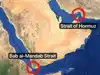
What is Bab el-Mandeb? The critical trade route Iran threatens to shut down
The Iran Red Sea trade threat has intensified sharply, with tanker traffic through the Strait of Hormuz falling below 10% of its normal daily volume. This is a critical global chokepoint. The crisis is escalating fast. Iran has warned it may expand disruption into the Red Sea and nearby routes. The U.S. blockade ordered by Donald Trump has increased tensions further. Global oil supply is at risk. Shipping costs are rising. Markets are reacting. The Iran Red Sea trade threat now signals deeper instability ahead.

Japan will provide support worth about $10 billion to help strengthen energy supply in Asia
External Affairs Minister S. Jaishankar said attacks on merchant vessels are “completely unacceptable,” stressing India’s commitment to secure maritime routes at the AZEC Plus meeting hosted by Japan. Amid tensions over the Strait of Hormuz, Japan announced a $10 billion energy support package to strengthen Asia’s supply chains. Leaders emphasised safe shipping, stable oil access, and coordinated efforts to safeguard regional energy security and economic stability.

Global growth needs unconstricted energy markets: Jaishankar on Hormuz disruption
India is pushing for safe passage for ships. Attacks on merchant vessels are unacceptable. Global growth needs open energy markets. India will work with partners to build strong supply chains. Japan launched a new initiative to help Asian countries facing fuel shortages. This plan offers financial aid to secure energy supplies and diversify sources.

Why are oil and gas prices witnessing wild swings, and will Brent crude futures, US WTI crude, Dutch and British wholesale gas prices rise or fall again? Analysts insights, market outlook and what should investors do now
Why are oil and gas prices witnessing wild swings, and will Brent crude futures, US WTI crude, Dutch and British wholesale gas prices rise or fall again? Oil and gas markets are moving as traders track US-Iran talks, Strait of Hormuz closure, supply risk, and inventory data. Prices show mixed movement after sharp falls. Gas prices in Europe dropped slightly as risk premiums eased. Analysts say diplomacy and supply restrictions will decide the next price trend for crude and gas markets.

IEA: Global oil demand to decline in '26, a first since Covid
While oil futures registered an unprecedented surge in March, they remain considerably below record levels and the price of actual cargoes, trading at just under $100 a barrel in London. This "disconnect" between futures and physical markets is becoming "increasingly acute," according to the report.

Why are oil and gas prices down today, and will Brent crude and US WTI crude futures continue to drop or rise again soon? Analysts insights, market outlook and what should investors do now
Why are oil and gas prices down today, and will Brent crude and US WTI crude futures continue to drop or rise again soon? Oil and gas markets moved lower after signals of possible US-Iran talks eased supply fears linked to the Strait of Hormuz blockade. Brent and WTI dropped after sharp gains. Analysts warn that lost oil supply, lower inventories, and uncertain negotiations may still push prices higher again soon.

What’s happening with Brent crude and African crude prices, and why physical oil hits $150 as Europe pays record premiums amid Strait of Hormuz disruption and global supply shock fears
Brent crude and WTI oil prices are under sharp focus as physical crude for Europe has surged near $150 a barrel, based on LSEG data. This gap between futures and real oil signals a live supply crunch. The Strait of Hormuz disruption has tightened global flows. Traders are scrambling for immediate cargoes. African crude prices are also hitting fresh highs. This shows replacement demand is rising fast. Fuel shortage risks are building across Europe and Asia. Inflation pressure is returning. Energy markets are turning volatile again.
Will US naval blockade on Iranian ports successful in ending already-fragile ceasefire? Global oil, Strait of Hormuz, Donald Trump, Iran tensions explained
Will US naval blockade on Iranian ports successful in ending already-fragile ceasefire? The United States has launched a naval blockade targeting ships linked to Iranian ports after failed talks. Warships are near the Gulf of Oman and the Strait of Hormuz. Iran has issued warnings. Oil prices, shipping, and global trade face pressure. This explainer covers the blockade, ceasefire risks, oil supply impact, diplomacy, and global reactions.
Why will US Navy blockade 'already choked' Strait of Hormuz? Trump blockade order after failed US Iran news talks
Why will US Navy blockade 'already choked' Strait of Hormuz? The question rose after President Donald Trump announced a naval blockade and ship interdiction plan following failed US Iran news peace talks. The Trump blockade targets vessels that paid tolls to Iran in the Strait of Hormuz. The naval blockade aims to stop payments and increase pressure. The move could impact global shipping, trade routes, oil supply, and regional security.
Donald Trump says US initiating move to 'clear out' Strait of Hormuz, cites global shipping security
Former US President Donald Trump stated America is beginning to clear the Strait of Hormuz. This move aims to ensure safe global energy shipments. Trump criticized other nations for not taking responsibility for securing the vital oil route. He also claimed Iran's military capabilities are significantly degraded and that oil tankers are heading to the US for crude.
Hormuz sees fresh activity: Three oil supertankers appear to make move through strait as US–Iran talks begin
Three oil supertankers are currently navigating the Strait of Hormuz, signalling a potential revival in shipping activity after weeks of disruption. This rise in traffic, involving Chinese and Greek vessels, is crucial for stabilising global oil supply. Meanwhile, delegations from the United States and Iran have arrived in Islamabad for key peace talks focused on sanctions relief and regional security.

My way or no waterway: Traffic remains blocked at Hormuz; Iran opens 2 routes
Ship traffic through the Strait of Hormuz is still blocked. Only a few Iran-linked ships have departed. Chinese oil tankers are waiting to enter. Iran is formalizing control and requires permission for passage. The waterway remains effectively shut, impacting global oil supply. A two-week ceasefire offers little immediate relief for shipping.
US wants to earn revenue from ships passing through Strait of Hormuz as ceasefire with Iran may break anytime. Here's what White House Press Secretary Karoline Leavitt said
US wants to earn revenue from ships passing through Strait of Hormuz as ceasefire with Iran may break anytime. The United States is exploring a plan to earn revenue from ships crossing the Strait of Hormuz while pushing for a ceasefire with Iran. Talks will begin in Islamabad as tensions continue due to Israel strikes in Lebanon, Iran warnings, and threats to close the shipping route.

Why is the Strait of Hormuz blocked despite US- Iran ceasefire? Key points to know
Why is the Strait of Hormuz blocked despite US-Iran ceasefire? The Strait of Hormuz blocked issue persists because the ceasefire is not a full peace agreement. It is temporary, fragile, and filled with conditions. Both sides remain cautious, and trust is extremely limited. This uncertainty is enough to keep the shipping lanes restricted. The Iran is exercising significant influence over maritime movement in the region. Reports suggest that ships must follow strict protocols before entering or crossing the strait. This controlled access is a major factor behind the ongoing Strait of Hormuz blocked situation.

What’s happening with WTI and Brent crude oil today? Why oil prices are surging $1 every hour—and will Brent cross $110 next?
What’s happening with WTI and Brent crude oil today? Why oil prices are surging $1 every hour. Oil price today is rising at an extraordinary pace across global energy markets. Brent crude is hovering near the $100 mark again. WTI crude is also climbing sharply with intraday gains nearing $1 every hour. Brent crude jumped over 12% within just 24 hours recently. WTI crude followed with similar sharp gains across trading sessions. These moves are rare and usually tied to supply shocks or war-like conditions. Fresh tensions between the United States and Iran are reshaping market expectations quickly. Supply fears are building as traders react to uncertain shipping flows and rising conflict risks.

India expects US to extend waiver on Russian oil imports amid global energy volatility
Amidst fluctuating global oil prices, India is petitioning for the continuation of the US exemption regarding Russian oil imports. With a notable surge in crude oil from Russia, the country faces supply challenges due to disruptions in essential shipping routes. In response, India is not only seeking alternative energy solutions but is also enhancing collaborative efforts on the international stage.
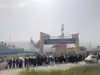
Is Iran using human shields to dissuade Donald Trump from targeting power plants and bridges? Here's complete truth, Iran news and war in Iran update
Is Iran using human shields to dissuade Donald Trump from targeting power plants and bridges? Iran news reports claim human chains formed near a power plant in Kazerun before the Trump Iran deadline linked to the Strait of Hormuz. Viral video claims remain unverified. US Iran strikes, war news, and travel disruptions raise global concerns.

Is Donald Trump going to use nuclear weapons to kill entire civilization? Latest Trump Iran deadline, Iran war update and Strait of Hormuz crisis
Is Donald Trump going to use nuclear weapons to kill entire civilization? This question is trending after new threats linked to the Trump Iran deadline and the Strait of Hormuz crisis. The US Iran conflict, Iran war update, Kharg Island strikes, Tehran explosions, and Strait of Hormuz travel disruptions are now global concerns.

Why are oil prices nearing $110, and will Brent and US WTI crude futures continue to rise or fall again? Analysts insights, market outlook and what should investors do now
Why are oil prices nearing $110, and will Brent and US WTI crude futures continue to rise or fall again? Oil prices remain near $110 as the Strait of Hormuz stays closed and geopolitical tension increases. A deadline from US President Donald Trump raised fears of escalation with Iran. Brent and US WTI crude futures reacted to supply disruption, refinery demand, and OPEC+ output plans, while traders monitor shipping risks, global supply flows, and diplomatic developments.

A $19.50 oil premium: Saudi Arabia sets record crude price as Hormuz crisis rattles markets
Saudi Aramco has set a record premium for its crude oil sold to Asian buyers. This move comes as disruptions in the Strait of Hormuz impact global energy markets. Iran's actions have affected oil flows from the Persian Gulf. Global oil prices have seen a significant rise. Fuel prices are also surging across continents.
Load More

