MAGMA MOVEMENT
Deep-Sea Escanaba Trough Holds Secrets of Earth's Fiery Core
Scientists explored the Escanaba Trough, a deep sea area. Underwater vehicles mapped the seafloor and studied geological activity. They discovered hydrothermal vents releasing hot, metal-rich fluids. These vents support unique life forms that depend on chemical reactions. The area is constantly changing, presenting new research opportunities and questions about resource use.
The Giant Beneath Yellowstone: What New Seismic Maps Just Uncovered
Yellowstone's powerful volcanic system lies beneath a peaceful landscape. Recent seismic mapping shows its magma reservoir is like a sponge, mostly solid rock with pockets of molten material. This layered structure extends deep underground. Current research indicates a low melt percentage, suggesting no immediate threat of a supervolcano eruption. Scientists understand this complex engine better than ever.
Why Do Some Volcanoes Inflate for Years… Then Never Erupt? Explained
Ground near volcanoes like Yellowstone and eastern California is slowly rising. This swelling is caused by underground magma and fluids. Scientists monitor these changes closely. However, rising land does not always mean an eruption is imminent. Often, the volcano adjusts internally and remains quiet. This is a natural process of the Earth's dynamic crust.
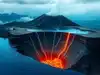
Can This Crater Lake Predict the Next Volcanic Eruption?
Volcanic crater lakes offer vital early warnings of eruptions. Scientists monitor subtle shifts in lake temperature, gas composition, and water chemistry. These changes reflect rising magma deep beneath the surface. This research helps communities near volcanoes prepare for potential danger. Lakes act as natural indicators, providing crucial lead time for safety measures.
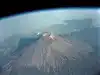
Why Some Volcanoes Erupt Without Warning, And How Satellites Catch It
Volcanoes can erupt suddenly, but satellite technology now detects hidden ground shifts and heat changes. This helps scientists monitor remote volcanoes where ground sensors are scarce. These advanced tools provide vital information, improving preparedness for volcanic hazards worldwide. Early warnings allow for timely advisories and evacuations, saving lives and infrastructure.
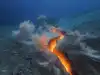
The Ocean Floor Is Cracking Open Faster Than Scientists Expected
Earth's ocean floor is not just steadily pulling apart; new research reveals rapid, dynamic cracking along mid-ocean ridges. Advanced mapping shows magma intrusions can fracture the crust in bursts, reshaping ocean basins faster than previously thought. This episodic process, observed from the East Pacific Rise to Iceland, highlights the seafloor's energetic, evolving nature.
- Go To Page 1
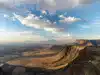
A Continent in Motion: GPS Shows the East African Rift Is Slowly Splitting Apart
Africa's ground is shifting. Tectonic forces are tearing the continent apart along the East African Rift. Satellites and GPS show this separation is happening now, widening by millimetres annually. This ongoing process offers scientists a unique chance to observe how new oceans form. The rift stretches over 3,000 kilometres, marking a boundary between tectonic plates.
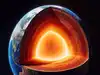
Deep Inside Earth, Rock Moves Slowly Like Liquid, and Now We Know Why
Scientists now understand why seismic waves speed up near Earth's core. Extreme pressure and temperature cause solid mantle rock to flow slowly, aligning mineral crystals. This anisotropic structure dramatically alters seismic wave propagation, revealing deep mantle convection and its influence on Earth's magnetic field and plate tectonics.
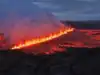
Earth cracks open in Iceland: Volcano eruption ends 800-year slumber, sends locals fleeing again
Iceland Volcano Eruption: A new volcanic fissure opened in southwest Iceland early Wednesday, sending lava and smoke into the air but sparing roads and airports. The Icelandic Meteorological Office confirmed the eruption near Grindavik and the Blue Lagoon spa, forcing evacuations. Since 2021, the Reykjanes Peninsula has seen repeated eruptions after centuries of quiet. Experts say these outbursts may go on for decades. Flights at Reykjavik’s main airport remain unaffected, unlike Iceland’s 2010 ash cloud disaster.

Red alert! When will Africa's gradual split create world’s sixth ocean?
Africa is slowly drifting apart along the East African Rift System, and researchers suspect this tectonic movement would create a new ocean. The mechanism, fueled by magma and moving plates, potentially would isolate the Horn of Africa from the rest of the continent, reshaping regional geography and worldwide ecosystems.

Is mega volcano Mount Spurr about to erupt? This Alaskan city is on edge as earthquakes shake the sleeping giant
Mount Spurr volcano, near Anchorage, Alaska, is showing increased activity. Scientists have detected a swarm of earthquakes beneath the volcano. This suggests magma is moving upwards. Anchorage residents are preparing for a possible ash cloud. Emergency protocols are in place. People are stocking up on supplies. The 1992 eruption serves as a reminder. Experts warn of a potentially explosive event.

Hawaii’s Kilauea volcano erupts again: Lava shoots 330 feet into the sky, tourists rush to witness fiery spectacle
Hawaii’s Kilauea volcano has erupted once again, shooting lava 330 feet into the sky and drawing crowds to Hawai‘i Volcanoes National Park. This marks the ninth eruption since December 23, 2024, with previous ones lasting from 13 hours to eight days. The Hawaiian Volcano Observatory reported the latest activity began at 10:16 AM on Tuesday, with molten rock flowing inside Halemaʻumaʻu Crater. While no homes are at risk, scientists continue monitoring the volcano’s seismic activity.

Underwater volcano near US coast could blow this year, warn scientists after spotting massive swelling
An undersea volcano named Axial Seamount near Cannon Beach, Oregon, is expected to erupt in 2025. Scientists have detected significant ground inflation, indicating magma movement. The volcano has a history of eruptions in 1998, 2011, and 2015. Continuous monitoring with advanced technologies has led to this prediction, marking a breakthrough in volcanic science.
Iceland's volcano may erupt, poses threat to Grindavik
Iceland's volcano might erupt in a few days as magma flow has been detected in Svartsengi reservoir
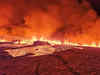
Iceland witnesses a fiery display as volcano erupts with lava
Iceland witnesses a dramatic volcanic eruption, with molten lava spewing from a two-mile crack. Thousands evacuated as the Icelandic Meteorological Office alerts potential risks to the town of Grindavik.
What is an Earthquake? Why it happens, and how is it measured?
Earthquakes are the result of the Earth's ever-moving tectonic plates. They serve as a reminder of the dynamic and ever-changing nature of our planet. While we cannot prevent earthquakes, understanding their causes and effects can help us better prepare for and respond to these natural events, minimizing their impact on our lives and the world around us.
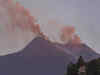
Mount Etna erupts, flights to and from Eastern Sicily Airports disrupted; Here are the details
Mount Etna’s volcanic activity's impact was evident with flights experiencing significant delays and diversions.

Indian Ocean’s giant 'gravity hole': All you may want to know
Researchers discovered a massive 'gravity hole' in the Indian Ocean caused by variations in density and mass distribution. Simulations reveal plumes of hot magma contributed to its formation.
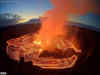
Kilauea, one of the world's most active volcanoes, begins erupting after 3-month pause
Before issuing the eruption notice, the observatory said increased earthquake activity and changes in the patterns of ground deformation at the summit started on Tuesday night, indicating the movement of magma in the subsurface. All activity is within a closed area of Hawaii Volcanoes National Park, on Hawaii's Big Island.
Antarctica experiences a massive earthquake swarm as an inactive volcano erupts
Due to the eruption of the volcano Orca, Antarctica experienced 8,500 earthquake shocks in 7 months.

Stocks in the news: ONGC, ZEEL, Hero MotoCorp, Max Healthcare, Infibeam Avenues and Infosys
JSW Energy company board appointed Pritesh Vinay as its Chief Financial Officer.
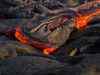
Volcanic rocks may trigger massive unpredicted global warming effects: Study
They created a model of changes in carbon emissions during the Paleocene-Eocene Thermal Maximum (PETM) - a short interval of maximum temperature lasting around 100,000 years some 55 million years ago.

Stocks you can pick up in this distress sale: Chakri Lokapriya
There will be a movement away from highly leveraged companies with no clear action plan.

MACD charts show Bharti Infra, L&T, Escorts among 42 stocks readying to rally further
The MACD is known for signalling trend reversals in a traded security or index.

What changed your markets while you were sleeping
Let’s check out what might matter to Dalal Street all through Thursday.

NBFCs on a hiring spree, look to acquire talent at CXO level
Senior-level talent from multinationals, ecommerce and other financial services companies have been gravitating to the NBFC space amid a top-level hiring boom in the sector.
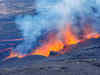
Iceland's volcano problem is only going to get worse
Iceland has always been a volcanically active island, but climate change and the world's resulting melting ice will make things worse.
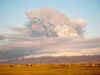
Chances of eruption increasing at Iceland volcano
European airlines have however been warned about the possibility of flight disruptions caused by activity at Iceland's largest volcano system.
Load More