
KEPLER SPACE TELESCOPE
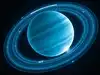
Uranus Spins Sideways, the Stranger Story Is What That Does to the Space Around It
Uranus spins on its side, creating a wild magnetosphere. Unlike Earth's stable bubble, Uranus's magnetic field is lopsided and constantly shifts. This affects how charged particles move and deposit energy in its atmosphere. Scientists are studying this to understand planets far beyond our solar system. The unusual physics around Uranus reveals how magnetic fields shape entire worlds.
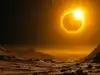
Planets With Two Suns Sound Perfect: So Why Does Space Keep Destroying Them?
Planets orbiting two suns are rare. Scientists now understand why. Subtle gravitational forces, amplified by Einstein's relativity, destabilize planetary orbits over eons. This leads to planets being destroyed or ejected. Future searches for planets around two suns will focus further out, where stability is possible. This discovery reshapes our understanding of planetary systems.

The Galaxy is full of double Suns: So where did all the 'Tatooine' planets go?
Scientists uncover a new reason for fewer planets around twin stars. Einstein's theory of general relativity shows that close binary stars can destabilize planetary orbits over billions of years. This effect can cause planets to collide with their stars or be ejected entirely. New research uses simulations to confirm this phenomenon.
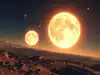
The Star Wars “Tatooine” Problem: Why Double-Sun Planets Are So Rare
While binary stars are common, planets orbiting two suns, like Tatooine, are rare. Complex gravitational forces in these systems hinder planet formation and orbital stability. Discoveries like Kepler 16b show these 'Tatooine worlds' exist but form and survive only in specific, stable zones, a testament to delicate cosmic balances.
How Artificial Intelligence Is Rewriting Planet Hunting
Astronomers are now leveraging artificial intelligence to sift through vast amounts of exoplanet data, a task impossible for humans alone. AI algorithms are accelerating discoveries by identifying subtle planetary signals missed by traditional methods in telescope archives. This technology is revolutionizing planet hunting, promising to uncover countless more hidden worlds.
The Search for an Exomoon: Have We Finally Found One?
Astronomers are actively searching for exomoons, the elusive counterparts to our Solar System's moons, with promising candidates like the one around Kepler 1625 b emerging. Despite theoretical expectations and sophisticated detection methods, confirming these distant celestial bodies remains a significant challenge. New telescopes and advanced techniques are expected to bring the first definitive exomoon discovery closer.
- Go To Page 1

How Close Is the Nearest Earth-Like Planet, Really?
Astronomers are actively searching for Earth-like planets, with thousands of exoplanets now confirmed. While Proxima Centauri b is the closest rocky planet in a habitable zone, its true Earth-likeness is uncertain. Statistical estimates suggest a true Earth twin around a Sun-like star could be within 20 light-years, though not yet identified.

Not Area 51: Scientists reveal the most likely alien hideouts — some inside our Solar System
Scientists say aliens are not hiding in Area 51. Experts believe life may exist on distant planets with water and the right temperature. Some moons in our Solar System, like Enceladus and Titan, may also have hidden oceans where life could survive. Studies using space telescopes suggest the universe is huge, so finding alien life somewhere is possible.
Why are planets with two Suns so rare? Einstein’s relativity may explain the mystery
New research suggests Einstein's general relativity explains the rarity of planets orbiting two suns. In tight binary systems, relativistic effects cause orbital resonances that destabilize planets, leading to their ejection or destruction. Surviving planets orbit much farther out, making them difficult to detect.
Two new exoplanets covered with water found by explorers
Exoplanet explorers have discovered new planets, Kepler-138c and d, covered with water.
'Seventeen new planets, including one Earth-sized world discovered'
Astronomers have discovered 17 new planets, including a potentially habitable Earth-sized world, by combing through data gathered by NASA's Kepler space telescope which was launched in 2009, and retired in October 2018.
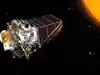
NASA's Kepler telescope retires after finding thousands of worlds
Bringing an end to a prolific nine-and-a-half year mission in which it discovered over 2,600 intriguing exoplanets, some of which may harbour life, the US space agency said.
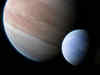
'First known exomoon may have been discovered'
The observations measured the momentary dimming of starlight as a planet passed in front of its star, called a transit.
Planet hunting Kepler telescope wakes up again: NASA
Washington, Sep 6 (IANS) NASA's planet-hunting Kepler space telescope has woken up from yet another slumber and begun collecting science data again, the US space agency has said.
NASA's Kepler discovers nearly 100 new exoplanets
London, Feb 17 (IANS) An international team of scientists have confirmed the discovery of nearly 100 new exoplanets -- planets located outside our solar system.
This is how Google AI helped NASA discover two exoplanets
Washington, Dec 15 (IANS) The Artificial Intelligence (AI) and Machine Learning (ML) approach from Google researchers helped NASA discover two exoplanets, including an eighth planet around the star Kepler-90.
Scientists find miniature version of our solar system with eight planets (Lead, Correcting headline)
Washington, Dec 15 (IANS) Scientists applying artificial intelligence to data from NASAs Kepler Space Telescope have discovered an eighth planet around the star Kepler-90 -- breaking the record for the star with the most exoplanets and, for the first time, tying with our own.
NASA spots eighth planet in solar system
Washington, Dec 15 (IANS) NASA has announced the discovery of an eight planet orbiting Kepler-90, a star comparable to the Sun located 2,545 light-years from the Earth.
NASA's Kepler probe uses Google AI for latest discovery
Washington, Dec 11 (IANS) NASA has said its planet-hunting Kepler space telescope made its latest discovery using machine learning from Google.
How hidden stars may impact search for Earth-like planets
Washington, July 12 (IANS) Researchers have found that hidden stars may make planets appear smaller than they actually are, complicating the search for Earth-like planets.
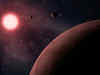
NASA's Kepler telescope spots over 200 new planet candidates
The new data is the most comprehensive and detailed catalogue of candidate exoplanets, which are planets outside our solar system, from Kepler's first four years of data.
NASA announces over 200 new planet candidates
Washington, June 20 (IANS) US space agency NASA announced that its Kepler space telescope has discovered 219 new planet candidates outside our Solar System.
Orbital details of TRAPPIST-1's outermost planet confirmed
Washington, May 23 (IANS) Using NASA's Kepler space telescope, scientists have confirmed that the outermost and least understood planet in the TRAPPIST-1 system orbits its star every 19 days.
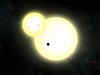
NASA's Kepler probe spots youngest exoplanet ever
The planet, K2-33b, is slightly larger than Neptune and whips tightly around its star every five days. It is one of the very few newborn planets found to date.
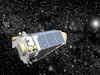
NASA's Kepler mission discovers over 1,200 new planets
Analysis was performed on the Kepler space telescope's July 2015 planet candidate catalogue, which identified 4,302 potential planets.
Sun can produce 'superflares' that may disrupt life on Earth
Superflares are thousands of times more powerful than those ever recorded on the Sun, and are frequently observed on some stars.
The force has not quite awakened yet
the Kepler space telescope has apparently not actually detected evidence of the star-dimming skills of an alien civilisation flourishing a mere 1,500 light years away.
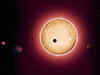
Earth-like planets around most stars: Australian National University research report
The new research made the finding by applying a 200 year old idea to the thousands of exo-planets discovered by NASA's Kepler space telescope.
Kepler exoplanet tally passes 1,000: NASA
Of more than 1,000 verified planets found, eight are less than twice Earth-size and in their stars' habitable zone, the US space agency said.
Load More

